


Gut Microbiota Metabolism and Interaction with Food Components
- PMID: 32456257
- PMCID: PMC7279363
- DOI: 10.3390/ijms21103688
Gut Microbiota Metabolism and Interaction with Food Components
Abstract
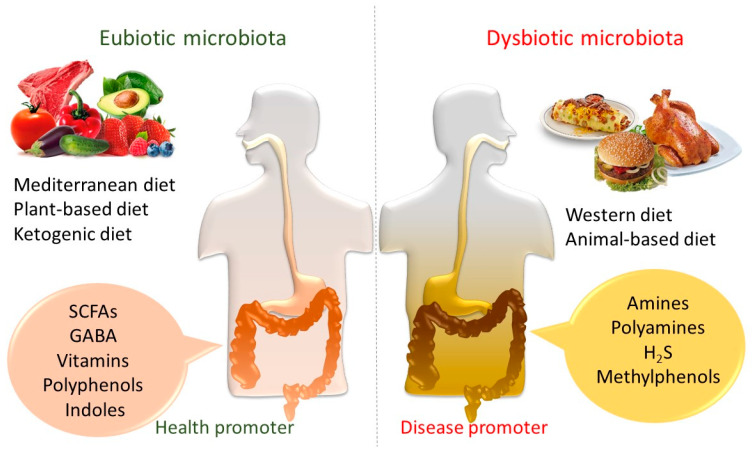
The human gut contains trillions of microbes that play a central role in host biology, including the provision of key nutrients from the diet. Food is a major source of precursors for metabolite production; in fact, diet modulates the gut microbiota (GM) as the nutrients, derived from dietary intake, reach the GM, affecting both the ecosystem and microbial metabolic profile. GM metabolic ability has an impact on human nutritional status from childhood. However, there is a wide variability of dietary patterns that exist among individuals. The study of interactions with the host via GM metabolic pathways is an interesting field of research in medicine, as microbiota members produce myriads of molecules with many bioactive properties. Indeed, much evidence has demonstrated the importance of metabolites produced by the bacterial metabolism from foods at the gut level that dynamically participate in various biochemical mechanisms of a cell as a reaction to environmental stimuli. Hence, the GM modulate homeostasis at the gut level, and the alteration in their composition can concur in disease onset or progression, including immunological, inflammatory, and metabolic disorders, as well as cancer. Understanding the gut microbe-nutrient interactions will increase our knowledge of how diet affects host health and disease, thus enabling personalized therapeutics and nutrition.
Keywords: diet; metabolome; microbiome therapeutics; microbiota metabolism.
Conflict of interest statement
The authors declare no conflict of interest.
Figures
References
Publication types
MeSH terms
Substances
LinkOut - more resources
Full Text Sources
Other Literature Sources
