Review
. 2020 Jul;36(7):634-645.
doi: 10.1016/j.pt.2020.04.011. Epub 2020 May 23.

Complement Evasion Contributes to Lyme Borreliae-Host Associations

Affiliations
Review

Complement Evasion Contributes to Lyme Borreliae-Host Associations

Yi-Pin Lin et al. Trends Parasitol. 2020 Jul.

Abstract

Lyme disease is the most common vector-borne disease in the northern hemisphere and is caused by spirochetes of the Borrelia burgdorferi sensu lato complex. Lyme borreliae infect diverse vertebrate reservoirs without triggering apparent manifestations in these animals; however, Lyme borreliae strains differ in their reservoir hosts. The mechanisms that drive those differences are unknown. To survive in vertebrate hosts, Lyme borreliae require the ability to escape from host defense mechanisms, in particular complement. To facilitate the evasion of complement, Lyme borreliae produce diverse proteins at different stages of infection, allowing them to persistently survive without being recognized by hosts and potentially resulting in host-specific infection. This review discusses the current knowledge regarding the ecology and evolutionary mechanisms of Lyme borreliae-host associations driven by complement evasion.

Keywords: Borrelia; Ixodes; Lyme disease; host association; immune evasion.


Figures

Figure 1.
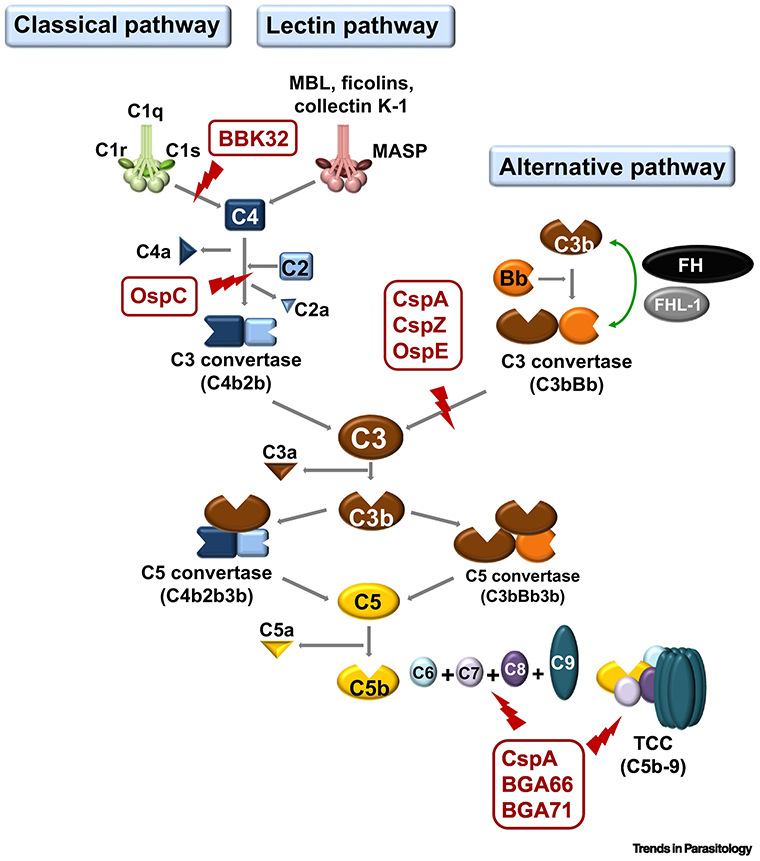
Figure 1.. Schematic diagram of vertebrate complement cascades and the particular steps Lyme borreliae anti-complement protein interact.
The CspA, CspZ, and OspE of B. burgdorferi s.l. target the host complement regulator, FH, by inhibiting the formation C3bBb to inactivate AP. LD spirochetes also produce BBK32 and OspC that bind to C1r and C4b, respectively. These proteins inhibit CP (for BBK32 and OspC) and LP (for OspC). Additional proteins of B. burgdorferi s.l. (e.g. CspA, BGA66, and BGA71) inactivate TCC by preventing the formation of C5b-9 on the surface of spirochetes (Part of the figure is adapted from [18]). FH, Factor H; AP, alternative pathway; CP, classical pathway; LP, Lectin pathway; TS, terminal sequence; LD, Lyme disease; TCC, terminal complement complex
Figure 2, Key Figure.
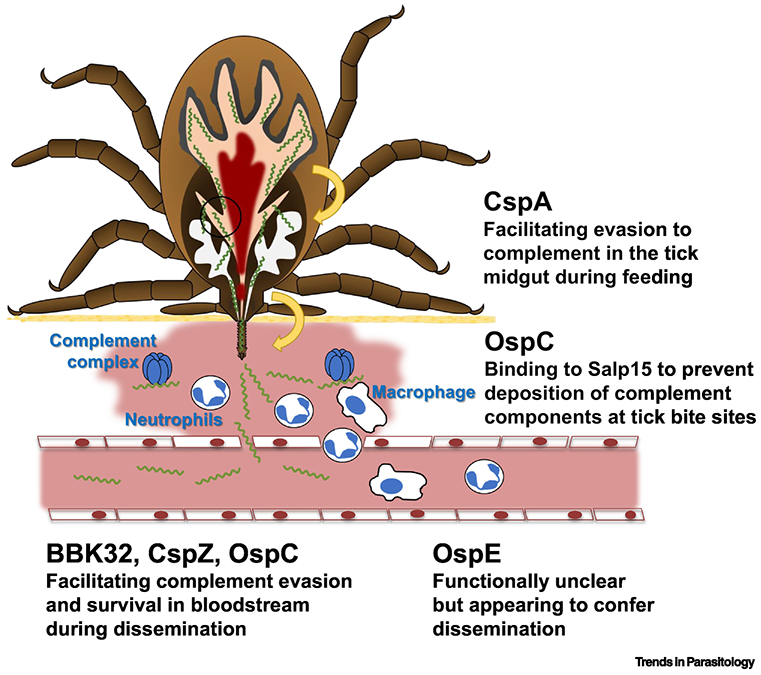
Figure 2, Key Figure.. Complement inhibitory proteins and their potential roles in the infection route.
When ticks feed on hosts, B. burgdorferi s.s. produce CspA to facilitate spirochete escape from complement-mediated killing in the blood meal. After transmission to a host, the tick salivary protein, Salp15, binds to OspC on the spirochete surface to prevent opsonophagocytosis at tick bite sites. Additionally, B. burgdorferi s.s. produces OspC, BBK32, and CspZ to promote complement evasion and bloodstream survival of spirochetes. The cell types and complement complex have been indicated on the figure. Though the function of OspE during infection remains unclear, the current evidence supports that this protein may confer spirochete dissemination in vertebrate animals (Part of the figure is adapted from [27]).
Figure 3.
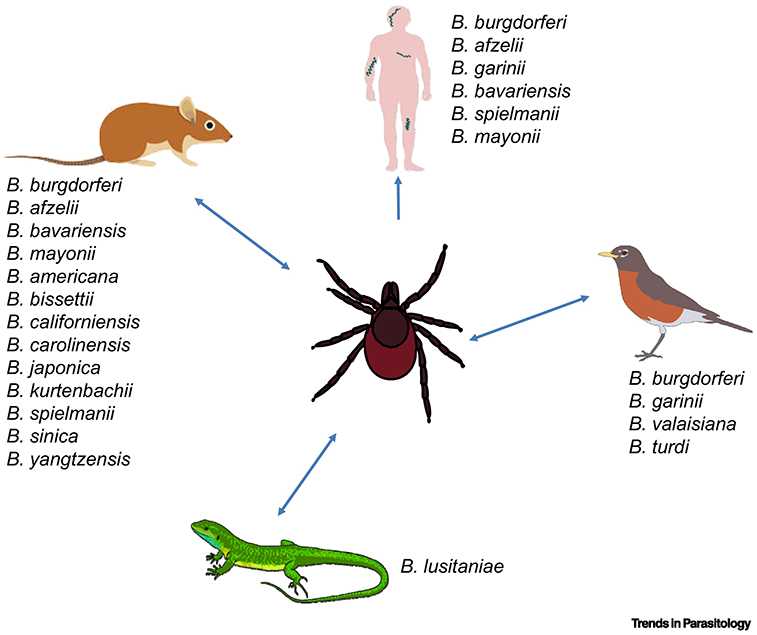
Figure 3.. The host-pathogen association for B. burgdorferi s.l. genospecies.
The indicated B. burgdorferi s.l. genospecies are acquired and transmitted between ticks and different vertebrate hosts including humans, small mammals, reptiles, and aves. Shown is the vertebrate hosts that have been demonstrated or suspected to carry respective species of the B. burgdorferi s.l. complex (Part of the figure is adapted from [9]).

References

    1. Radolf JD et al. (2012) Of ticks, mice and men: understanding the dual-host lifestyle of Lyme disease spirochaetes. Nat Rev Microbiol 10 (2), 87–99. - PMC - PubMed
    1. Steere AC et al. (2016) Lyme borreliosis. Nat Rev Dis Primers 2, 16090. - PMC - PubMed
    1. Wang IN et al. (1999) Genetic diversity of ospC in a local population of Borrelia burgdorferi sensu stricto. Genetics 151 (1), 15–30. - PMC - PubMed
    1. Bunikis J et al. (2004) Sequence typing reveals extensive strain diversity of the Lyme borreliosis agents Borrelia burgdorferi in North America and Borrelia afzelii in Europe. Microbiology 150 (Pt 6), 1741–1755. - PubMed
    1. Hoen AG et al. (2009) Phylogeography of Borrelia burgdorferi in the eastern United States reflects multiple independent Lyme disease emergence events. Proc Natl Acad Sci U S A 106 (35), 15013–8. - PMC - PubMed

Publication types