. 2020 Aug;183(4):1453-1471.
doi: 10.1104/pp.19.01194. Epub 2020 May 26.

Plant Genome Editing and the Relevance of Off-Target Changes

Affiliations

Plant Genome Editing and the Relevance of Off-Target Changes

Nathaniel Graham et al. Plant Physiol. 2020 Aug.

Abstract

Site-directed nucleases (SDNs) used for targeted genome editing are powerful new tools to introduce precise genetic changes into plants. Like traditional approaches, such as conventional crossing and induced mutagenesis, genome editing aims to improve crop yield and nutrition. Next-generation sequencing studies demonstrate that across their genomes, populations of crop species typically carry millions of single nucleotide polymorphisms and many copy number and structural variants. Spontaneous mutations occur at rates of ∼10-8 to 10-9 per site per generation, while variation induced by chemical treatment or ionizing radiation results in higher mutation rates. In the context of SDNs, an off-target change or edit is an unintended, nonspecific mutation occurring at a site with sequence similarity to the targeted edit region. SDN-mediated off-target changes can contribute to a small number of additional genetic variants compared to those that occur naturally in breeding populations or are introduced by induced-mutagenesis methods. Recent studies show that using computational algorithms to design genome editing reagents can mitigate off-target edits in plants. Finally, crops are subject to strong selection to eliminate off-type plants through well-established multigenerational breeding, selection, and commercial variety development practices. Within this context, off-target edits in crops present no new safety concerns compared to other breeding practices. The current generation of genome editing technologies is already proving useful to develop new plant varieties with consumer and farmer benefits. Genome editing will likely undergo improved editing specificity along with new developments in SDN delivery and increasing genomic characterization, further improving reagent design and application.


Figures

Box 1.
Box 1.
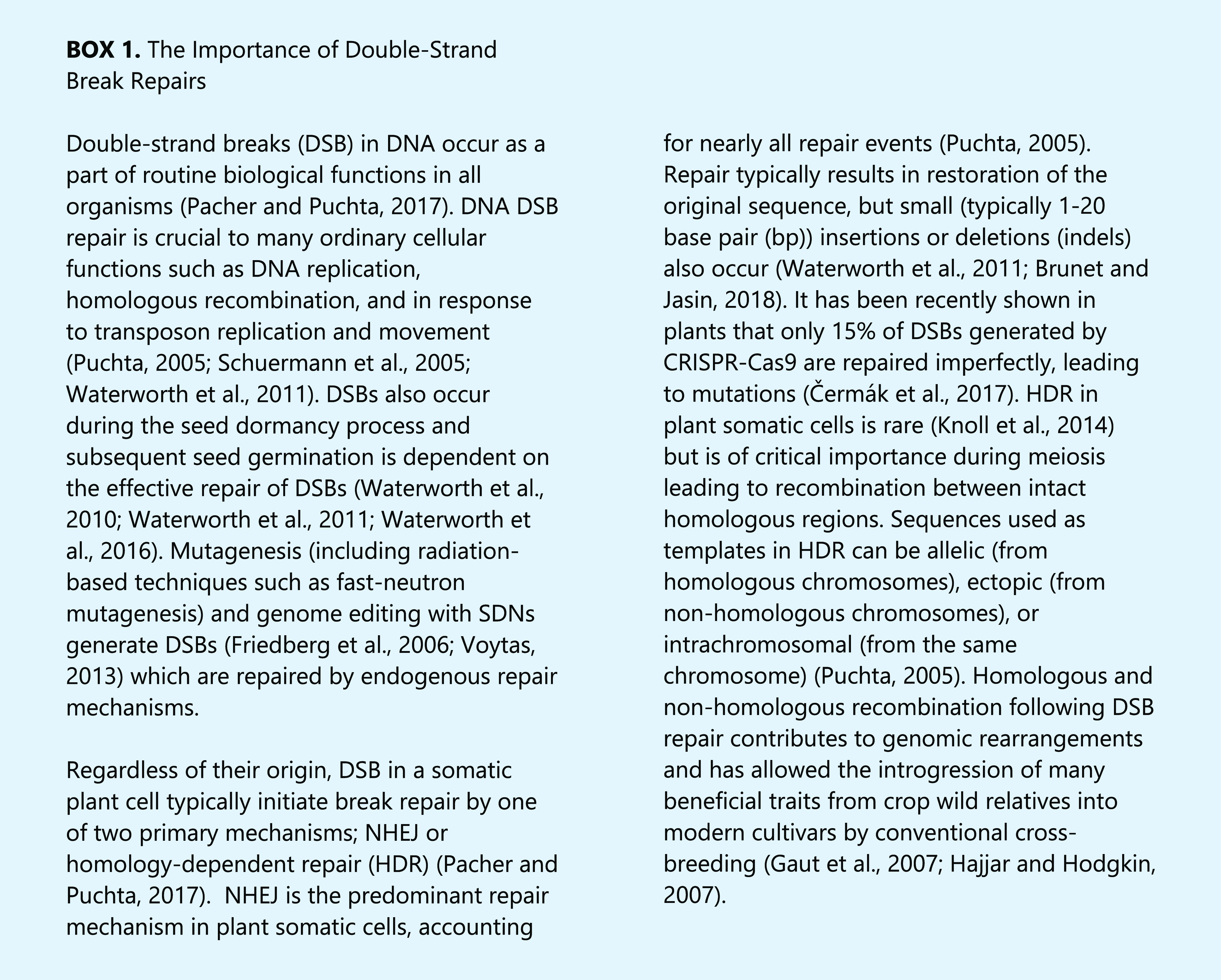
The importance of double-strand break repairs. Pacher and Puchta, 2017; Puchta, 2005; Schuermann et al., 2005; Waterworth et al., 2010; Waterworth et al., 2011; Waterworth et al., 2016; Friedberg et al., 2006; Voytas, 2013; Brunet and Jasin, 2018; Čermák et al., 2017; Knoll et al., 2014; Gaut et al., 2007; Hajjar and Hodgkin, 2007.
Figure 1.
Figure 1.
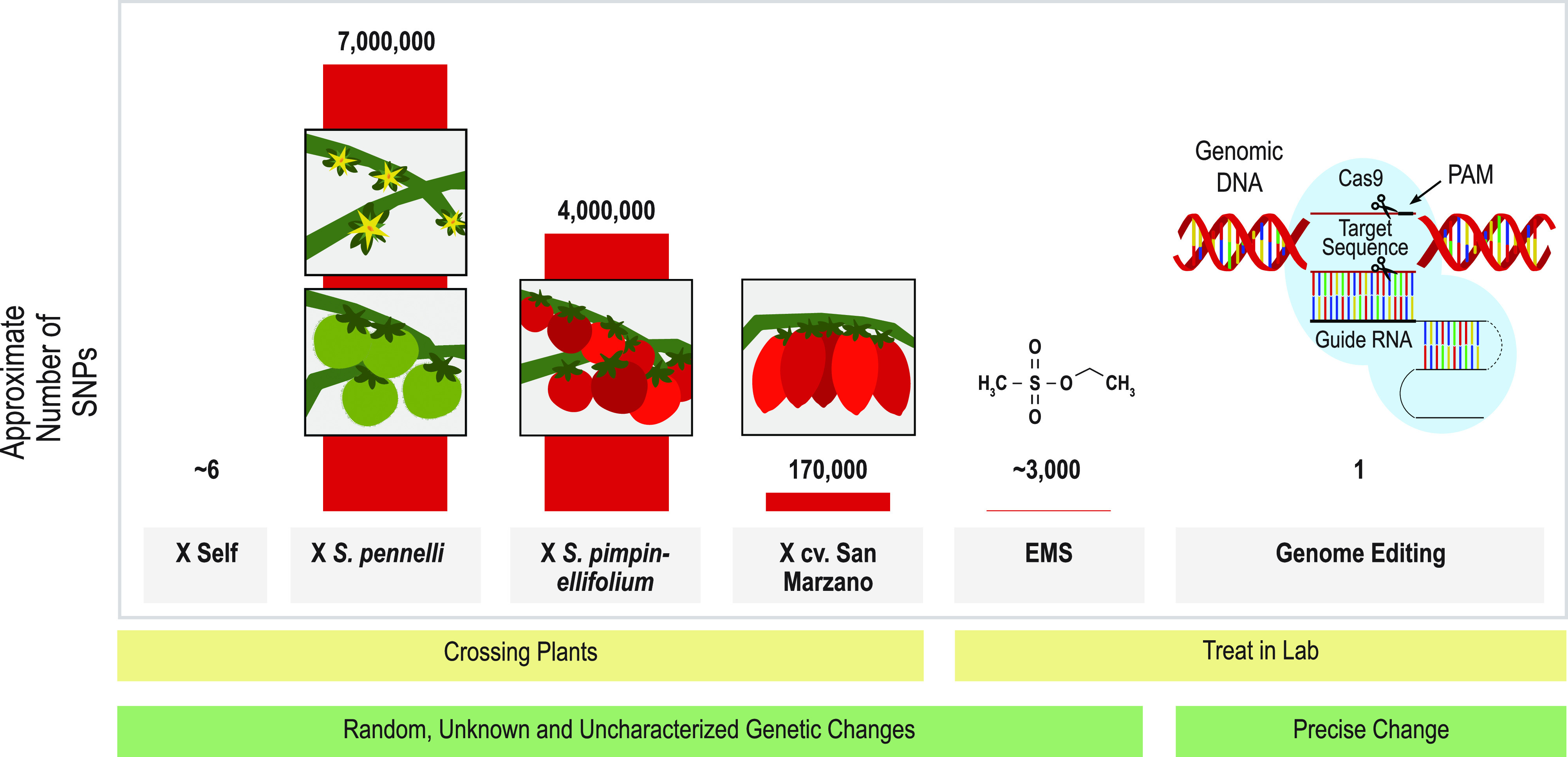
Comparison of the average number of SNPs and indels per genome (individual) introduced into tomato by different breeding strategies. The data represent approximate numbers of SNPs between the genome sequence of S. lycopersicum (Heinz 1706 reference genome) and other cultivars or wild relatives which have been used in breeding of modern tomato cultivars. After selfing (× Self), each individual plant in the next generation will have (on average) approximately six random SNPs (assuming the de novo rate of spontaneous heritable SNP formation in tomato is similar to that of lab-grown Arabidopsis (Ossowski et al., 2010). Most modern elite tomato lines commercially grown typically have four or more disease-resistance genes that have been introgressed by crossing with wild tomato species such as Solanum pennellii or Solanum pimpinellifolium (Foolad, 2007). These initial elite × wild species hybridization events introduced millions to tens of millions of SNPs in addition to indels, CNVs, and PAVs (Aflitos et al., 2014). Crosses with more closely related domestic tomato lines or landraces (i.e. cv San Marzano) will introduce (on average) hundreds of thousands of SNPs/indels (Ercolano et al., 2014). Creating random variation by treating seeds with the chemical mutagen ethyl methanesulphonate (EMS) typically introduces thousands of SNPs per individual (Minoia et al., 2010). Treating cells with a well-designed gene editing reagent (including a gRNA homologous to target sequence and adjacent PAM) can create a single SNP or indel at a precise, predetermined location. Crossing with wild or closely related species can also introduce additional indels, CNVs, and PAVs into the genome, which is not considered in this figure.
Figure 2.
Figure 2.
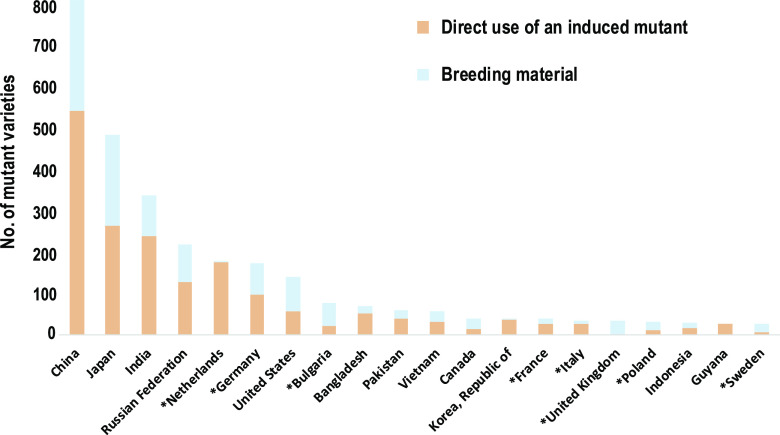
Numbers of officially released mutant varieties from the top 20 tomato-breeding countries, showing direct releases of improved varieties (orange bars) and mutants used as breeding material (blue bars). Asterisks indicate European Union countries. Data source: Mutant Variety Database (https://mvd.iaea.org).
Figure 3.
Figure 3.
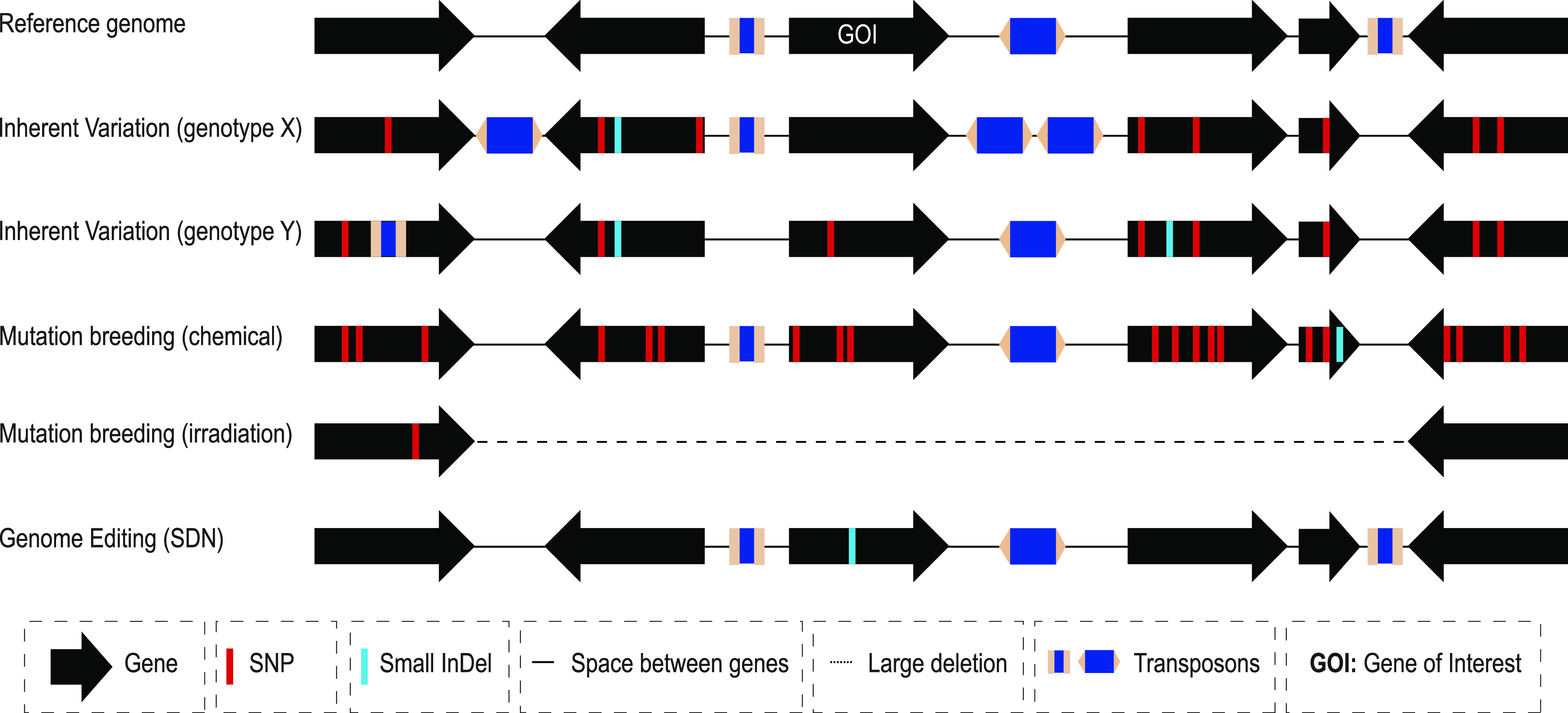
Overview of sources of genomic variation in crop plants. The simplified gene models depict observed variation among individual crop species. Comparison of inherent/standing (genotypes X and Y) and induced variation (by chemicals and irradiation) with the reference genome shows a range of intended and unintended mutations, including SNPs, small indels, transposon insertions/movement, or a large segmental deletion. However, the intended edit induced via a SDN occurs at the target site. Note that the diagram is not drawn to scale and that intergenic variation is not shown.
Figure 4.
Figure 4.
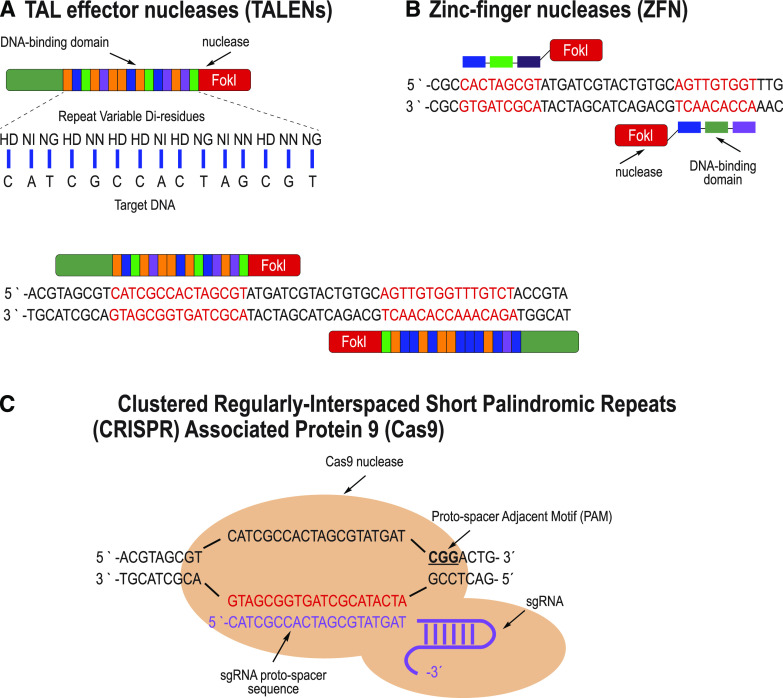
Most widely used SDNs. A, TALENs are composed of a DNA-binding domain and the nuclease Fok1; the DNA binding domain contains an array of nearly identical protein subdomains, each varying at two specific amino acids known as the repeat variable di-residues; specific repeat variable di-residues recognize unique bases on the target DNA molecule. B, ZFNs are also composed of DNA-binding domains and the Fok1 nuclease; each ZFN is composed of three zinc-finger domains that are custom designed to recognize a triplet of DNA bases on the target sequence. For TALENs and ZFNs, two subunits are needed per target region, each binding closely spaced DNA sequences. C, The Cas9 nuclease binds to the target sequence via an RNA molecule, known as the sgRNA; the 5′ region of the sgRNA, the proto-spacer, is typically 20 nucleotides long and is complementary to the target DNA; a PAM sequence (bold and underlined) is also required for recognition.
Figure 5.
Figure 5.
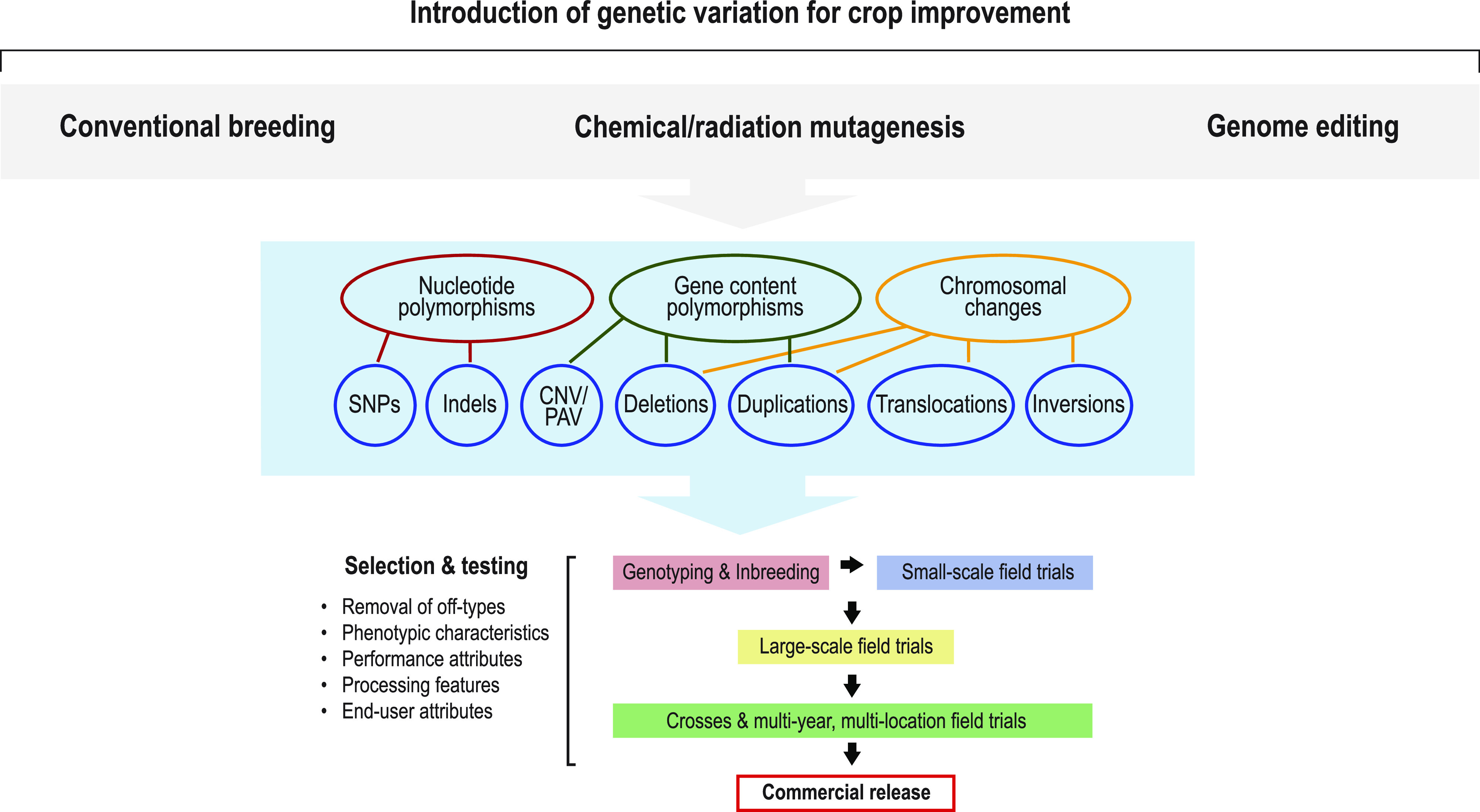
An overview of conventional and modern mutation breeding approaches for crop improvement. The figure illustrates the systematic approach for introducing intended and unintended genomic variation in crops for trait discovery, germplasm development, and commercial release of new crop varieties. After the introduction of genomic variation, the mutant populations go through a series of selection and testing to remove undesirable mutations and phenotypic variations. The best-performing line is selected for subsequent commercial release. This breeding process is common to all methods used for crop product development (Kaiser et al., 2020).
None
None

References

    1. Adli M.(2018) The CRISPR tool kit for genome editing and beyond. Nat Commun 9: 1911. - PMC - PubMed
    1. Aflitos S, Schijlen E, de Jong H, de Ridder D, Smit S, Finkers R, Wang J, Zhang G, Li N, Mao L, et al. ; 100 Tomato Genome Sequencing Consortium (2014) Exploring genetic variation in the tomato (Solanum section Lycopersicon) clade by whole-genome sequencing. Plant J 80: 136–148 - PubMed
    1. Aguilar-Meléndez A, Morrell PL, Roose ML, Kim S-C(2009) Genetic diversity and structure in semiwild and domesticated chiles (Capsicum annuum; Solanaceae) from Mexico. Am J Bot 96: 1190–1202 - PubMed
    1. Ahloowalia B, Maluszynski M, Nichterlein K(2004) Global impact of mutation-derived varieties. Euphytica 135: 187–204
    1. Akcakaya P, Bobbin ML, Guo JA, Malagon-Lopez J, Clement K, Garcia SP, Fellows MD, Porritt MJ, Firth MA, Carreras A, et al. (2018) In vivo CRISPR editing with no detectable genome-wide off-target mutations. Nature 561: 416–419 - PMC - PubMed

Publication types

LinkOut - more resources