


INDUCED PLURIPOTENT STEM CELLS FOR MODELLING ENERGETIC ALTERATIONS IN HYPERTROPHIC CARDIOMYOPATHY
- PMID: 32457935
- PMCID: PMC7250397
INDUCED PLURIPOTENT STEM CELLS FOR MODELLING ENERGETIC ALTERATIONS IN HYPERTROPHIC CARDIOMYOPATHY
Abstract
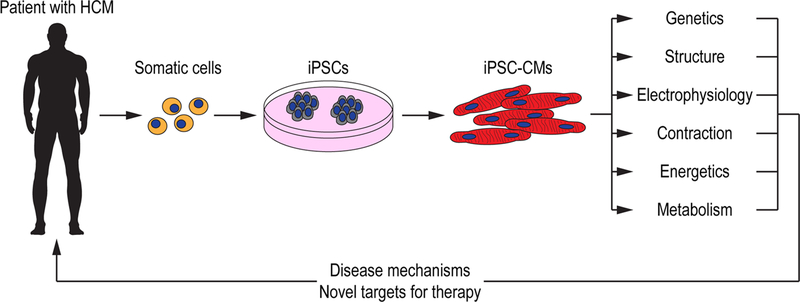
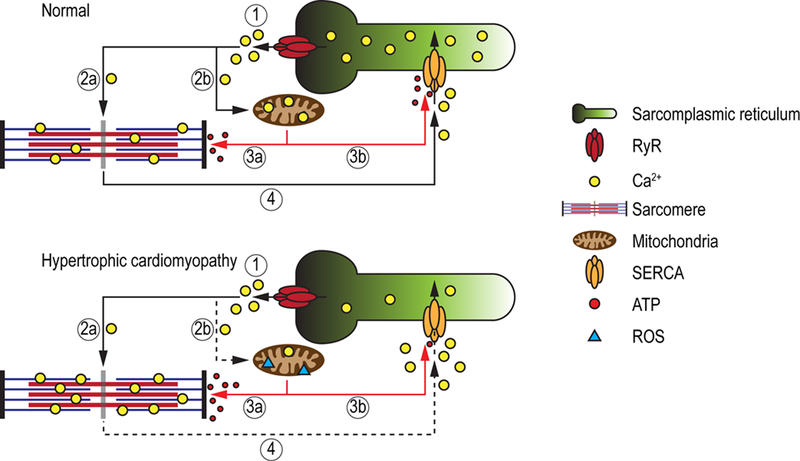
Hypertrophic cardiomyopathy (HCM) is one of the most commonly inherited cardiac disorders that manifests with increased ventricular wall thickening, cardiomyocyte hypertrophy, disarrayed myofibers and interstitial fibrosis. The major pathophysiological features include, diastolic dysfunction, obstruction of the left ventricular outflow tract and cardiac arrhythmias. Mutations in genes that encode mostly for sarcomeric proteins have been associated with HCM but, despite the abundant research conducted to decipher the molecular mechanisms underlying the disease, it remains unclear as to how a primary defect in the sarcomere could lead to secondary phenotypes such as cellular hypertrophy. Mounting evidence suggests energy deficiency could be an important contributor of disease pathogenesis as well. Various animal models of HCM have been generated for gaining deeper insight into disease pathogenesis, however species variation between animals and humans, as well as the limited availability of human myocardial samples, has encouraged researchers to seek alternative 'humanized' models. Using induced pluripotent stem cells (iPSCs), human cardiomyocytes (CMs) have been generated from patients with HCM for investigating disease mechanisms. While these HCM-iPSC models demonstrate most of the phenotypic traits, it is important to ascertain if they recapitulate all pathophysiological features, especially that of energy deficiency. In this review we discuss the currently established HCM-iPSC models with emphasis on altered energetics.
Keywords: Hypertrophic cardiomyopathy (HCM); cardiomyocytes; disease modelling; energetics; induced pluripotent stem cells (iPSCs); metabolism.
Figures
References
-
- Abraham MR, Bottomley PA, Dimaano VL, Pinheiro A, Steinberg A, Traill TA, Abraham TP, Weiss RG (2013) Creatine kinase adenosine triphosphate and phosphocreatine energy supply in a single kindred of patients with hypertrophic cardiomyopathy. The American journal of cardiology 112:861–866. - PMC - PubMed
-
- Aoyama T, Souri M, Ushikubo S, Kamijo T, Yamaguchi S, Kelley RI, Rhead WJ, Uetake K, Tanaka K, Hashimoto T (1995) Purification of human very-long-chain acyl-coenzyme A dehydrogenase and characterization of its deficiency in seven patients. The Journal of clinical investigation 95:2465–2473. - PMC - PubMed
-
- Ashrafian H, McKenna WJ, Watkins H (2011) Disease pathways and novel therapeutic targets in hypertrophic cardiomyopathy. Circulation research 109:86–96. - PubMed
-
- Authors/Task Force m et al. (2014) 2014 ESC Guidelines on diagnosis and management of hypertrophic cardiomyopathy: the Task Force for the Diagnosis and Management of Hypertrophic Cardiomyopathy of the European Society of Cardiology (ESC). European heart journal 35:2733–2779. - PubMed
Grants and funding
LinkOut - more resources
Full Text Sources