


Evaluating the use of posterior oropharyngeal saliva in a point-of-care assay for the detection of SARS-CoV-2
- PMID: 32459137
- PMCID: PMC7448919
- DOI: 10.1080/22221751.2020.1775133
Evaluating the use of posterior oropharyngeal saliva in a point-of-care assay for the detection of SARS-CoV-2
Abstract
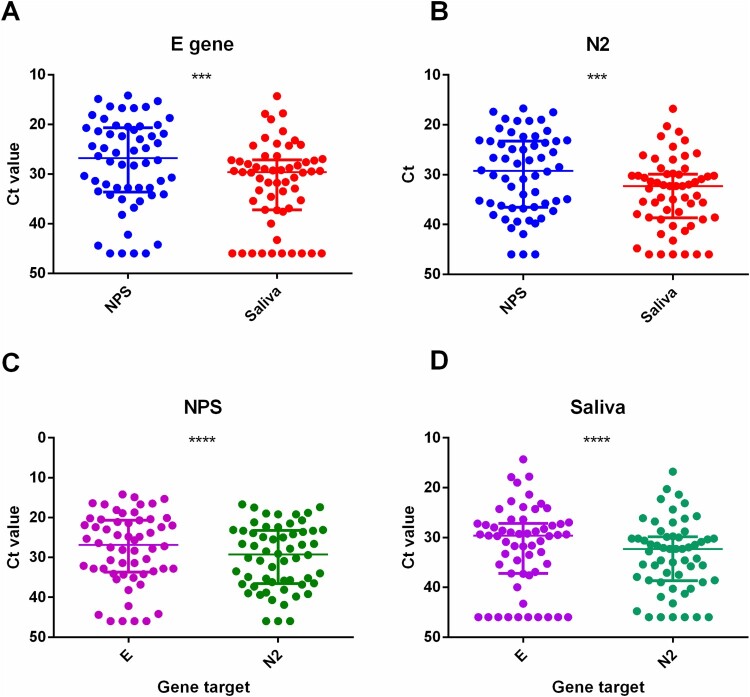
During the Coronavirus disease 2019 (COVID-19) pandemic, logistic problems associated with specimen collection limited the SARS-CoV-2 testing, especially in the community. In this study, we assessed the use of posterior oropharyngeal saliva as specimens for the detection of SARS-CoV-2 in an automated point-of-care molecular assay. Archived nasopharyngeal swab (NPS) and posterior oropharyngeal saliva specimens of 58 COVID-19 patients were tested with the Xpert® Xpress SARS-CoV-2 assay. SARS-CoV-2 was detected in either NPS or saliva specimens of all patients. Among them, 84.5% (49/58) tested positive in both NPS and saliva, 10.3% (6/58) tested positive in NPS only, and 5.2% (3/58) tested positive in saliva only. No significant difference in the detection rate was observed between NPS and saliva (McNemar's test p = 0.5078). The detection rate was slightly higher for N2 (NPS 94.8% and Saliva 93.1%) than that of the E gene target (Saliva: 89.7% vs 82.8%) on both specimen types. Significantly earlier median Ct value was observed for NPS comparing to that of saliva on both E (26.8 vs 29.7, p = 0.0002) and N2 gene target (29.3 vs 32.3, p = 0.0002). The median Ct value of E gene target was significantly earlier than that of the N2 gene target for both NPS (26.8 vs 29.3, p < 0.0001) and saliva (29.7 vs 32.3, p < 0.0001). In conclusion, posterior oropharyngeal saliva and NPS were found to have similar detection rates in the point-of-care test for SARS-CoV-2 detection. Since posterior oropharyngeal saliva can be collected easily, the use of saliva as an alternative specimen type for SARS-CoV-2 detection is recommended.
Keywords: COVID-19; SARS-CoV-2; nasopharyngeal swab; point-of-care testing; saliva.
Conflict of interest statement
No potential conflict of interest was reported by the author(s).
Figures
References
-
- Salathe M, Althaus CL, Neher R, et al. COVID-19 epidemic in Switzerland: on the importance of testing, contact tracing and isolation. Swiss Med Wkly. 2020;150:w20225. - PubMed
MeSH terms
Substances
LinkOut - more resources
Full Text Sources
Other Literature Sources
Medical
Miscellaneous
