Review
. 2020 Jun;6(6):478-488.
doi: 10.1016/j.trecan.2020.02.021. Epub 2020 Mar 18.

RAC1 as a Therapeutic Target in Malignant Melanoma

Affiliations
Review

RAC1 as a Therapeutic Target in Malignant Melanoma

Alexa C Cannon et al. Trends Cancer. 2020 Jun.

Abstract

Small GTPases of the RAS and RHO families are related signaling proteins that, when activated by growth factors or by mutation, drive oncogenic processes. While activating mutations in KRAS, NRAS, and HRAS genes have long been recognized and occur in many types of cancer, similar mutations in RHO family genes, such as RAC1 and RHOA, have only recently been detected as the result of extensive cancer genome-sequencing efforts and are linked to a restricted set of malignancies. In this review, we focus on the role of RAC1 signaling in malignant melanoma, emphasizing recent advances that describe how this oncoprotein alters melanocyte proliferation and motility and how these findings might lead to new therapeutics in RAC1-mutant tumors.

Keywords: cancer therapeutics; driver mutations; effectors; fast-cycling; malignant melanoma; signal transduction; small GTPases.


Figures

Figure 1.
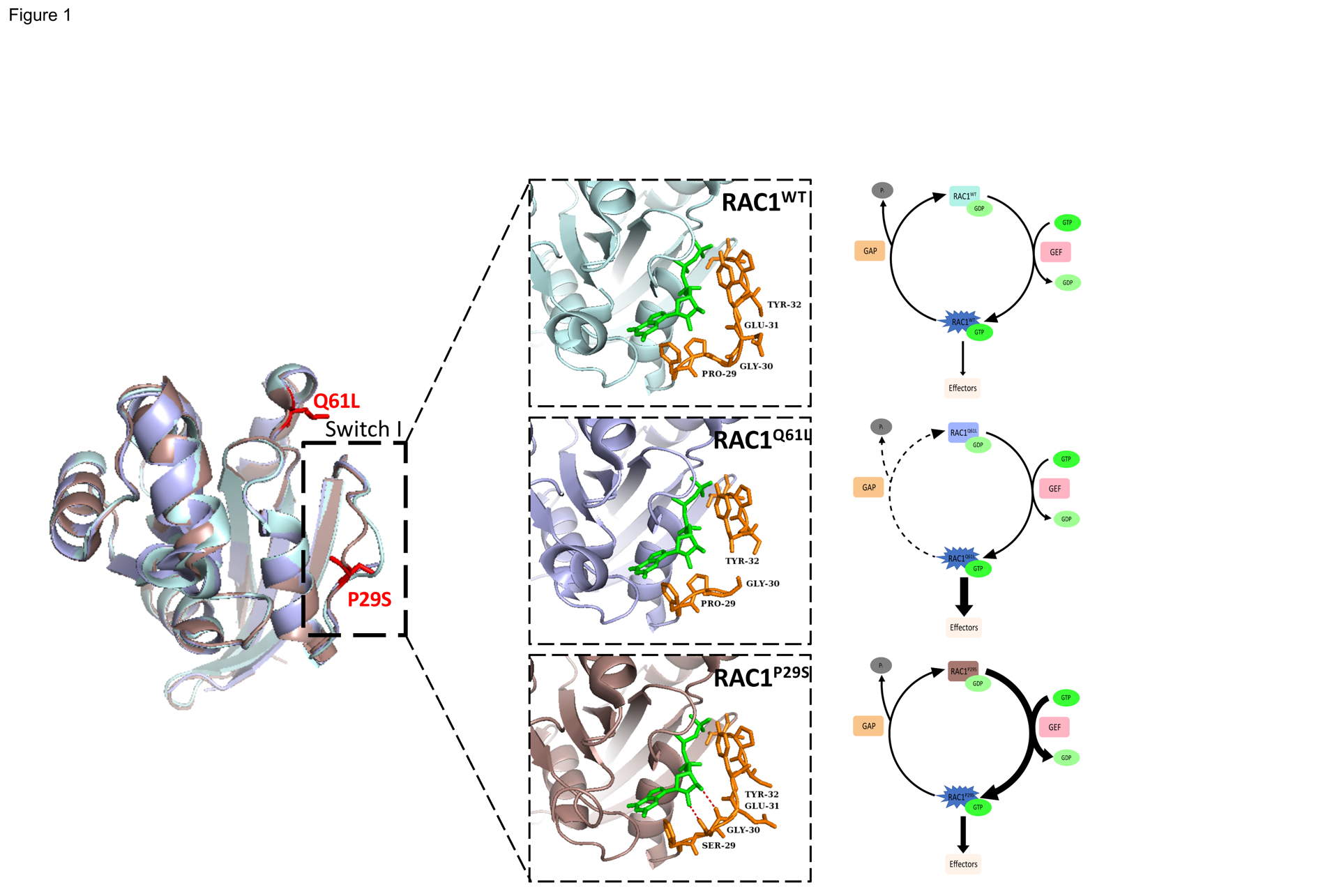
Figure 1.. Structure and Biochemistry of Wild-type RAC1, the Constitutively Active RAC1Q61L mutant, and the Fast Cycling RAC1P29S Mutant.
Comparison of crystal structures of RAC1WT (light blue, PDB 3TH5) with RAC1Q61L (light purple, PDB 4GZL), and RAC1P29S (dark pink, PDB 3SBE) in complex with the slow hydrolyzing GTP analog GMPPNP (green). RAC1P29S possesses a more flexible switch I domain than RACWT and RAC1Q61L. The proline to serine substitution enables hydrogen bonding between Ser-29 and Gly-30 of switch I and GTP and constitutes the difference between fast cycling mutations such as P29S and GTP-hydrolysis deficient mutations such as Q61L. Residue 29 and surrounding residues are displayed in orange stick format to illustrate hydrogen bonding (red).
Figure 2.
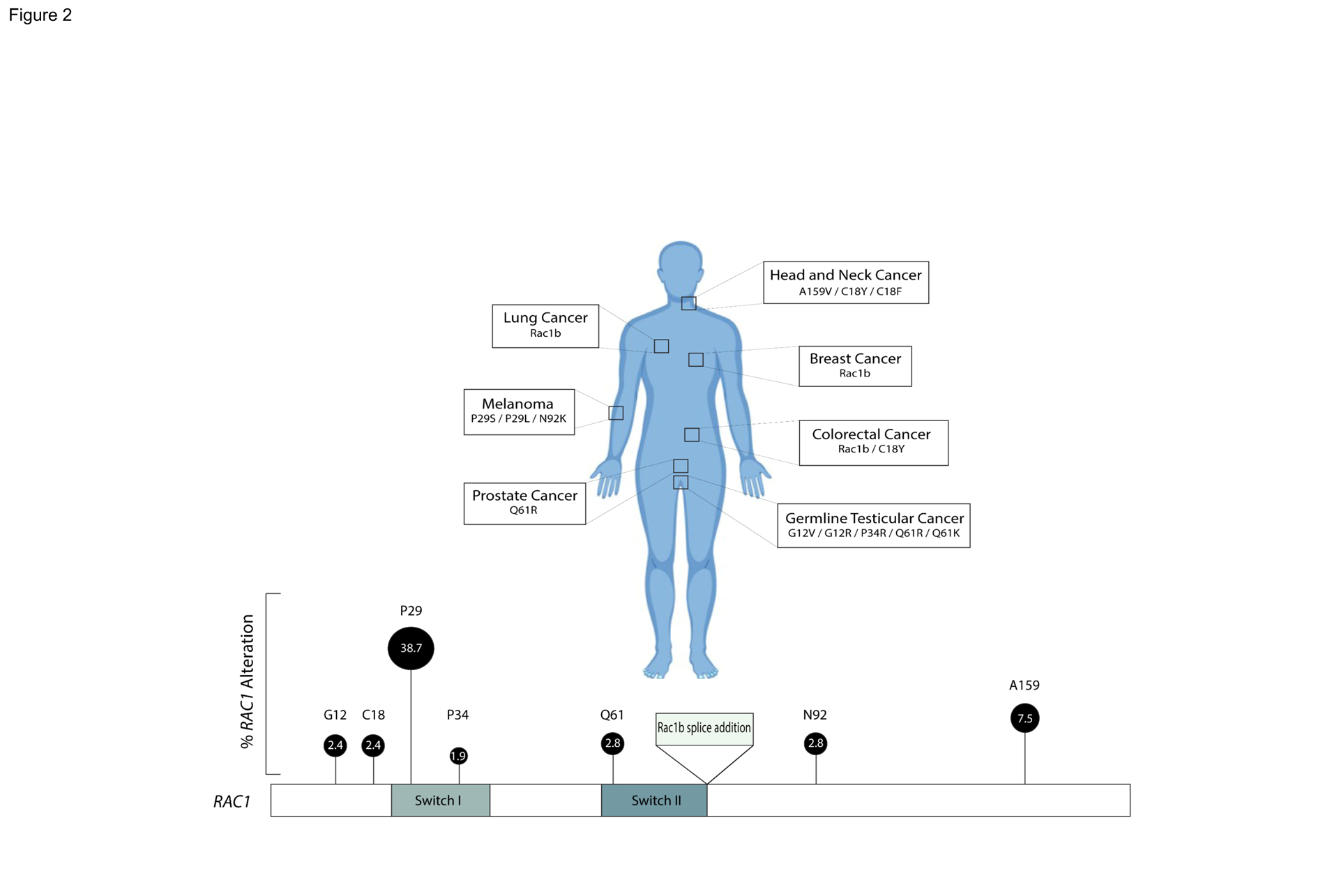
Figure 2.. RAC1 Variations and Frequency in Cancer.
Representation of RAC1 hotspots and associated cancers. RAC1 point mutations associated with various types of cancer are depicted. Some of the most common cancer-associated mutations affect either the switch 1 (residues 26–45) or switch 2 (residues 59–74) region of RAC1. These regions represent key structural elements in the GTPase, mediated interactions with effectors and GEFs, respectively, and contain conserved residues important for nucleotide and Mg2+-ion coordination. The percentage of RAC1 hotspot mutations in RAC1-altered cancer is represented by height and size of locus marker. Frequencies are derived from cbioportal curated set of nonredundant studies.
Figure 3.
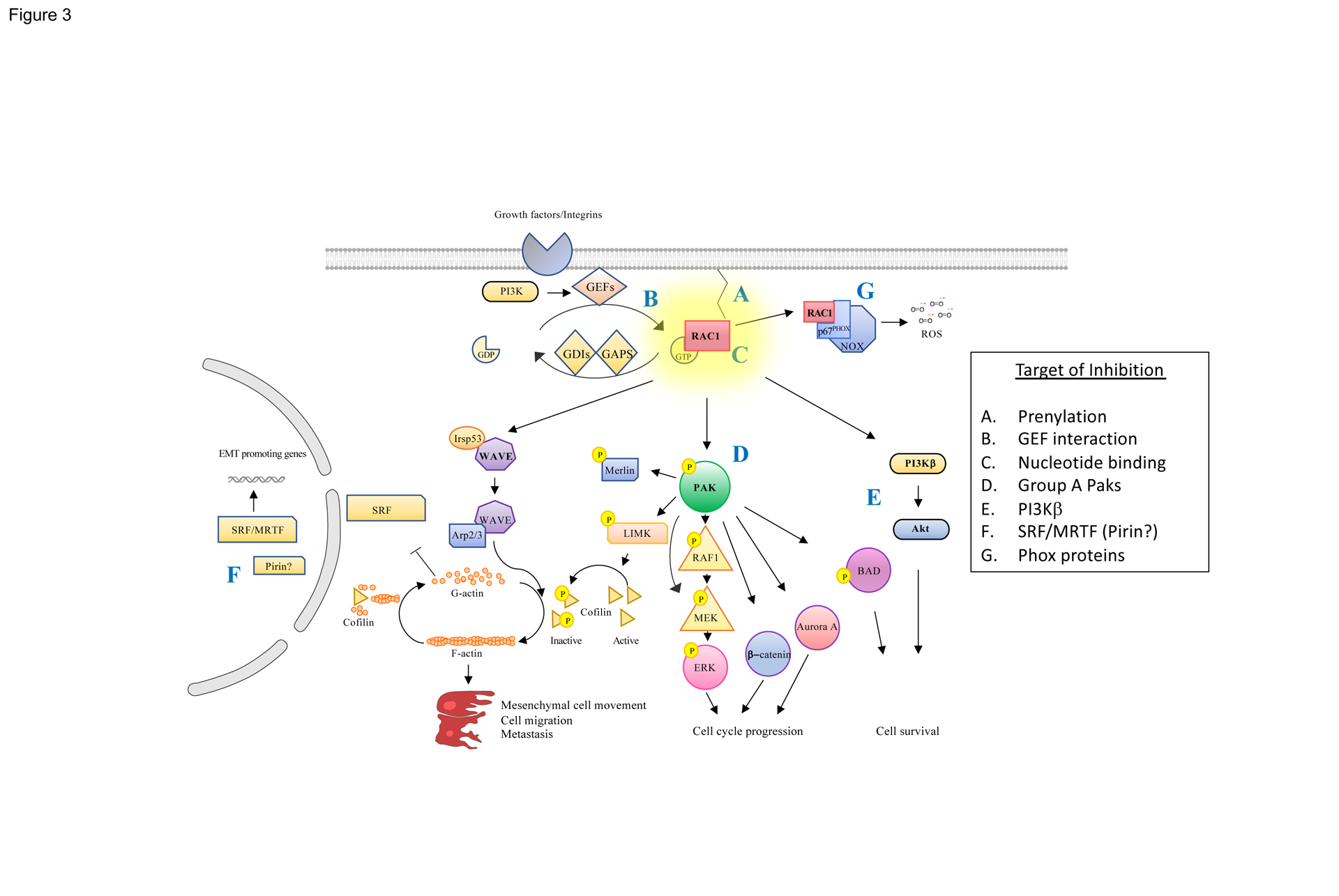
Figure 3.. Signaling from RAC1 and Potential Vulnerabilities to Targeted Therapy.
(A) RAC activation requires membrane localization mediated by prenyl modifications at its C-terminus, creating an opportunity for small inhibitors. (B) Fast-cycling mutants such as RAC1P29S, which rapidly exchange GDP for GTP, require stimulation by GEFs, and inhibitors of GEF/RAC interactions have been described, as have (C) molecules that displace bound GTP. (D) Effectors such as PAK (which regulates the activation of ERK, β-catenin, Aurora A, and BAD), (E) PI3Kβ, which regulates cell survival via AKT, and (F) WAVE2, which regulates actin polymerization and cytoskeletal structure, via IRSP53 and ARP2/3, as well as gene transcription via SRF/MRTF and, possibly, Pirin, are also potentially druggable. (G) ROS, generated by the RAC1 effectors p40Phox and p67Phox, may also play a role in oncogenic signaling from this small GTPase and are potentially targetable by small molecule inhibitors.

References

    1. Sorokina EM and Chernoff J (2005) Rho-GTPases: New members, new pathways. J Cell Biochem 94, 225–31. - PubMed
    1. Mack NA et al. (2011) The diverse roles of Rac signaling in tumorigenesis. Cell Cycle 10, 1571–81. - PMC - PubMed
    1. Etienne-Manneville S and Hall A (2002) Rho GTPases in cell biology. Nature 420, 629–35. - PubMed
    1. Qiu RG et al. (1995) An essential role for Rac in Ras transformation. Nature 374, 457–9. - PubMed
    1. Marcar L et al. (2019) Acquired resistance of EGFR-mutated lung cancer to tyrosine kinase inhibitor treatment promotes PARP inhibitor sensitivity. Cell Rep 27, 3422–3432 e4. - PMC - PubMed

Publication types

MeSH terms