


Utilization of personal protective equipment and associated factors among building construction workers in Addis Ababa, Ethiopia, 2019
- PMID: 32460738
- PMCID: PMC7251725
- DOI: 10.1186/s12889-020-08889-x
Utilization of personal protective equipment and associated factors among building construction workers in Addis Ababa, Ethiopia, 2019
Abstract
Background: Personal protective equipment (PPE) is a material, device, equipment, or clothing used or worn by workers to reduce their chance of exposure or contact with any harmful material or energy that causes injury, disease, or even death. The use of PPE is a universal legal requirement to reduce occupational injuries and illnesses in the workplace. Therefore, this study was conducted to assess PPE utilization and its associated factors among building construction workers in Addis Ababa, Ethiopia, 2019.
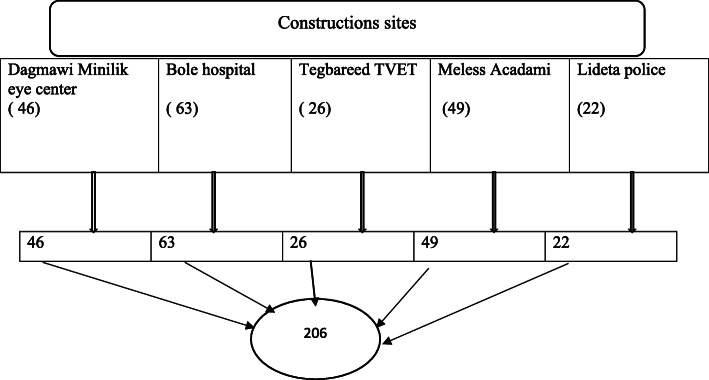
Methods: Institution based quantitative cross-sectional study was conducted on the selected construction sites of Addis Ababa city from April 1 to May 18, 2019. Data were collected among all (206) building construction workers via interviewer-administered questionnaires. Data were entered into Epi info version 7.1 and exported to SPSS version 25 statistical software for analysis. Variables with a p-value of less than 0.20 in bivariate analysis were included in multivariate logistic regression. Finally, variables with a p-value of less than 0.05 in multivariate analysis were considered as significantly associated.
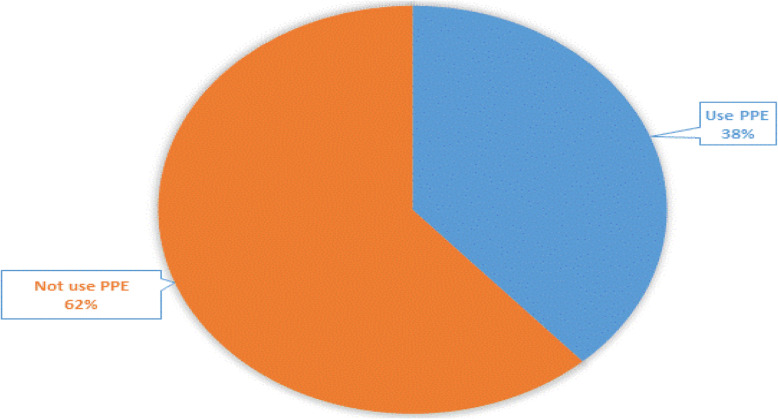
Results: The utilization of at least one PPE among building construction workers in Addis Ababa was found to be 38%. The majority (41.1%) of the participants' reason for not using PPE were the unavailability of PPE followed by absence of orientation on using PPE (21.3%). The majority (35.3%) and (32.2%) of participants knew abrasion as a type of injury and suffered from abrasion respectively. Factors associated with utilization of PPE were the presence of training on PPE use (AOR = 4.8; 95% CI: 2.3, 10.3), presence of safety training (AOR = 2,8; 95% CI:1.5, 5.2), safety orientation before commencing work (AOR = 4.0; 95% CI:1.9, 9.0) and presence of supervision (AOR = 5.0; 95% CI:1.9,13).
Conclusions: PPE utilization among building construction workers in Addis Ababa was low. The main reasons for non-utilization of PPE were unavailability of the materials and the absence of orientation on using PPE. The presence of PPE use training, presence of safety training, safety orientation, and governmental supervision were factors associated with PPE utilization. There should be continuous supervision of construction sites to assure all workers get material and training on how to use it.
Keywords: Construction workers; Ethiopia; Personal protective equipment.
Conflict of interest statement
The authors declare that they have no competing interests.
Figures
References
-
- Goetsch DL. Occupational safety and health. Pearson India; 2010.
-
- Kakaei H, Mirzaei Alavijeh M, Mahboubi M, Maghsodi Moghadam R, Zinat Motlagh F, Farasaty F. Factors related to personal protective equipment use between factory cement employ in Ilam, the west of Iran: application of BASNEF model. J Sci Today’s World. 2014;3(2):56–59.
-
- Shinde M, Sadare S, Potdar N. Awareness of occupational health hazards among staff nurses. Int J Sci Res. 2016;5(12):2319–7064.
-
- Tolera TB. Occupational hazards in the construction industry: case studies from housing and construction workers at Addis Ababa. Ethiopia Int J Res Granthaalayah. 2016;4(9):84–96.
MeSH terms
LinkOut - more resources
Full Text Sources
Medical
Miscellaneous
