


Exosomal neurofilament light: A prognostic biomarker for remote symptoms after mild traumatic brain injury?
- PMID: 32461282
- PMCID: PMC7455370
- DOI: 10.1212/WNL.0000000000009577
Exosomal neurofilament light: A prognostic biomarker for remote symptoms after mild traumatic brain injury?
Abstract
Objective: To measure exosomal and plasma levels of candidate blood biomarkers in veterans with history of mild traumatic brain injury (mTBI) and test their relationship with chronic symptoms.
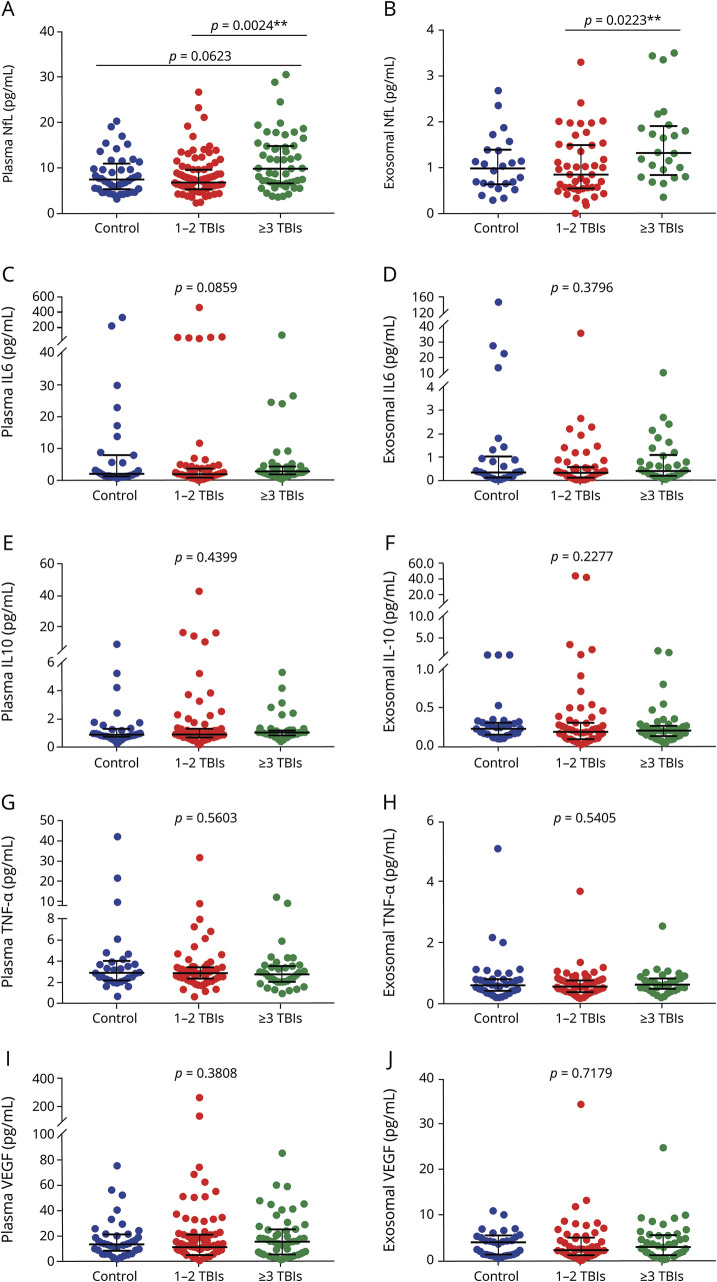
Methods: Exosomal and plasma levels of neurofilament light (NfL) chain, tumor necrosis factor (TNF)-α, interleukin (IL)-6, IL-10, and vascular endothelial growth factor (VEGF) were measured using an ultrasensitive assay in a cohort of 195 veterans, enrolled in the Chronic Effects of Neurotrauma Consortium Longitudinal Study. We examined relationships between candidate biomarkers and symptoms of postconcussive syndrome (PCS), posttraumatic stress disorder (PTSD), and depression. Biomarker levels were compared among those with no traumatic brain injury (TBI) (controls), 1-2 mTBIs, and repetitive (3 or more) mTBIs.
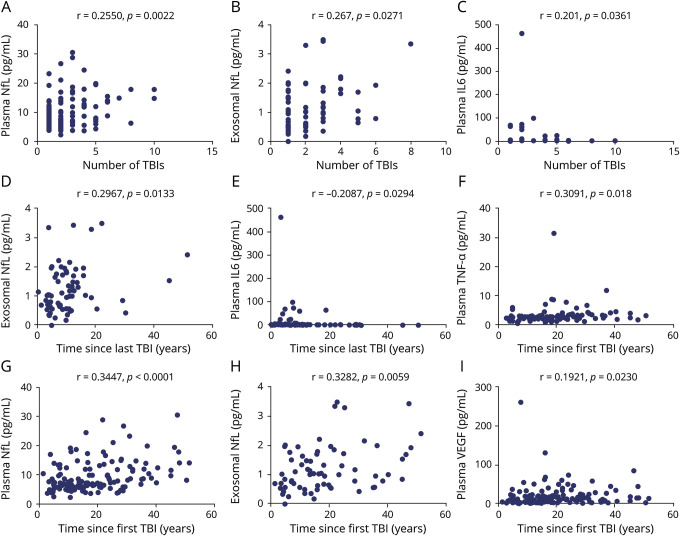
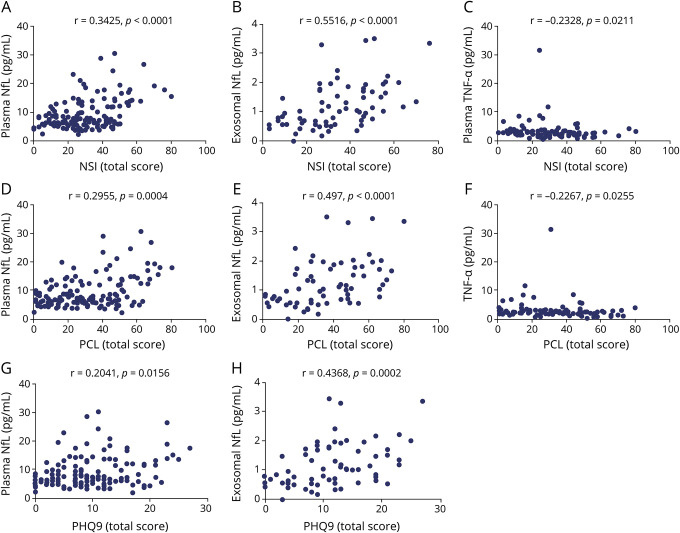
Results: Elevated exosomal and plasma levels of NfL were associated with repetitive mTBIs and with chronic PCS, PTSD, and depression symptoms. Plasma TNF-α levels correlated with PCS and PTSD symptoms. The total number of mTBIs correlated with exosomal and plasma NfL levels and plasma IL-6. Increased number of years since the most recent TBI correlated with higher exosomal NfL and lower plasma IL-6 levels, while increased number of years since first TBI correlated with higher levels of exosomal and plasma NfL, as well as plasma TNF-α and VEGF.
Conclusion: Repetitive mTBIs are associated with elevated exosomal and plasma levels of NfL, even years following these injuries, with the greatest elevations in those with chronic PCS, PTSD, and depression symptoms. Our results suggest a possible neuroinflammatory and axonal disruptive basis for symptoms that persist years after mTBI, especially repetitive.
© 2020 American Academy of Neurology.
Figures
Comment in
-
Comment: Biomarkers for mild traumatic brain injury: Role of the exosomes.Neurology. 2020 Jun 9;94(23):1017. doi: 10.1212/WNL.0000000000009574. Epub 2020 May 27. Neurology. 2020. PMID: 32461280 No abstract available.
-
Reader Response: Exosomal Neurofilament Light: A Prognostic Biomarker for Remote Symptoms After Mild Traumatic Brain Injury?Neurology. 2021 Apr 13;96(15):725-726. doi: 10.1212/WNL.0000000000011784. Neurology. 2021. PMID: 33846170 No abstract available.
-
Author Response: Exosomal Neurofilament Light: A Prognostic Biomarker for Remote Symptoms After Mild Traumatic Brain Injury?Neurology. 2021 Apr 13;96(15):726. doi: 10.1212/WNL.0000000000011786. Neurology. 2021. PMID: 33846171 No abstract available.
References
-
- Radhakrishnan R, Garakani A, Gross LS, et al. Neuropsychiatric aspects of concussion. Lancet Psychiatry 2016;3:1166–1175. - PubMed
Publication types
MeSH terms
Substances
Grants and funding
LinkOut - more resources
Full Text Sources
Medical
