Taenia solium Cysticercosis and Its Impact in Neurological Disease
- PMID: 32461308
- PMCID: PMC7254859
- DOI: 10.1128/CMR.00085-19
Taenia solium Cysticercosis and Its Impact in Neurological Disease
Abstract
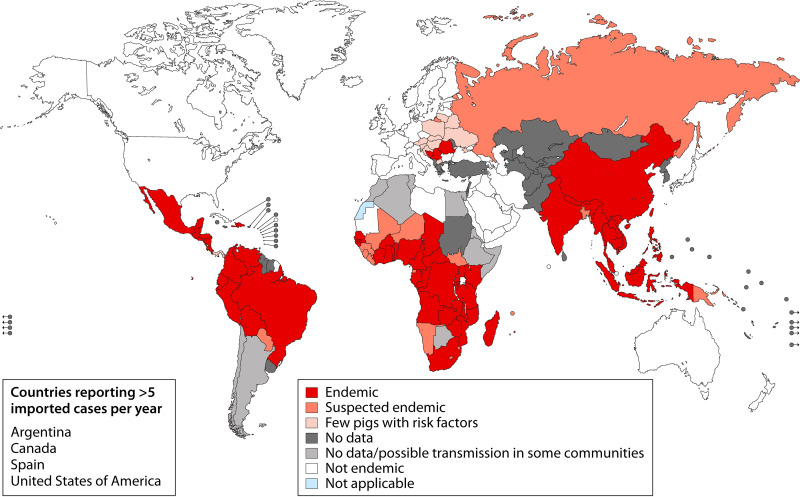
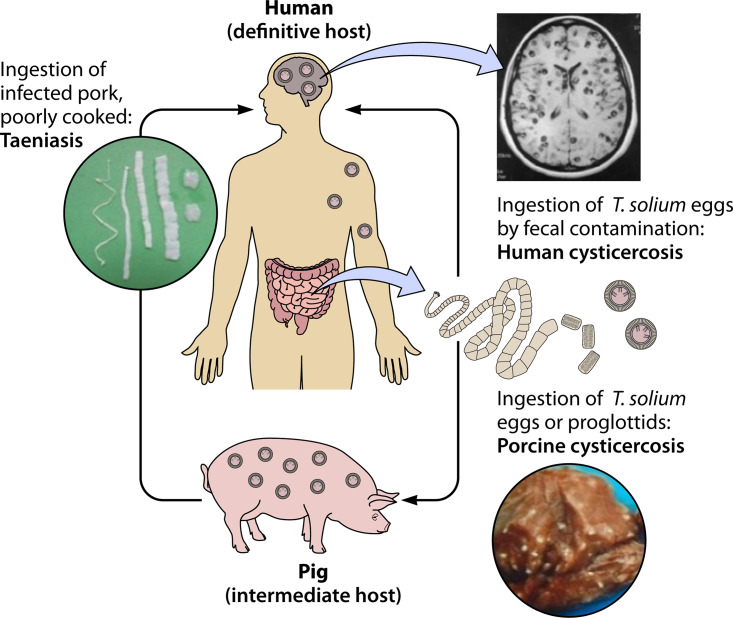
Taenia solium neurocysticercosis (NCC) is endemic in most of the world and contributes significantly to the burden of epilepsy and other neurological morbidity. Also present in developed countries because of immigration and travel, NCC is one of few diseases targeted for eradication. This paper reviews all aspects of its life cycle (taeniasis, porcine cysticercosis, human cysticercosis), with a focus on recent advances in its diagnosis, management, and control. Diagnosis of taeniasis is limited by poor availability of immunological or molecular assays. Diagnosis of NCC rests on neuroimaging findings, supported by serological assays. The treatment of NCC should be approached in the context of the particular type of infection (intra- or extraparenchymal; number, location, and stage of lesions) and has evolved toward combined symptomatic and antiparasitic management, with particular attention to modulating inflammation. Research on NCC and particularly the use of recently available genome data and animal models of infection should help to elucidate mechanisms of brain inflammation, damage, and epileptogenesis.
Keywords: Peru; Taenia solium; cysticercosis; epilepsy; neurocysticercosis.
Copyright © 2020 American Society for Microbiology.
Figures
References
-
- Grove DI. 1990. A history of human helminthology. CABI, Wallingford, England.
-
- Kean BH, Mott KE, Russell AJ. 1978. Tropical medicine and parasitology. Classic investigations, vol 2 Cornell University Press, Ithaca, NY.
-
- Brizzi K, Pelden S, Tshokey T, Nirola DK, Diamond MB, Klein JP, Tshering L, Deki S, Nidup D, Bruno V, Dorny P, Garcia HH, Mateen FJ, Bhutan Epilepsy Project. 2016. Neurocysticercosis in Bhutan: a cross-sectional study in people with epilepsy. Trans R Soc Trop Med Hyg 110:517–526. doi: 10.1093/trstmh/trw066. - DOI - PMC - PubMed
Publication types
MeSH terms
Substances
LinkOut - more resources
Full Text Sources