


Long-read bitter gourd (Momordica charantia) genome and the genomic architecture of nonclassic domestication
- PMID: 32461376
- PMCID: PMC7321978
- DOI: 10.1073/pnas.1921016117
Long-read bitter gourd (Momordica charantia) genome and the genomic architecture of nonclassic domestication
Abstract
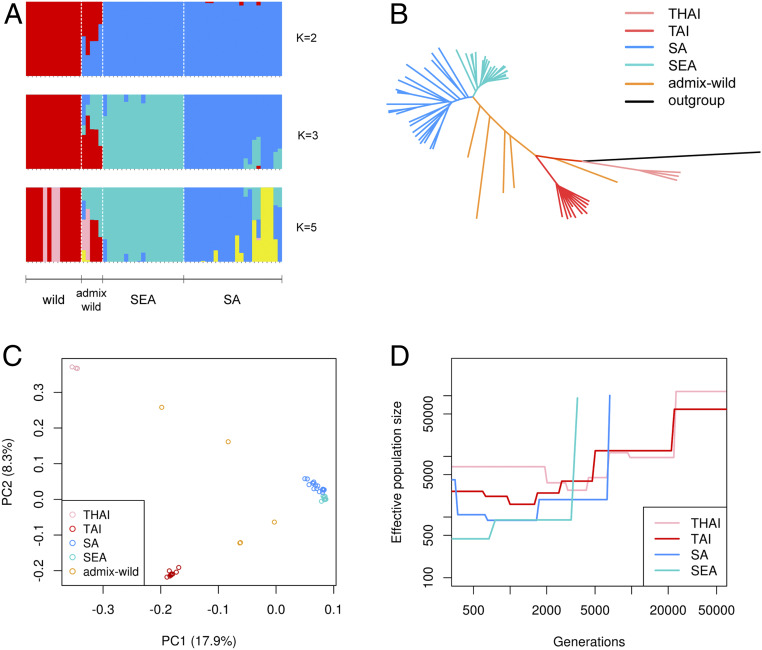
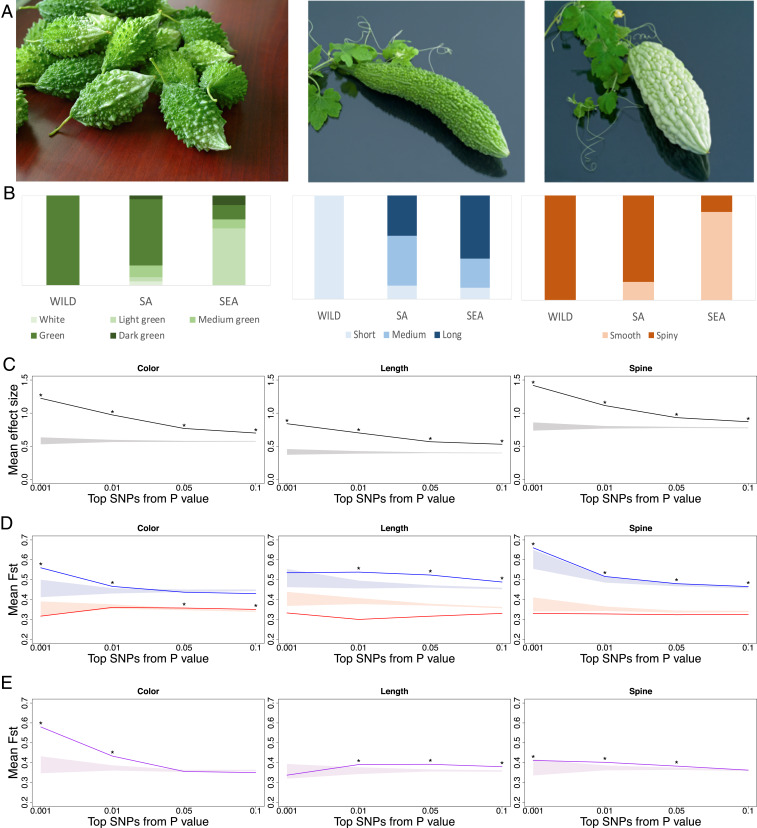
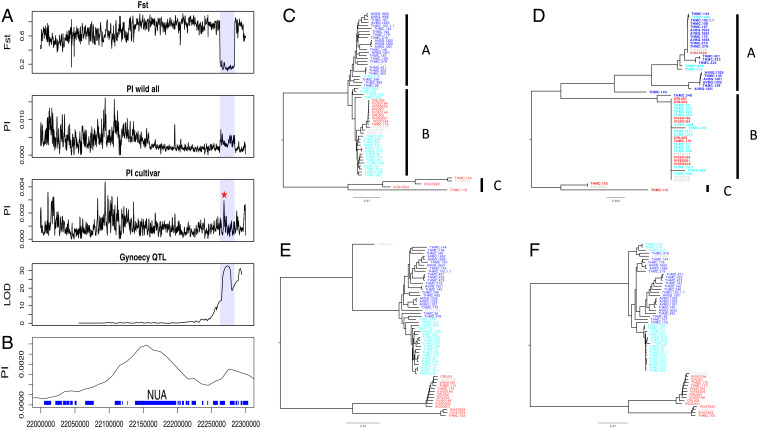
The genetic architecture of quantitative traits is determined by both Mendelian and polygenic factors, yet classic examples of plant domestication focused on selective sweep of newly mutated Mendelian genes. Here we report the chromosome-level genome assembly and the genomic investigation of a nonclassic domestication example, bitter gourd (Momordica charantia), an important Asian vegetable and medicinal plant of the family Cucurbitaceae. Population resequencing revealed the divergence between wild and South Asian cultivars about 6,000 y ago, followed by the separation of the Southeast Asian cultivars about 800 y ago, with the latter exhibiting more extreme trait divergence from wild progenitors and stronger signs of selection on fruit traits. Unlike some crops where the largest phenotypic changes and traces of selection happened between wild and cultivar groups, in bitter gourd large differences exist between two regional cultivar groups, likely reflecting the distinct consumer preferences in different countries. Despite breeding efforts toward increasing female flower proportion, a gynoecy locus exhibits complex patterns of balanced polymorphism among haplogroups, with potential signs of selective sweep within haplogroups likely reflecting artificial selection and introgression from cultivars back to wild accessions. Our study highlights the importance to investigate such nonclassic example of domestication showing signs of balancing selection and polygenic trait architecture in addition to classic selective sweep in Mendelian factors.
Keywords: Momordica charantia; artificial selection; domestication; genome assembly; population genetics.
Conflict of interest statement
The authors declare no competing interest.
Figures
Comment in
-
Reply to Renner: Meticulous investigation, not sequencing effort, leads to robust conclusion.Proc Natl Acad Sci U S A. 2020 Oct 6;117(40):24632-24633. doi: 10.1073/pnas.2015561117. Epub 2020 Sep 29. Proc Natl Acad Sci U S A. 2020. PMID: 32994346 Free PMC article. No abstract available.
-
Bitter gourd from Africa expanded to Southeast Asia and was domesticated there: A new insight from parallel studies.Proc Natl Acad Sci U S A. 2020 Oct 6;117(40):24630-24631. doi: 10.1073/pnas.2014454117. Epub 2020 Sep 29. Proc Natl Acad Sci U S A. 2020. PMID: 32994347 Free PMC article. No abstract available.
References
-
- Meyer R. S., Purugganan M. D., Evolution of crop species: Genetics of domestication and diversification. Nat. Rev. Genet. 14, 840–852 (2013). - PubMed
-
- Wang R.-L., Stec A., Hey J., Lukens L., Doebley J., The limits of selection during maize domestication. Nature 398, 236–239 (1999). - PubMed
-
- Konishi S. et al., An SNP caused loss of seed shattering during rice domestication. Science 312, 1392–1396 (2006). - PubMed
-
- Zaman M. Y., Alam S. S., Karyotype diversity in three cultivars of Momordica charantia L. Cytologia 74, 473–478 (2009).
Publication types
MeSH terms
LinkOut - more resources
Full Text Sources
