Review
. 2020 May 6:16:917-955.
doi: 10.3762/bjoc.16.83. eCollection 2020.

Recent applications of porphyrins as photocatalysts in organic synthesis: batch and continuous flow approaches

Affiliations
Review

Recent applications of porphyrins as photocatalysts in organic synthesis: batch and continuous flow approaches

Rodrigo Costa E Silva et al. Beilstein J Org Chem. .

Abstract

In this review we present relevant and recent applications of porphyrin derivatives as photocatalysts in organic synthesis, involving both single electron transfer (SET) and energy transfer (ET) mechanistic approaches. We demonstrate that these highly conjugated photosensitizers show increasing potential in photocatalysis since they combine both photo- and electrochemical properties which can substitute available metalloorganic photocatalysts. Batch and continuous-flow approaches are presented highlighting the relevance of enabling technologies for the renewal of porphyrin applications in photocatalysis. Finally, the reaction scale in which the methodologies were developed are highlighted since this is an important parameter in the authors' opinion.

Keywords: energy transfer; photocatalysis; photooxygenation; photoredox; porphyrins.


Figures
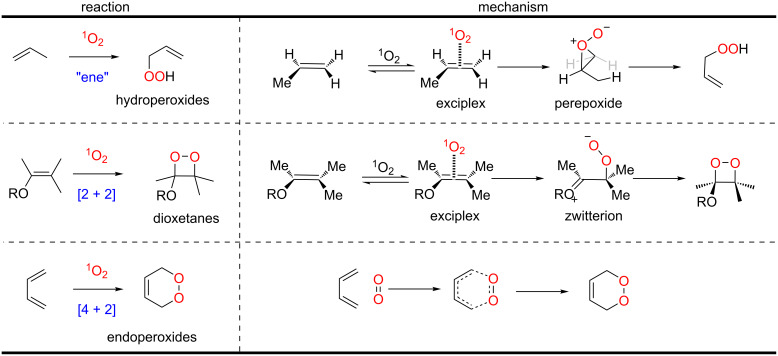
Figure 1
Figure 1
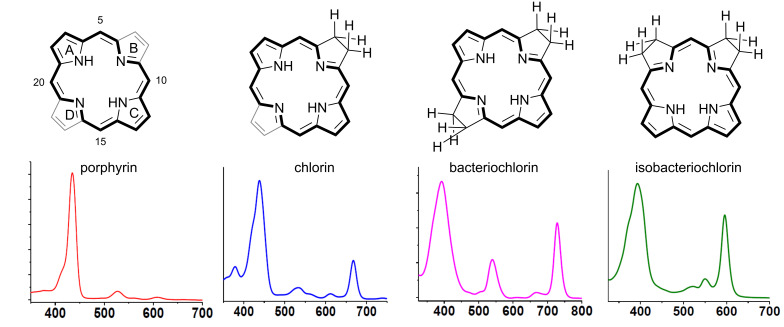
Chemical structures of the porphyrinoids and their absorption spectra: in bold are highlighted the 18 π aromatic system. Adapted from [7].
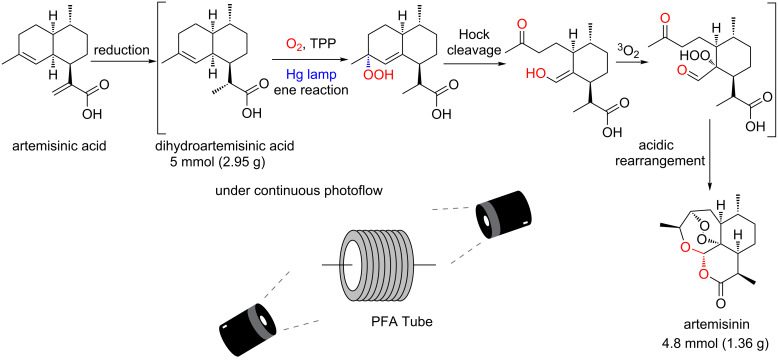
Figure 2
Figure 2
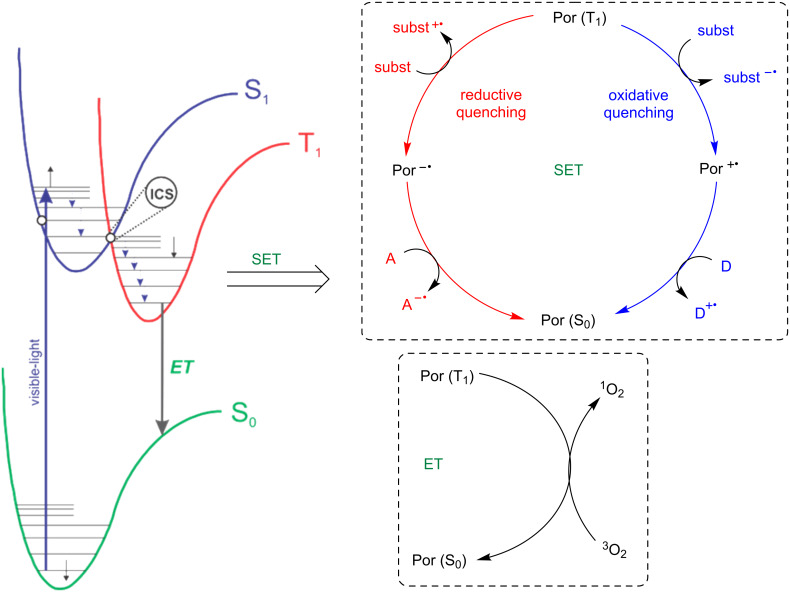
Photophysical and photochemical processes (Por = porphyrin). Adapted from [12,18].
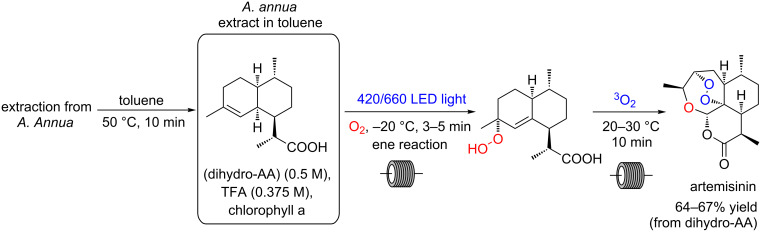
Figure 3
Figure 3
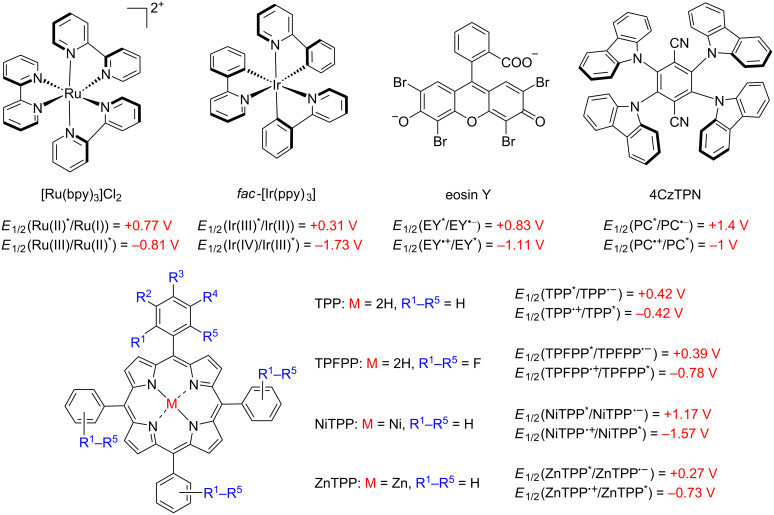
Main dual photocatalysts and their oxidative/reductive excited state potentials, including porphyrin derivatives. Adapted from [10,12,22].
Scheme 1
Scheme 1
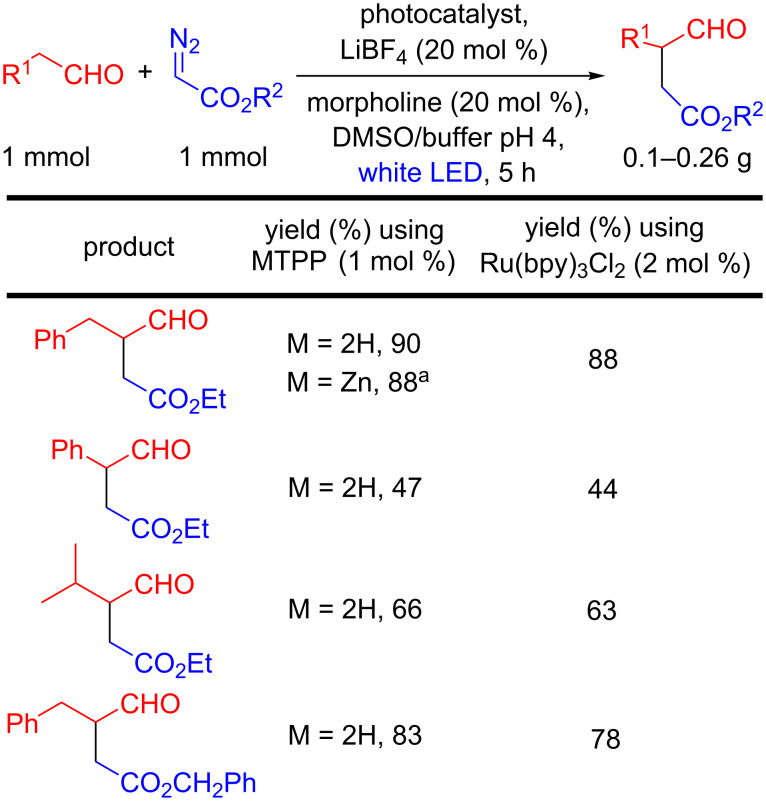
Photoredox alkylation of aldehydes with diazo acetates using porphyrins and a Ru complex. aUsing a loading of 0.1 mol % for ZnTPP.
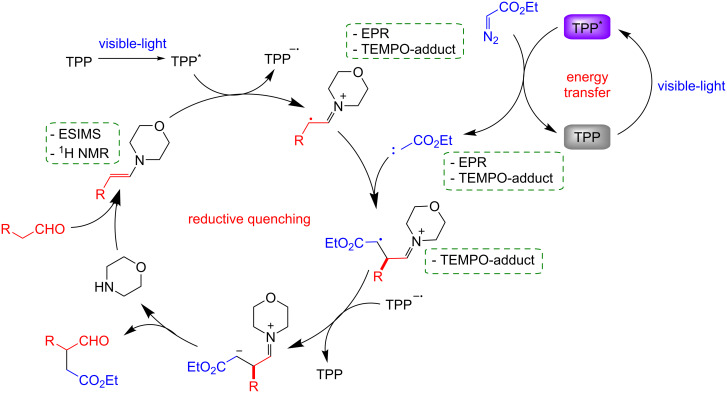
Scheme 2
Scheme 2
Proposed mechanism for the alkylation of aldehydes with diazo acetates in the presence of TPP.
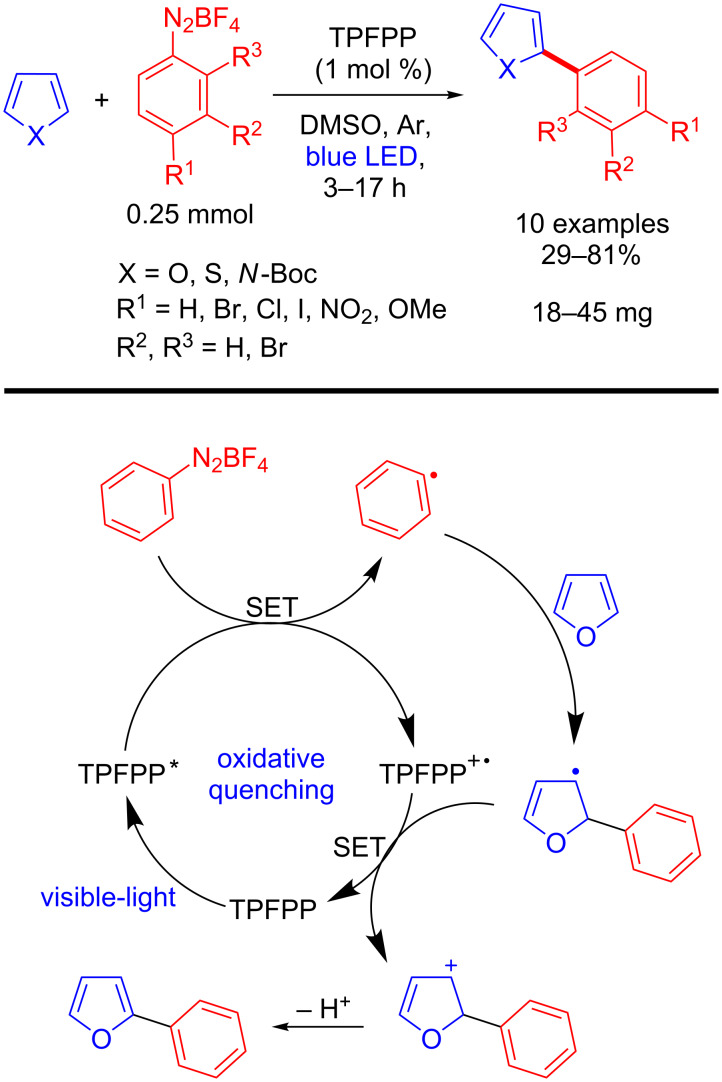
Scheme 3
Scheme 3
Arylation of heteroarenes with aryldiazonium salts using TPFPP as photocatalyst, and corresponding mechanism.
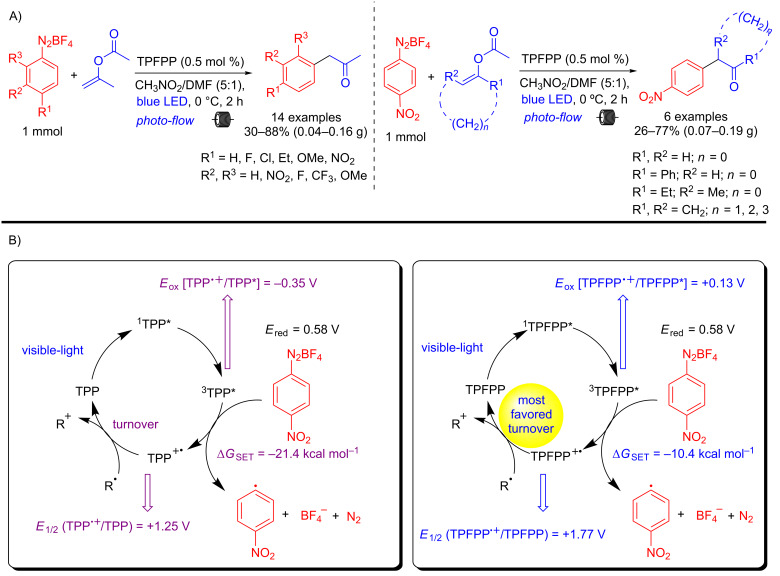
Scheme 4
Scheme 4
A) Scope with different aryldiazonium salts and enol acetates. B) Photocatalytic cycles and comparison between TPP and TPFPP.
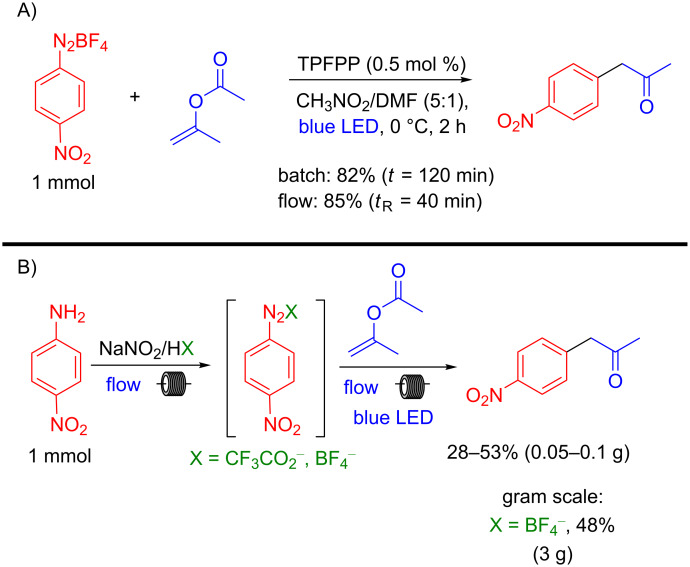
Scheme 5
Scheme 5
Photoarylation of isopropenyl acetate A) Comparison between batch and continuous-flow approaches and B) end-to-end protocol.
Scheme 6
Scheme 6
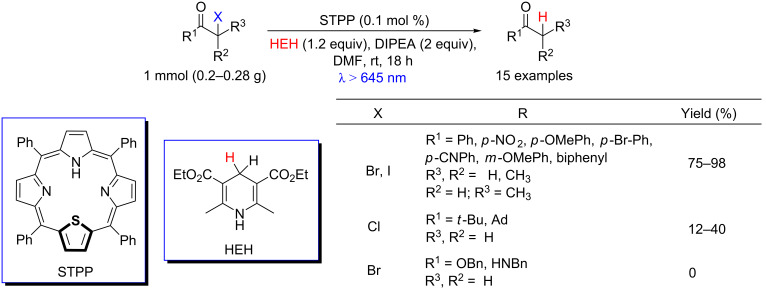
Dehalogenation induced by red light using thiaporphyrin (STPP).
Scheme 7
Scheme 7
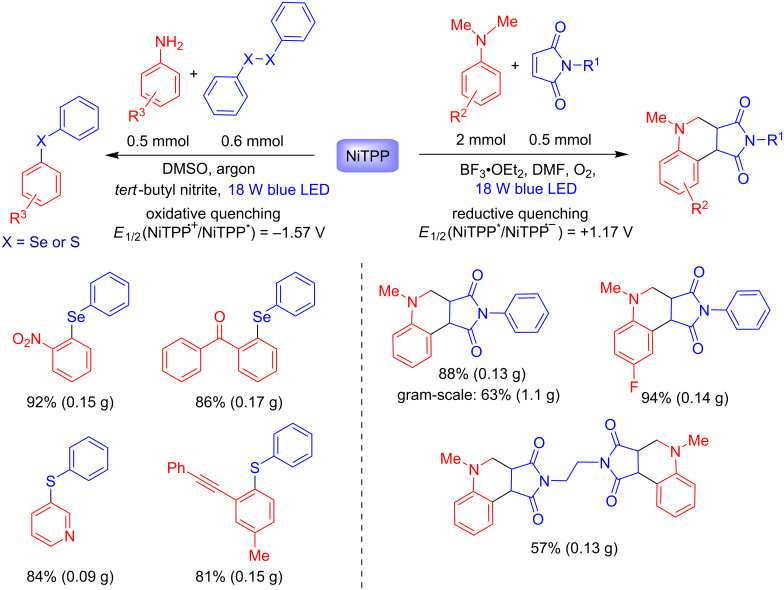
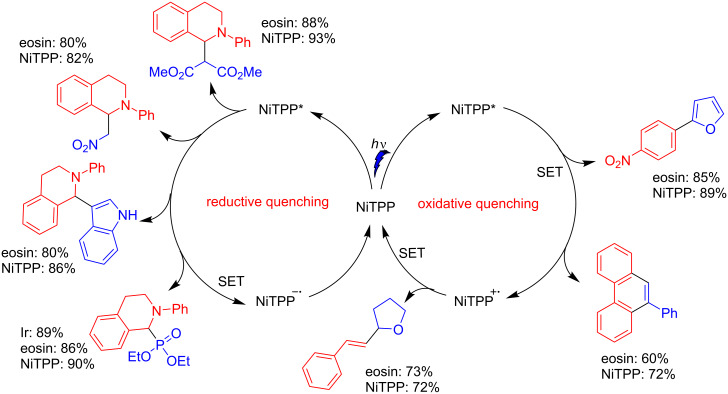
Applications of NiTPP as both photoreductant and photooxidant.
Scheme 8
Scheme 8
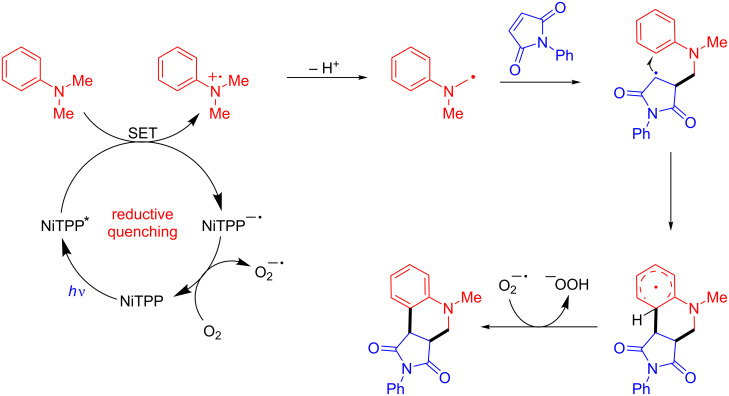
Proposed mechanism for obtaining tetrahydroquinolines by reductive quenching.
Scheme 9
Scheme 9
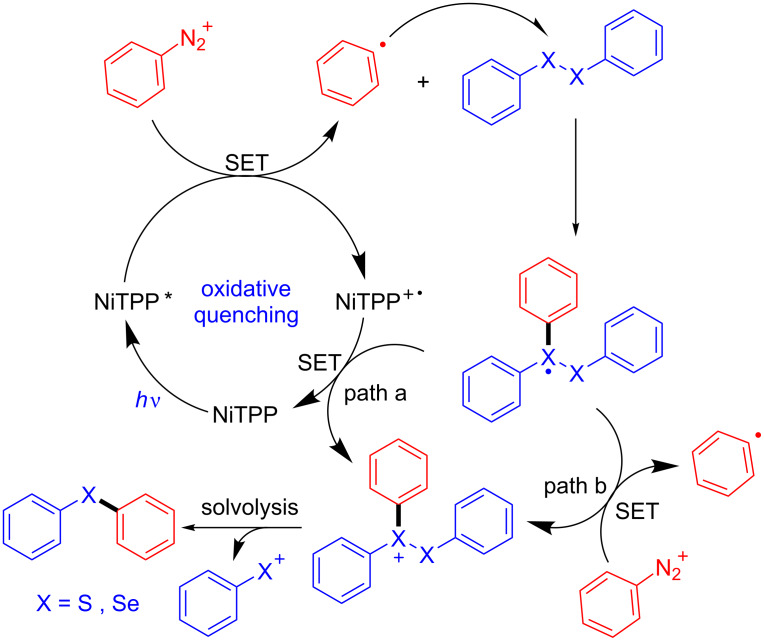
Selenylation and thiolation of anilines.
Scheme 10
Scheme 10
NiTPP as photoredox catalyst in oxidative and reductive quenching, in comparison with other photocatalysts.
Scheme 11
Scheme 11
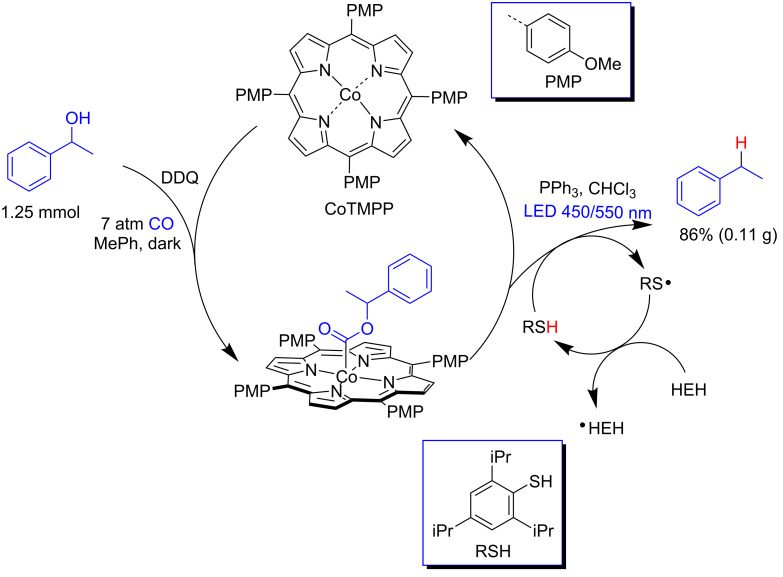
C–O bond cleavage of 1-phenylethanol using a cobalt porphyrin (CoTMPP) under visible light.
Scheme 12
Scheme 12
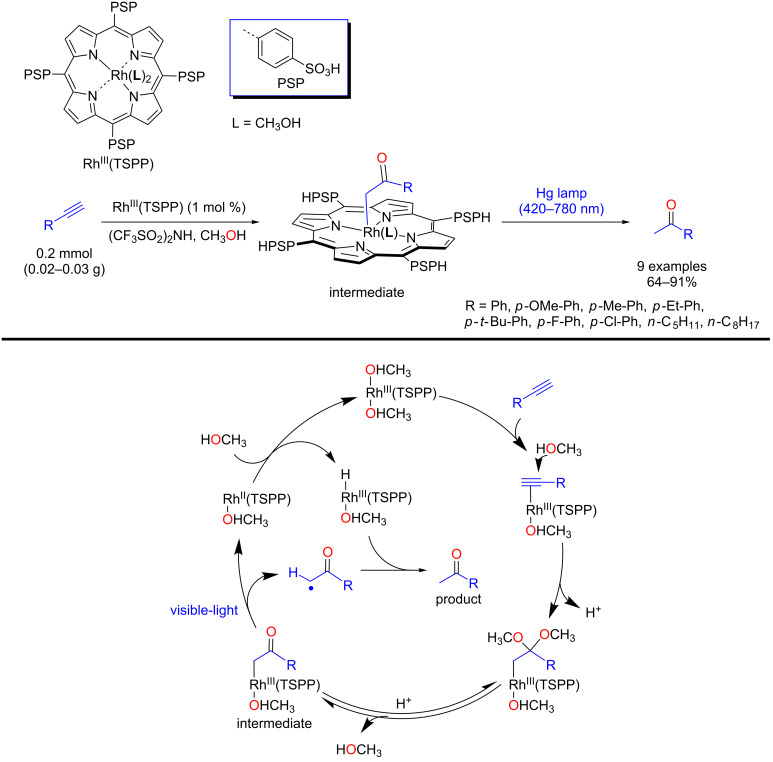
Hydration of terminal alkynes by RhIII(TSPP) under visible light irradiation.
Scheme 13
Scheme 13
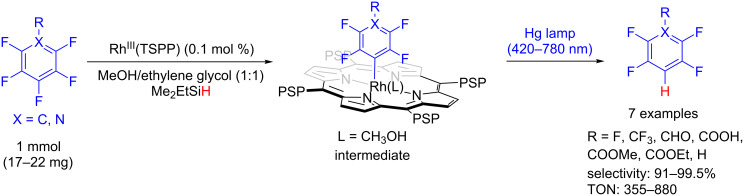
Regioselective photocatalytic hydro-defluorination of perfluoroarenes by RhIII(TSPP).
Scheme 14
Scheme 14
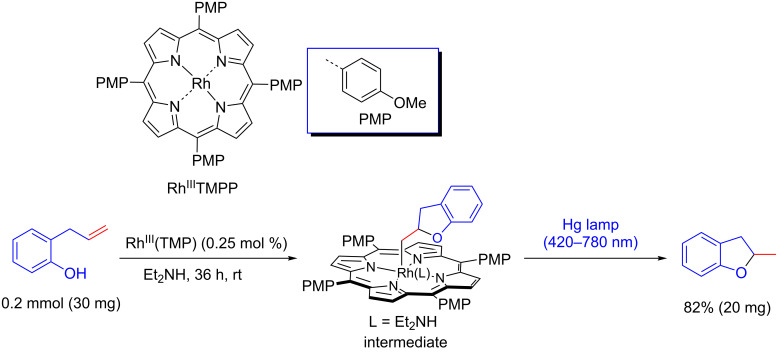
Formation of 2-methyl-2,3-dihydrobenzofuran by intramolecular hydro-functionalization of allylphenol using RhIIITMPP under visible light irradiation.
Scheme 15
Scheme 15
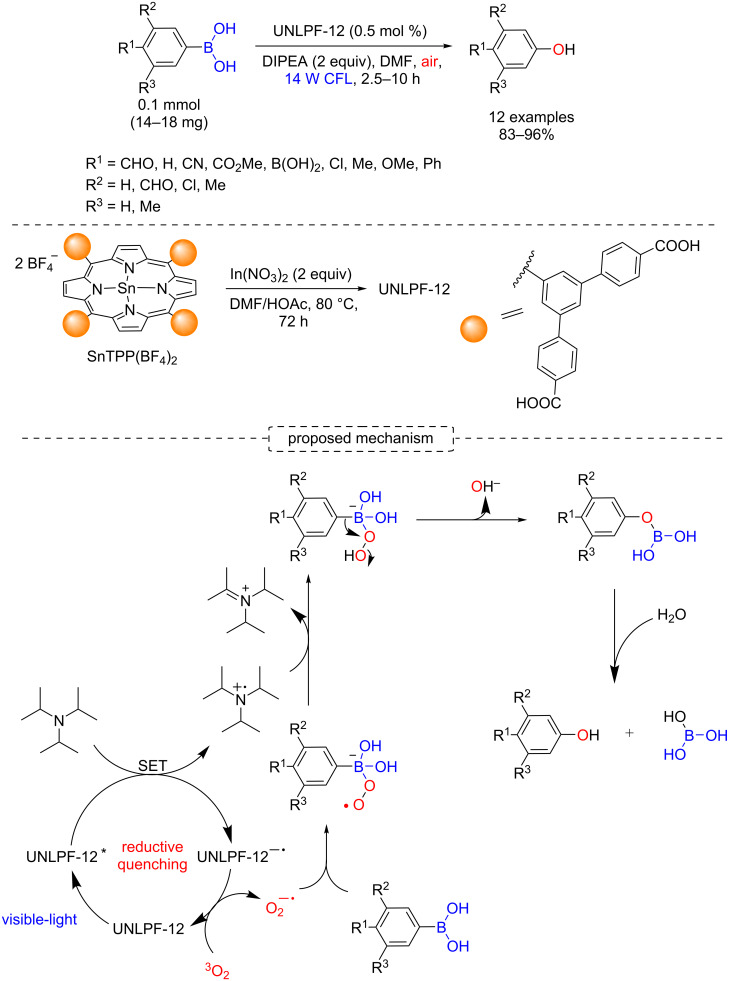
Photocatalytic oxidative hydroxylation of arylboronic acids using UNLPF-12 as heterogeneous photocatalyst.
Scheme 16
Scheme 16
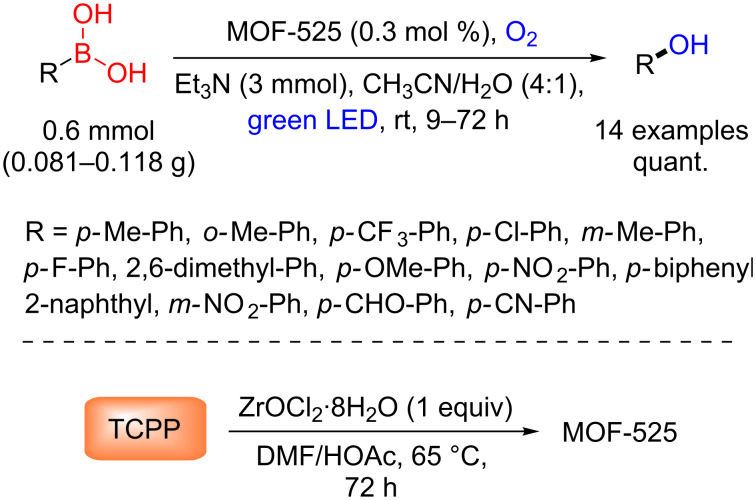
Photocatalytic oxidative hydroxylation of arylboronic acids using MOF-525 as heterogeneous photocatalyst.
Scheme 17
Scheme 17
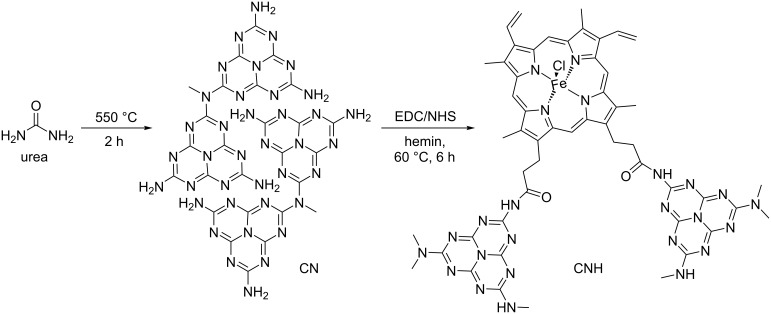
Preparation of the heterogeneous photocatalyst CNH.
Scheme 18
Scheme 18
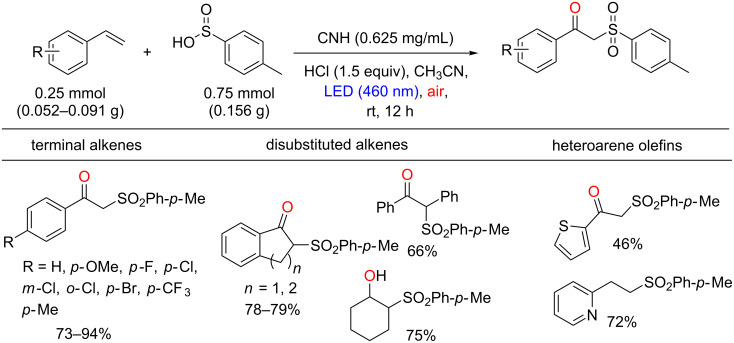
Photoinduced sulfonation of alkenes with sulfinic acid using CNH as photocatalyst.
Scheme 19
Scheme 19
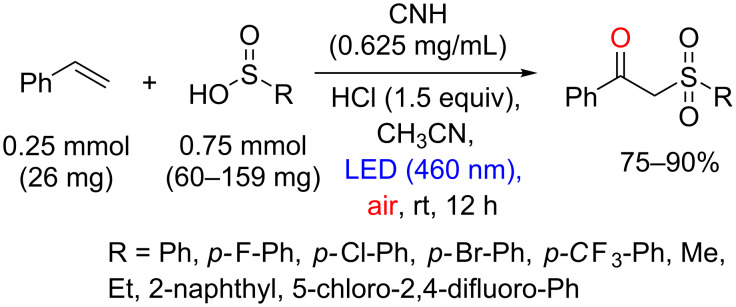
Sulfonic acid scope of the sulfonation reactions.
Scheme 20
Scheme 20
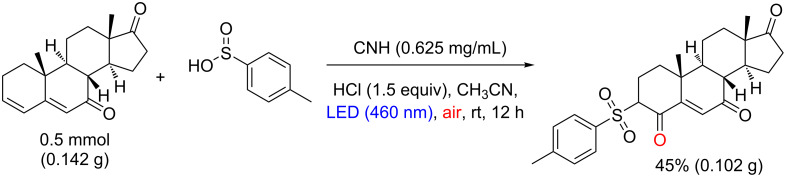
Regioselective sulfonation reaction of arimistane.
Scheme 21
Scheme 21
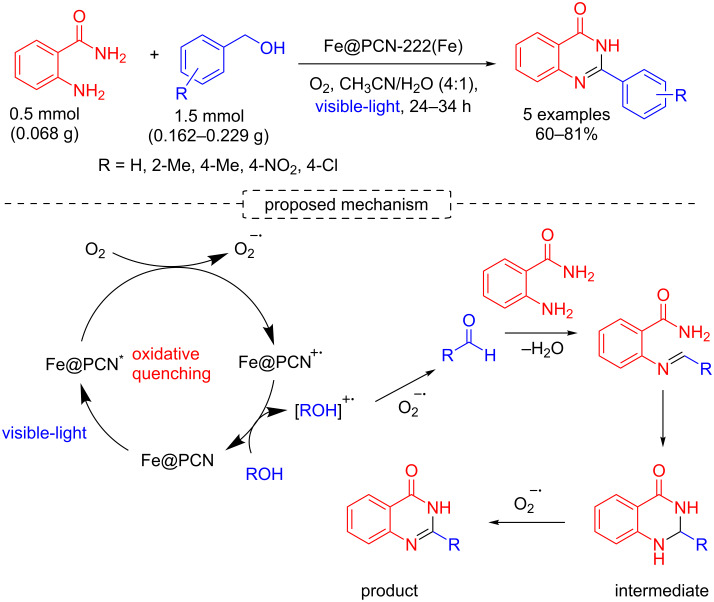
Synthesis of quinazolin-4-(3H)-ones.
Scheme 22
Scheme 22
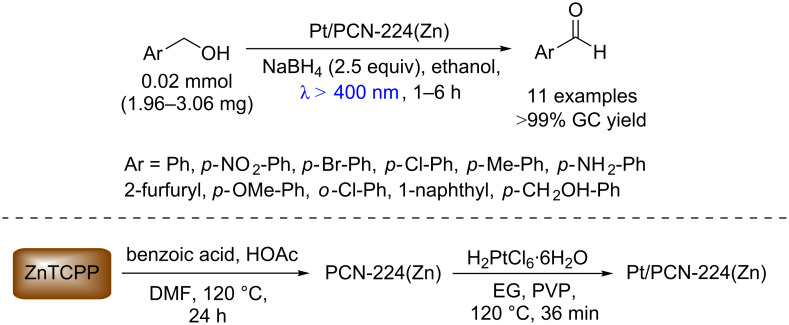
Selective photooxidation of aromatic benzyl alcohols to benzaldehydes using Pt/PCN-224(Zn).
Scheme 23
Scheme 23
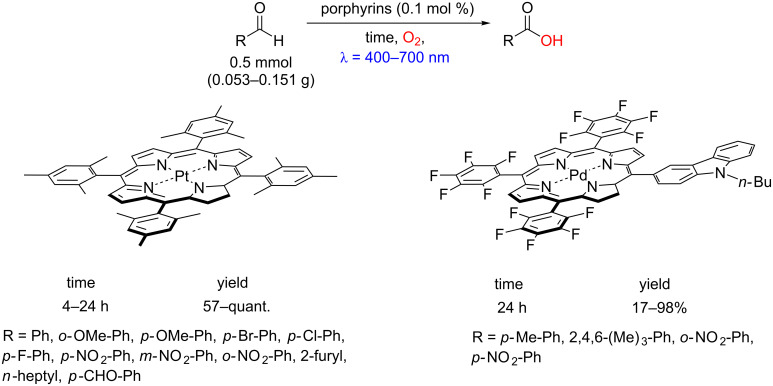
Photooxidation of benzaldehydes to benzoic acids using Pt or Pd porphyrins.
Scheme 24
Scheme 24
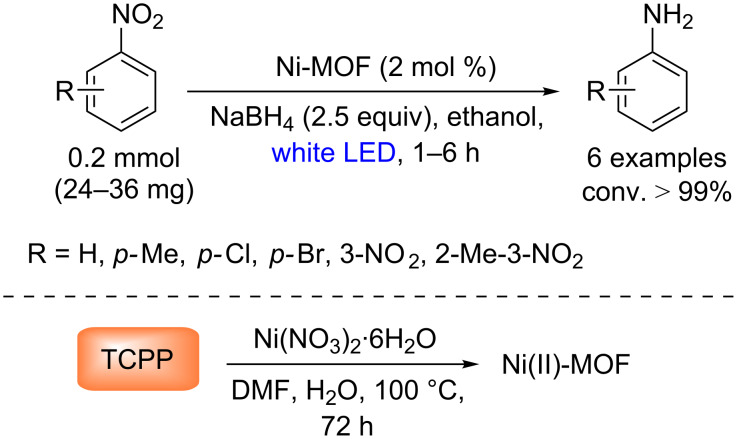
Photocatalytic reduction of various nitroaromatics using a Ni-MOF.
Scheme 25
Scheme 25
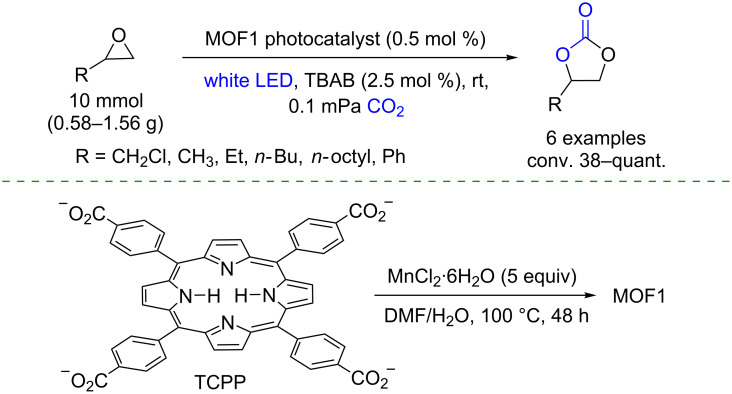
Photoinduced cycloadditions of CO2 with epoxides by MOF1.
Figure 4
Figure 4
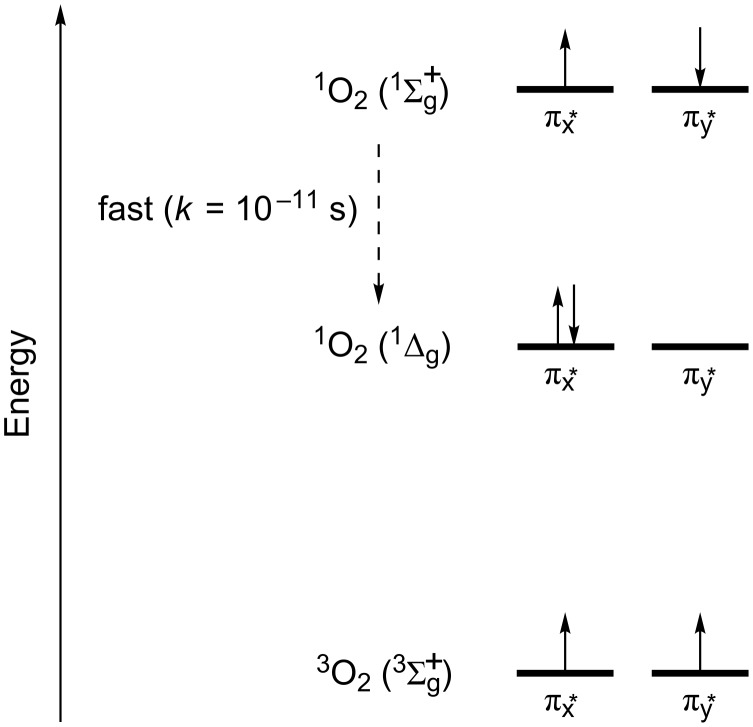
Electronic configurations of the species of oxygen. Adapted from [66].
Scheme 26
Scheme 26
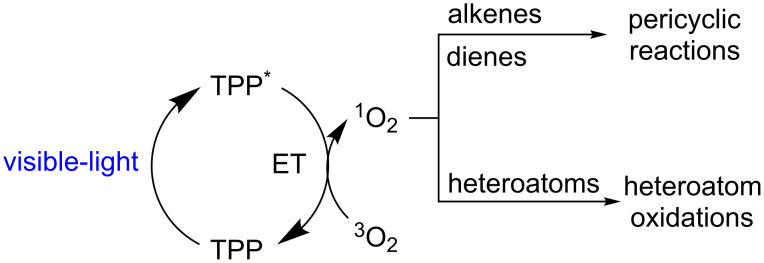
TPP-photocatalyzed generation of 1O2 and its application in organic synthesis. Adapted from [–69].
Scheme 27
Scheme 27
Pericyclic reactions involving singlet oxygen and their mechanisms. Adapted from [67].
Scheme 28
Scheme 28
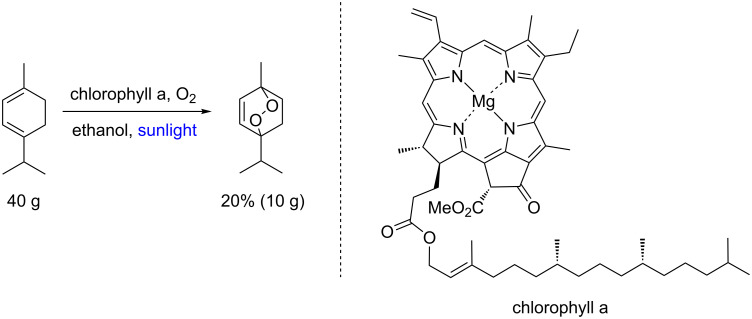
First scaled up ascaridole preparation from α-terpinene.
Scheme 29
Scheme 29
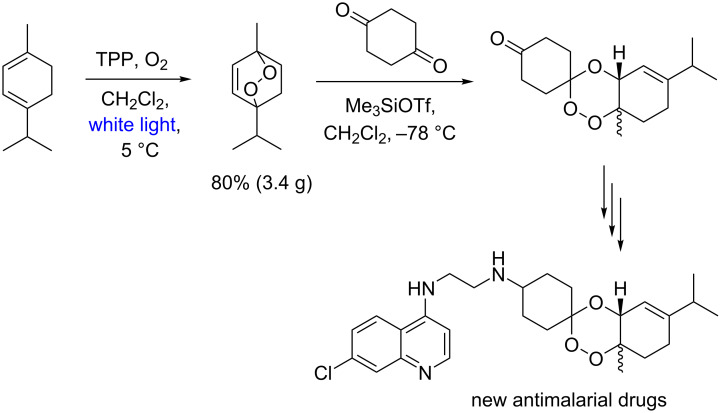
Antimalarial drug synthesis using an endoperoxidation approach.
Scheme 30
Scheme 30
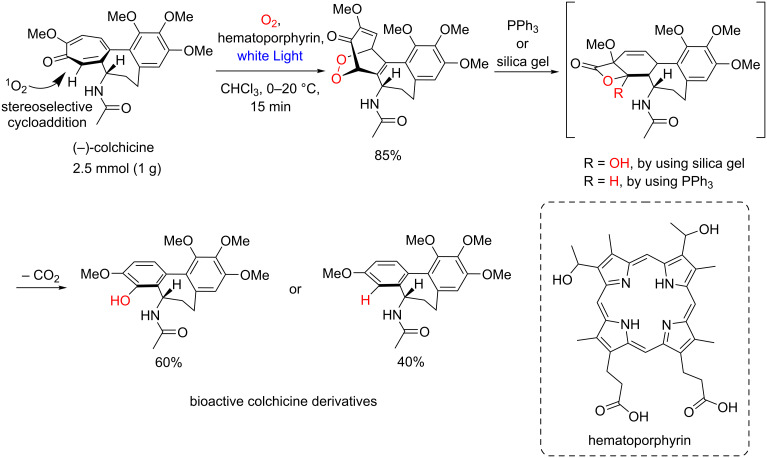
Photooxygenation of colchicine.
Scheme 31
Scheme 31
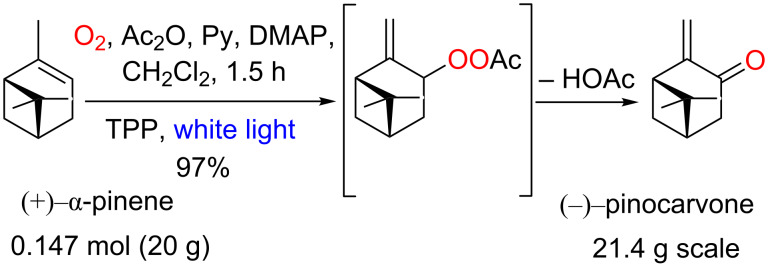
Synthesis of (−)-pinocarvone from abundant (+)-α-pinene.
Scheme 32
Scheme 32
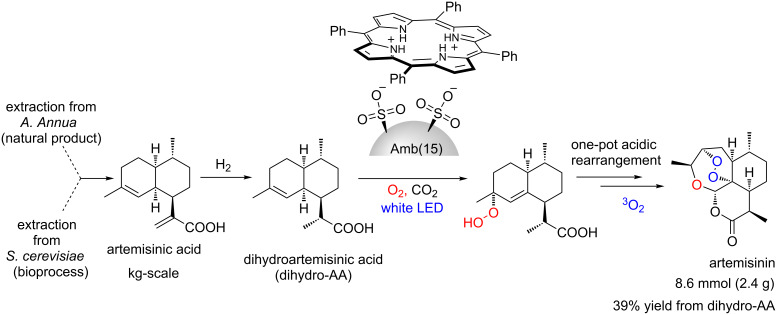
Seeberger’s semi-synthesis of artemisinin.
Scheme 33
Scheme 33
Synthesis of artemisinin using TPP and supercritical CO2.
Scheme 34
Scheme 34
Synthesis of artemisinin using chlorophyll a.
Scheme 35
Scheme 35
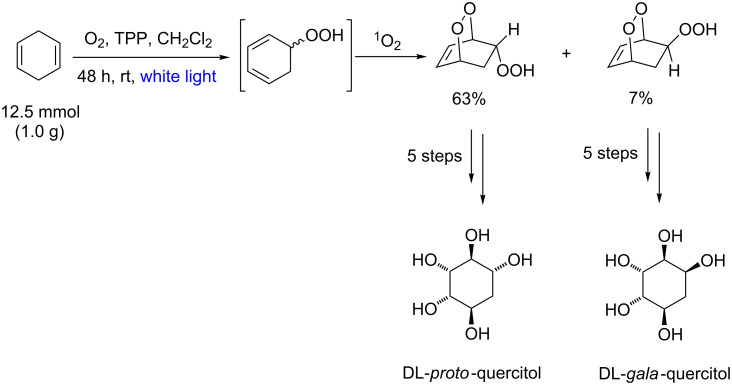
Quercitol stereoisomer preparation.
Scheme 36
Scheme 36
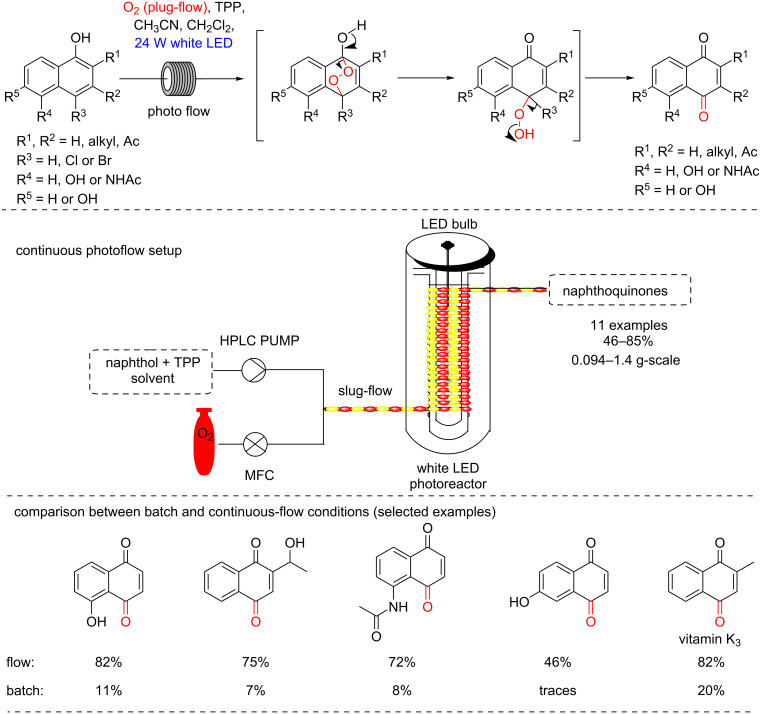
Photocatalyzed preparation of naphthoquinones.
Scheme 37
Scheme 37
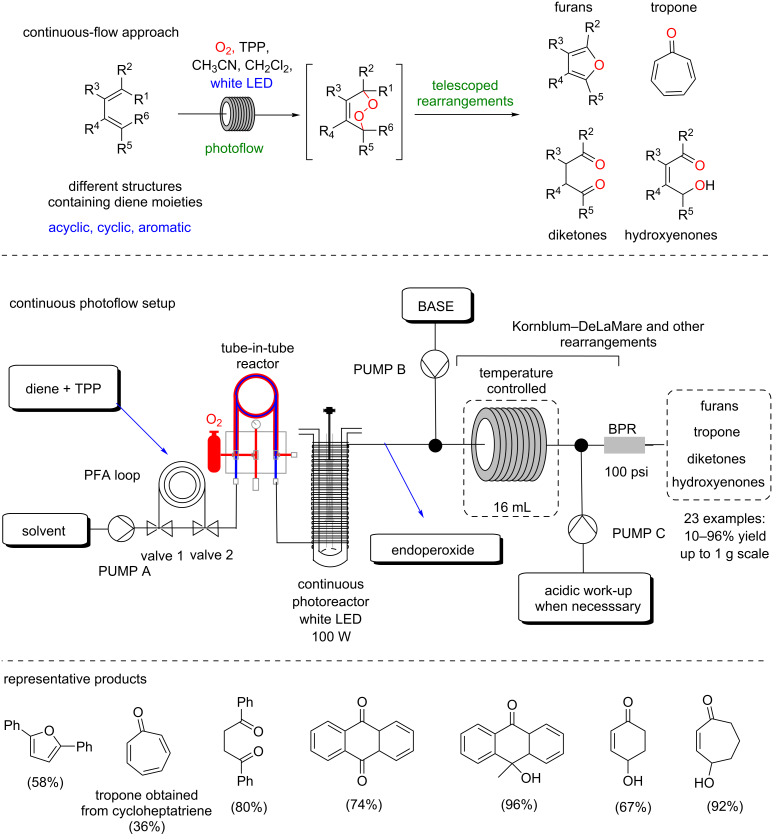
Continuous endoperoxidation of conjugated dienes and subsequent rearrangements leading to oxidized products.
Scheme 38
Scheme 38
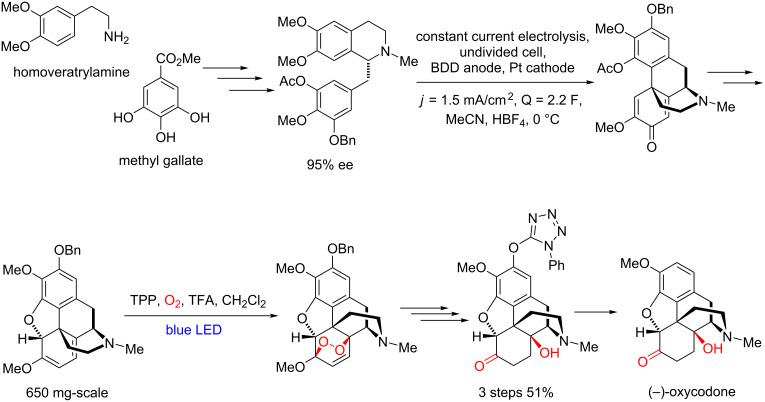
The Opatz group total synthesis of (–)-oxycodone.
Scheme 39
Scheme 39
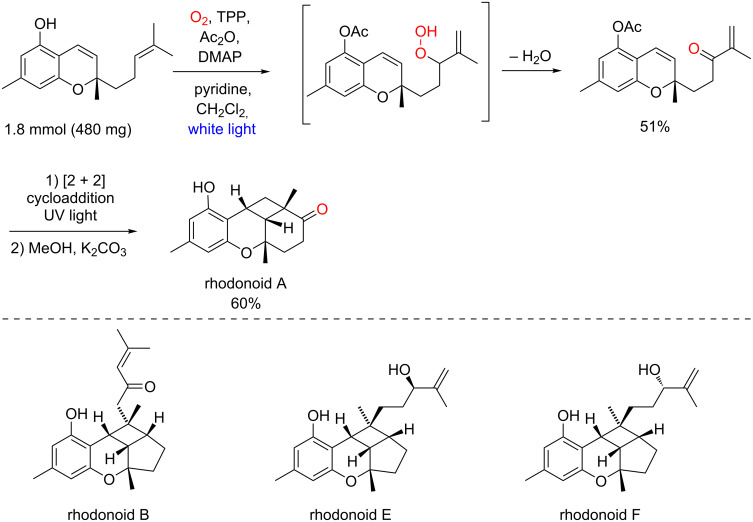
Biomimetic syntheses of rhodonoids A, B, E, and F.
Scheme 40
Scheme 40
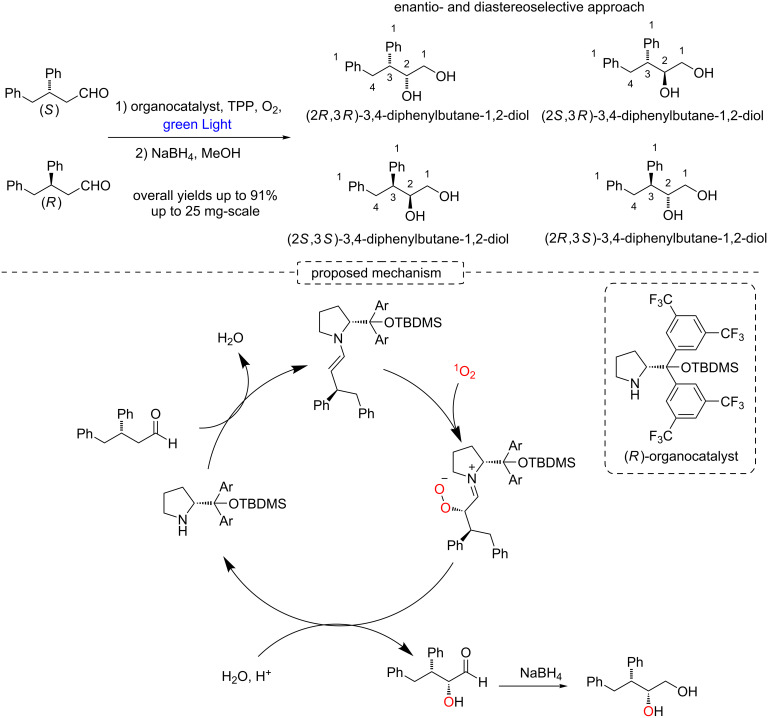
α-Photooxygenation of chiral aldehydes.
Scheme 41
Scheme 41
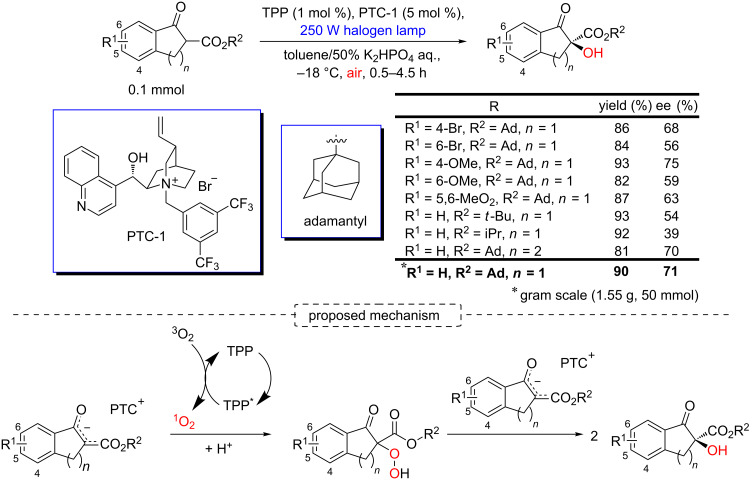
Asymmetric photooxidation of indanone β-keto esters by singlet oxygen using PTC as a chiral inducer, and the related mechanism.
Scheme 42
Scheme 42
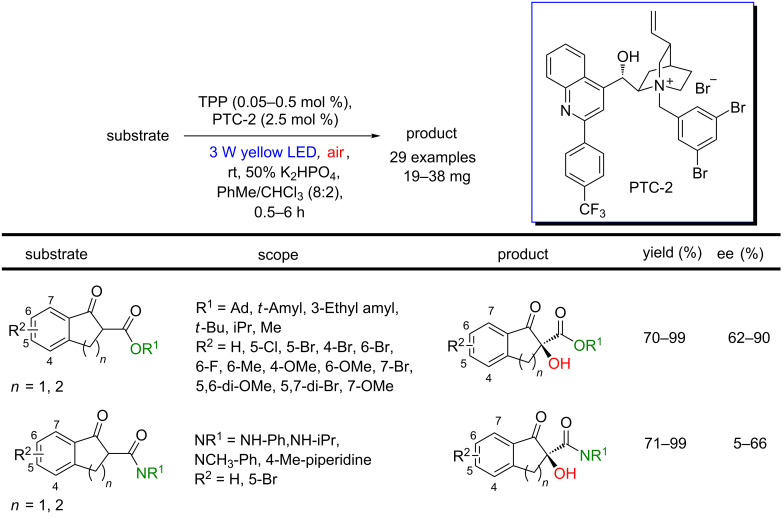
Asymmetric photooxidation of both β-keto esters and β-keto amides by singlet oxygen using PTC-2 as a chiral organocatalyst.
Scheme 43
Scheme 43
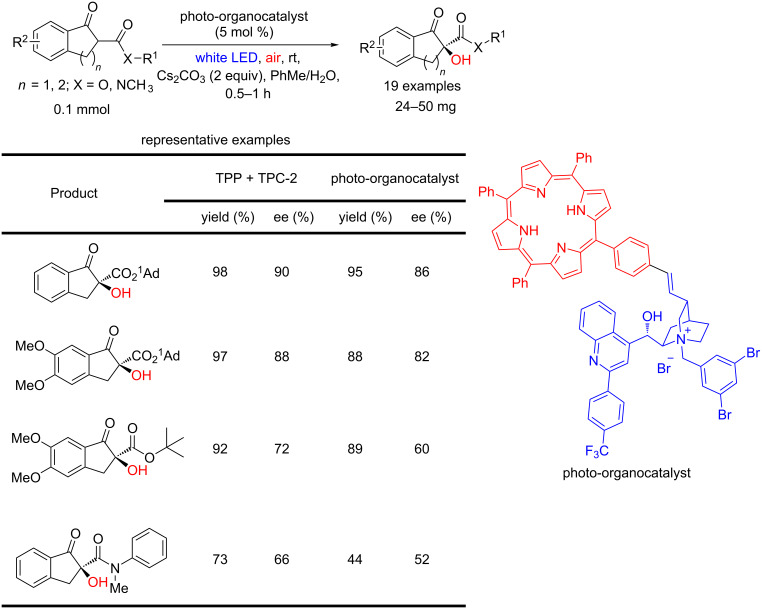
Bifunctional photo-organocatalyst used for the asymmetric oxidation of β-keto esters and β-keto amides by singlet oxygen.
Scheme 44
Scheme 44
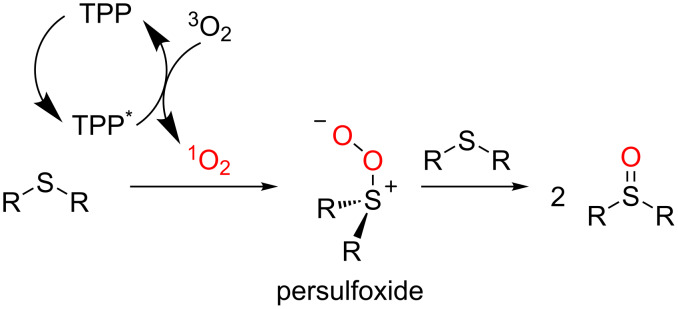
Mechanism of singlet oxygen oxidation of sulfides to sulfoxides.
Scheme 45
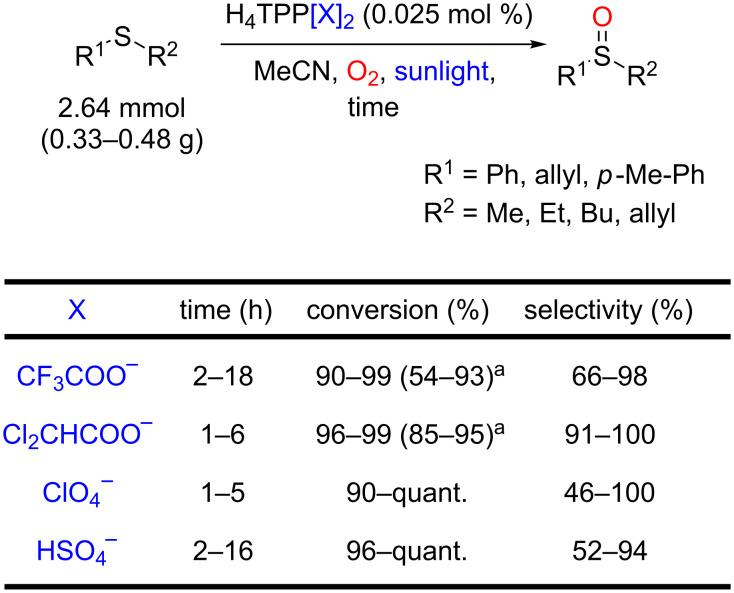
Scheme 45
Controlled oxidation of sulfides to sulfoxides using protonated porphyrins as photocatalysts. aIsolated yield.
Scheme 46
Scheme 46
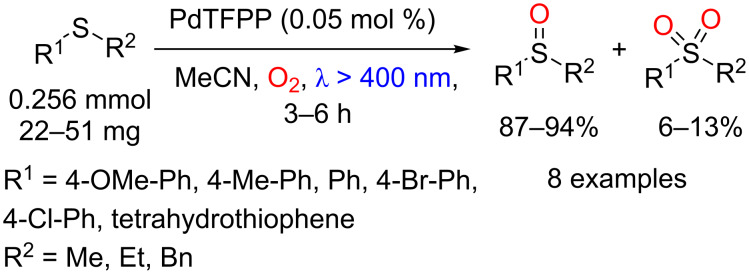
Photochemical oxidation of sulfides to sulfoxides using PdTPFPP as photocatalyst.
Scheme 47
Scheme 47
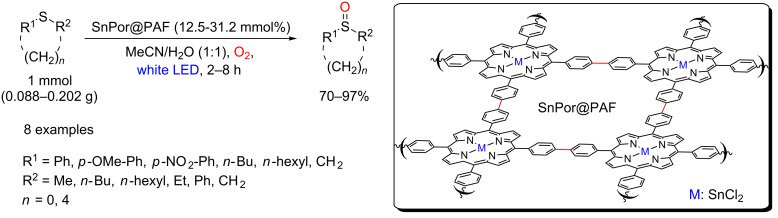
Controlled oxidation of sulfides to sulfoxides using SnPor@PAF as a photosensitizer.
Scheme 48
Scheme 48
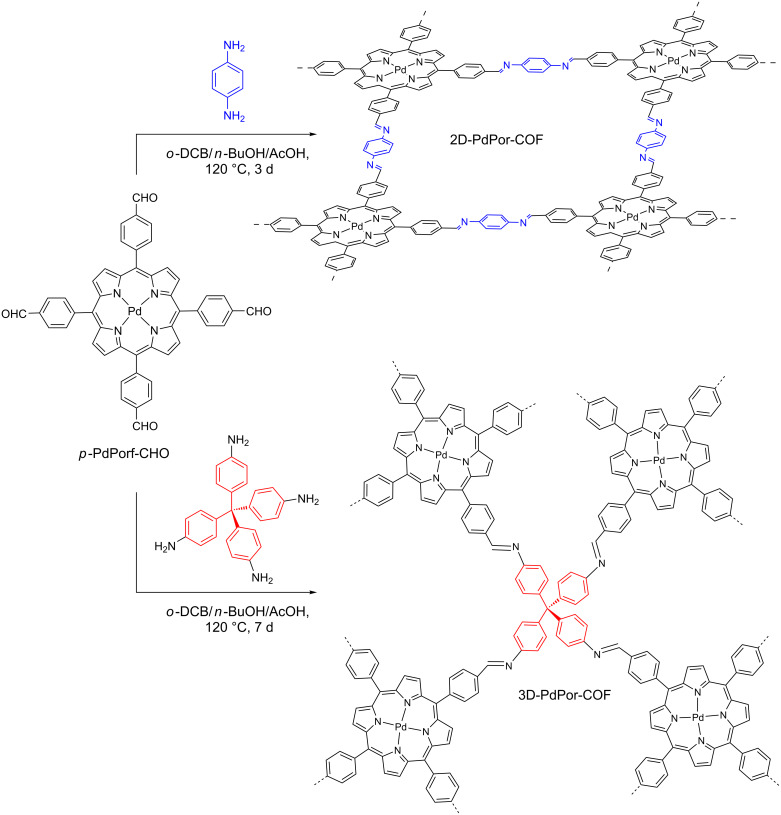
Syntheses of 2D-PdPor-COF and 3D-Pd-COF.
Scheme 49
Scheme 49
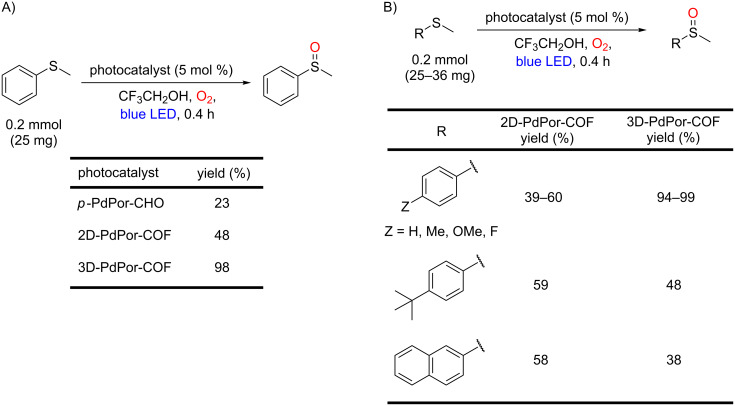
Photocatalytic oxidation of A) thioanisole to methyl phenyl sulfoxide and B) various aryl sulfides, using 2D-PdPor-COF, 3D-PdPor-COF, and p-PdPor-CHO.
Scheme 50
Scheme 50
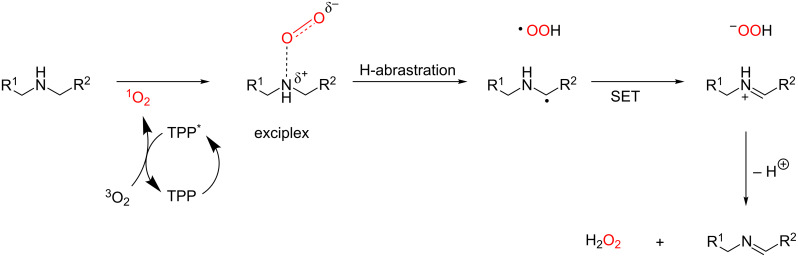
General mechanism for oxidation of amines to imines.
Scheme 51
Scheme 51
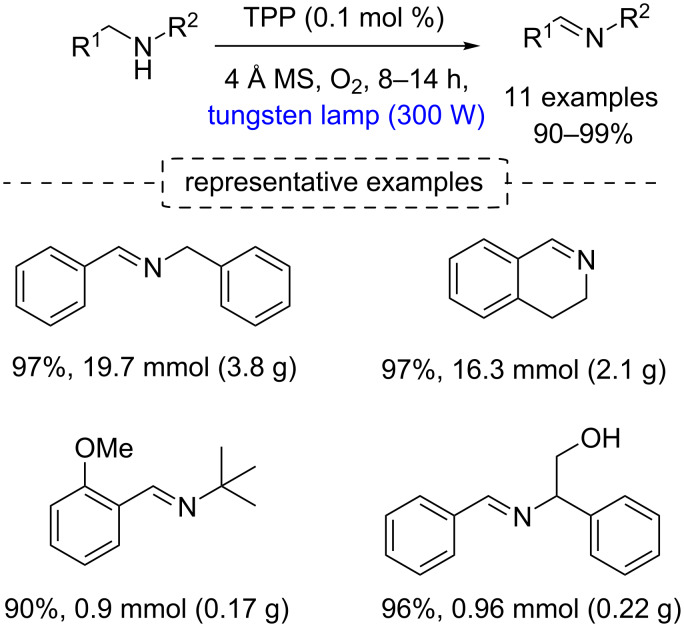
Oxidation of secondary amines to imines.
Scheme 52
Scheme 52
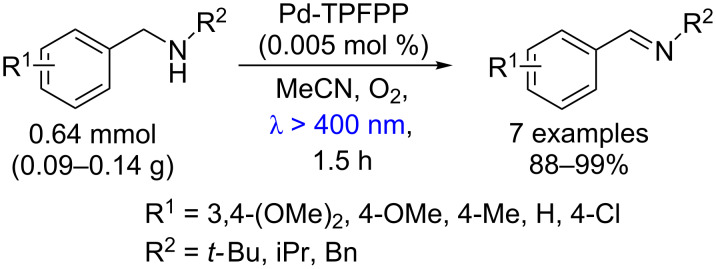
Oxidation of secondary amines using Pd-TPFPP as photocatalyst.
Scheme 53
Scheme 53
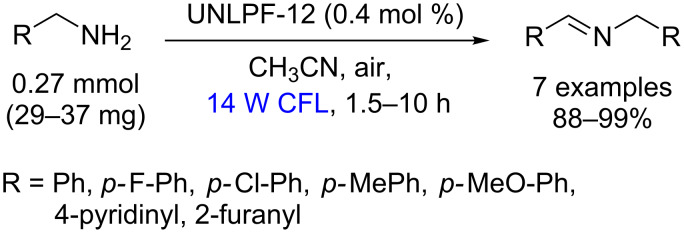
Oxidative amine coupling using UNLPF-12 as heterogeneous photocatalyst.
Scheme 54
Scheme 54
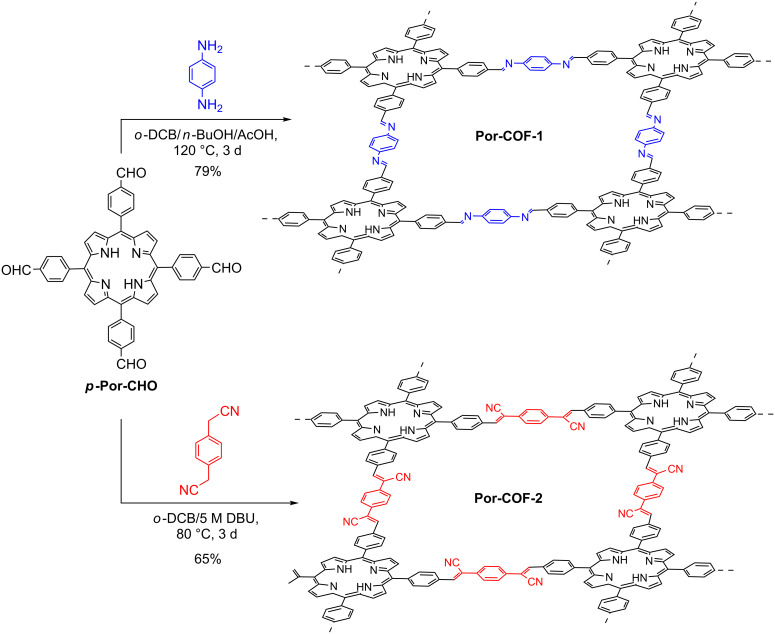
Synthesis of Por-COF-1 and Por-COF-2.
Scheme 55
Scheme 55
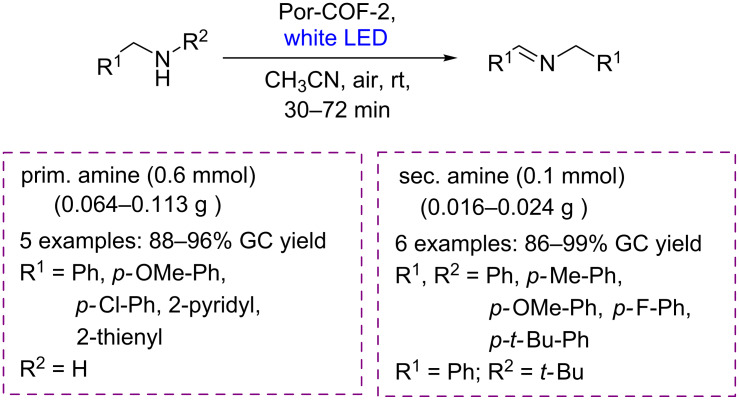
Photocatalytic oxidation of amines to imines by Por-COF-2.
Scheme 56
Scheme 56
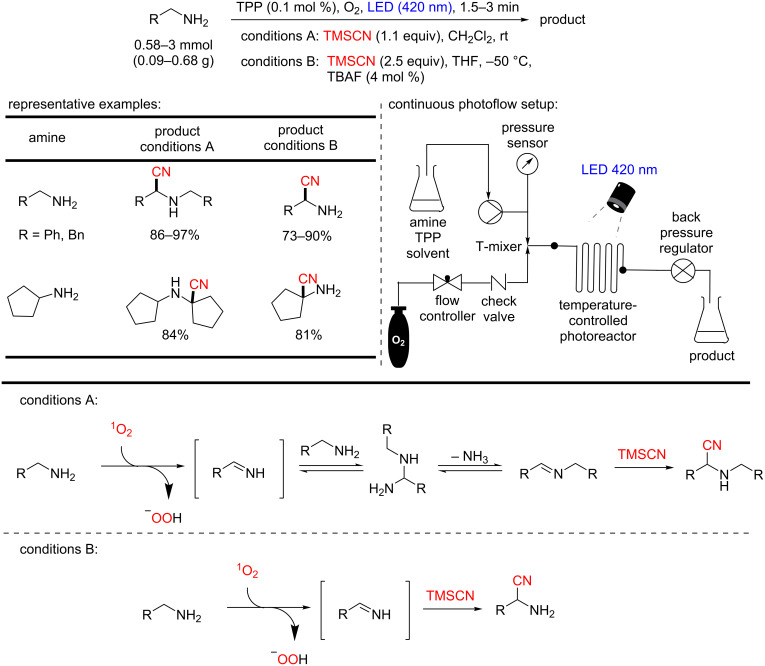
Photocyanation of primary amines.
Scheme 57
Scheme 57
Synthesis of ᴅ,ʟ-tert-leucine hydrochloride.
Scheme 58
Scheme 58
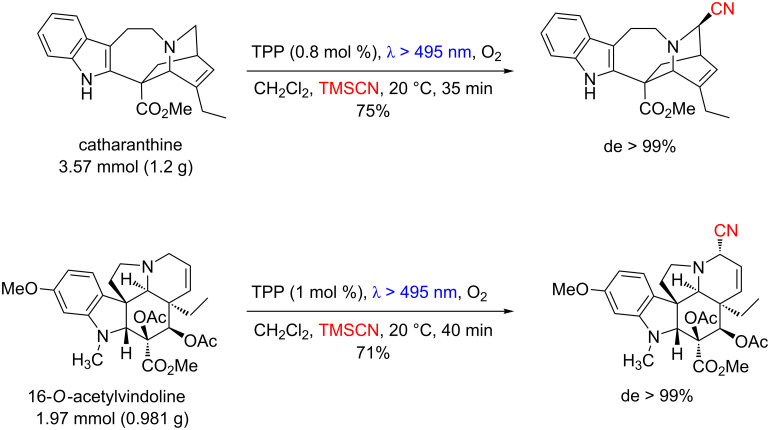
Photocyanation of catharanthine and 16-O-acetylvindoline using TPP.
Scheme 59
Scheme 59
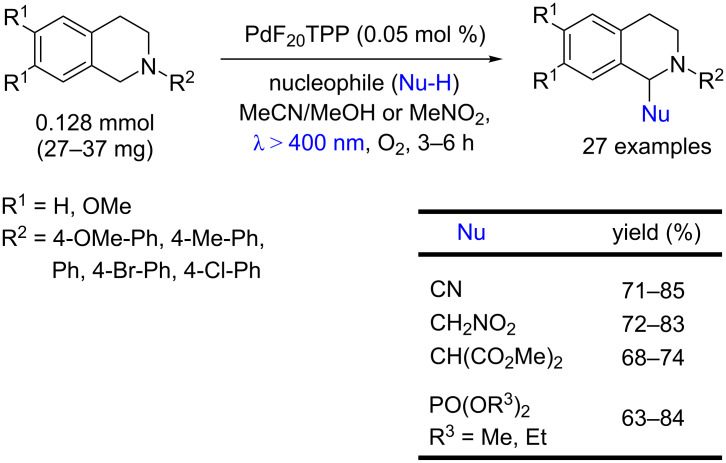
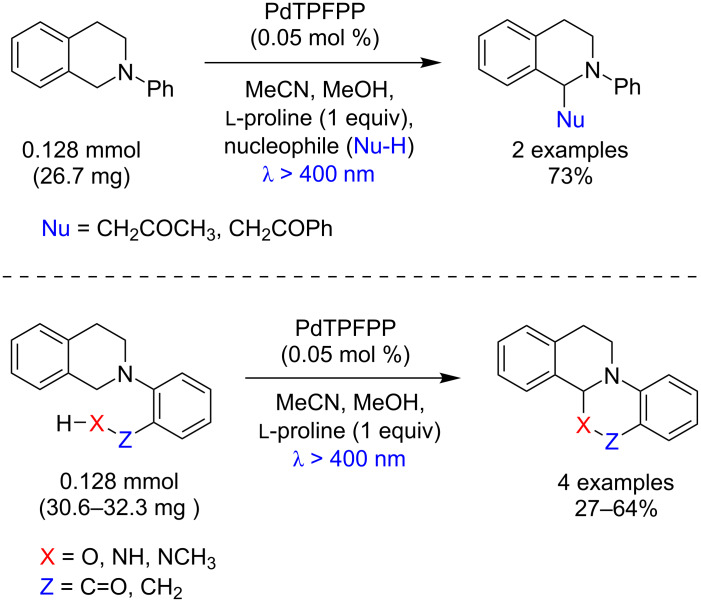
Photochemical α-functionalization of N-aryltetrahydroisoquinolines using Pd-TPFPP as photocatalyst.
Scheme 60
Scheme 60
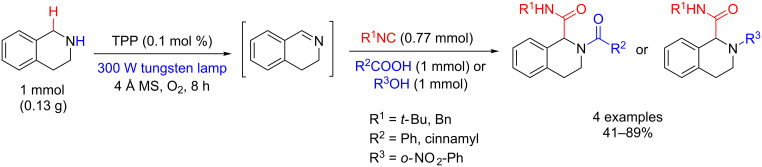
Ugi-type reaction with 1,2,3,4-tetrahydroisoquinoline using molecular oxygen and TPP.
Scheme 61
Scheme 61
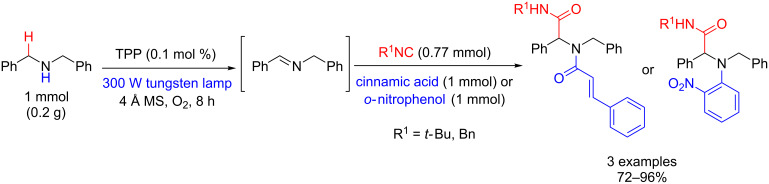
Ugi-type reaction with dibenzylamines using molecular oxygen and TPP.
Scheme 62
Scheme 62
Mannich-type reaction of tertiary amines using PdTPFPP as photocatalyst.
Scheme 63
Scheme 63
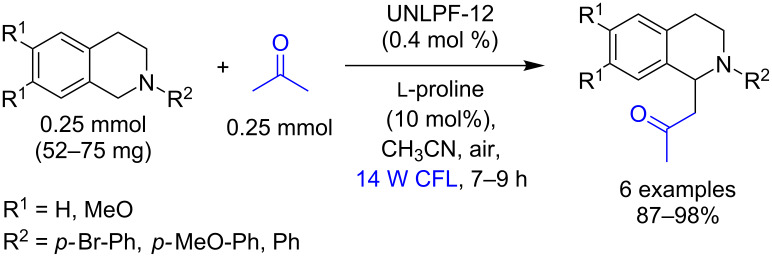
Oxidative Mannich reaction using UNLPF-12 as heterogeneous photocatalyst.
Scheme 64
Scheme 64
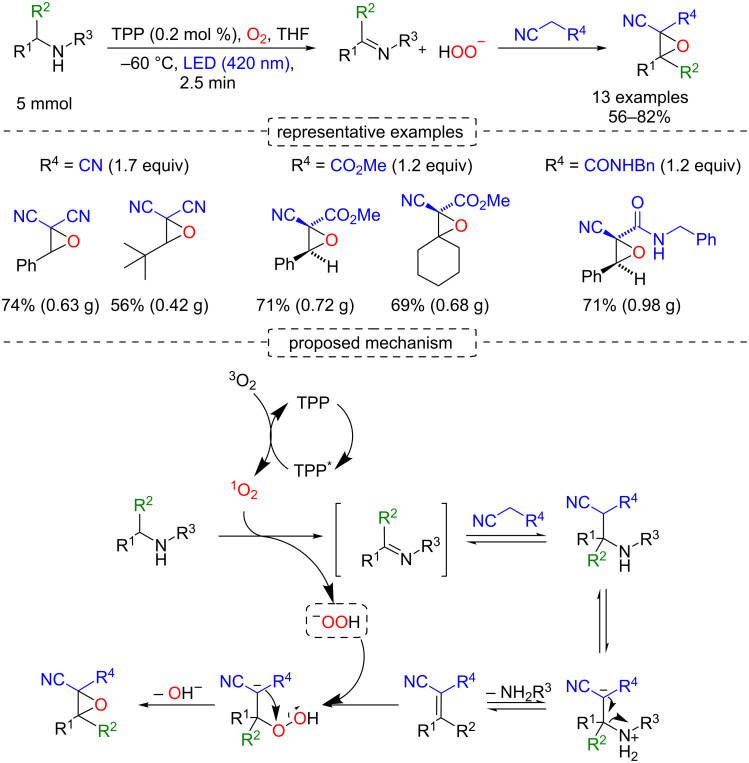
Transformation of amines to α-cyanoepoxides and the proposed mechanism.

References

    1. Garlets Z J, Nguyen J D, Stephenson C R J. Isr J Chem. 2014;54:351–360. doi: 10.1002/ijch.201300136. - DOI - PMC - PubMed
    1. Cambié D, Bottecchia C, Straathof N J W, Hessel V, Noël T. Chem Rev. 2016;116:10276–10341. doi: 10.1021/acs.chemrev.5b00707. - DOI - PubMed
    1. Noël T. J Flow Chem. 2017;7:87–93. doi: 10.1556/1846.2017.00022. - DOI
    1. Oelgemoeller M. Chem Eng Technol. 2012;35:1144–1152. doi: 10.1002/ceat.201200009. - DOI
    1. Lesage S, Xu H, Durham L. Hydrol Sci J. 1993;38:343–354. doi: 10.1080/02626669309492679. - DOI

LinkOut - more resources