


Polypharmacy as a prognostic factor in older patients with advanced non-small-cell lung cancer treated with anti-PD-1/PD-L1 antibody-based immunotherapy
- PMID: 32462298
- PMCID: PMC11804739
- DOI: 10.1007/s00432-020-03252-4
Polypharmacy as a prognostic factor in older patients with advanced non-small-cell lung cancer treated with anti-PD-1/PD-L1 antibody-based immunotherapy
Abstract
Purpose: Polypharmacy is a common problem among older adults. However, its prevalence and impact on the clinical outcomes of anticancer treatment, such as survival and adverse events, in older patients with advanced cancer have not been well investigated.
Methods: We retrospectively reviewed data from Japanese patients treated with an immune checkpoint inhibitor (ICI) for advanced or recurrent non-small-cell lung cancer (NSCLC) between 2016 and 2019.
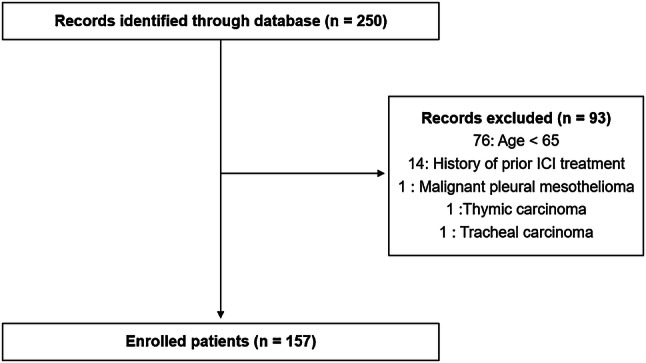
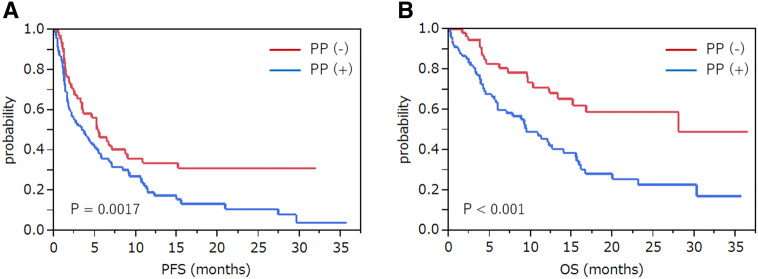
Results: Among 157 older (aged ≥ 65 years) patients, the prevalence of polypharmacy, defined as ≥ 5 medications, was 59.9% (94/157). The prevalence of potentially inappropriate medication use, according to the screening tool of older people's prescription (STOPP) criteria version 2, was 38.2% (60/157). The median progression-free survival (PFS) in patients with and without polypharmacy was 3.7 and 5.5 months, respectively (P = 0.0017). The median overall survival (OS) in patients with and without polypharmacy was 9.5 and 28.1 months, respectively (P < 0.001). Multivariate analysis revealed marked associations between polypharmacy and OS, but no significant associations between polypharmacy and PFS. Polypharmacy was not associated with immune-related adverse events but was associated with higher rate of unexpected hospitalizations during ICI treatment (59.6% vs. 31.7%, P < 0.001).
Conclusion: Polypharmacy is an independent prognostic factor in older patients with advanced NSCLC treated with ICI. Also, polypharmacy could be utilized as a simple indicator of patients' comorbidities and symptoms or as a predictive marker of unexpected hospitalizations during ICI treatment.
Keywords: Comorbidity; Geriatric oncology; Non-small cell lung cancer; Overall survival; Polypharmacy.
Conflict of interest statement
YH has received personal fees from AstraZeneca, Eli Lilly Japan, Taiho Pharmaceutical, Chugai Pharmaceutical, Ono Pharmaceutical, Bristol-Myers Squibb, Kyowa Kirin, and CSL Behring, outside the submitted work. YO has received personal fees from Chugai Pharmaceutical and Takeda Oncology, outside the submitted work. No other potential conflicts of interest were reported.
Figures

References
-
- By the American Geriatrics Society Beers Criteria Update Expert P (2015) American Geriatrics Society 2015 updated beers criteria for potentially inappropriate medication use in older adults. J Am Geriatr Soc 63(11):2227–2246 - PubMed
MeSH terms
Substances
LinkOut - more resources
Full Text Sources
Medical
Research Materials
