


The importance of anti-vaping vigilance-EVALI in seven adolescent pediatric patients in Northeast Ohio
- PMID: 32462762
- PMCID: PMC7384027
- DOI: 10.1002/ppul.24872
The importance of anti-vaping vigilance-EVALI in seven adolescent pediatric patients in Northeast Ohio
Abstract
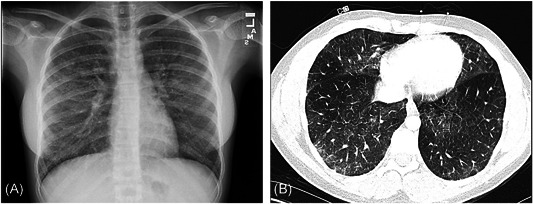
As of 18 February 2020, the e-cigarette or vaping product use-associated lung injury (EVALI) epidemic has claimed the lives of 68 patients in the USA with the total number of reported cases standing at 2807 to date. We present the clinical and radiologic findings, course of illness, and treatment of EVALI in seven adolescent patients in Northeast Ohio. Five of our patients required supplemental oxygen with four requiring intensive care unit care for respiratory support during admission. Three patients were treated with systemic steroids while inpatient. Bilateral opacities were seen on radiographic imaging of all seven of our patients. All patients were discharged alive on room air. However, impaired diffusing capacity of the lungs for carbon monoxide (DLCO) with nonobstructive spirometry was seen in patients that were tested postdischarge. This suggests that although recovery from the acute illness process of EVALI is achieved, there may be long-term impact on lung function in these patients. We recommend close follow-up with a pediatric pulmonologist where spirometry and DLCO can be performed.
Keywords: Centers for Disease Control and Prevention (CDC); acute respiratory distress syndrome (ARDS); cannabidiol (CBD); diffusing capacity of the lungs for carbon monoxide (DLCO); e-cigarette or vaping product use-associated lung injury (EVALI); lung injury; nonnicotine substances such as tetrahydrocannabinol (THC); respiratory failure; vaping.
© 2020 The Authors. Pediatric Pulmonology Published by Wiley Periodicals LLC.
Conflict of interest statement
The authors declare that there are no conflict of interests.
Figures
References
-
- Walley SC, Wilson KM, Winickoff JP, Groner J. A public health crisis: electronic cigarettes, vape, and Juul. Pediatrics. 2019;143(6):e20182741. - PubMed
Publication types
MeSH terms
Substances
Grants and funding
LinkOut - more resources
Full Text Sources
Medical
