Predicting college student prescription stimulant misuse: An analysis from ecological momentary assessment
- PMID: 32463280
- PMCID: PMC8363071
- DOI: 10.1037/pha0000386
Predicting college student prescription stimulant misuse: An analysis from ecological momentary assessment
Abstract
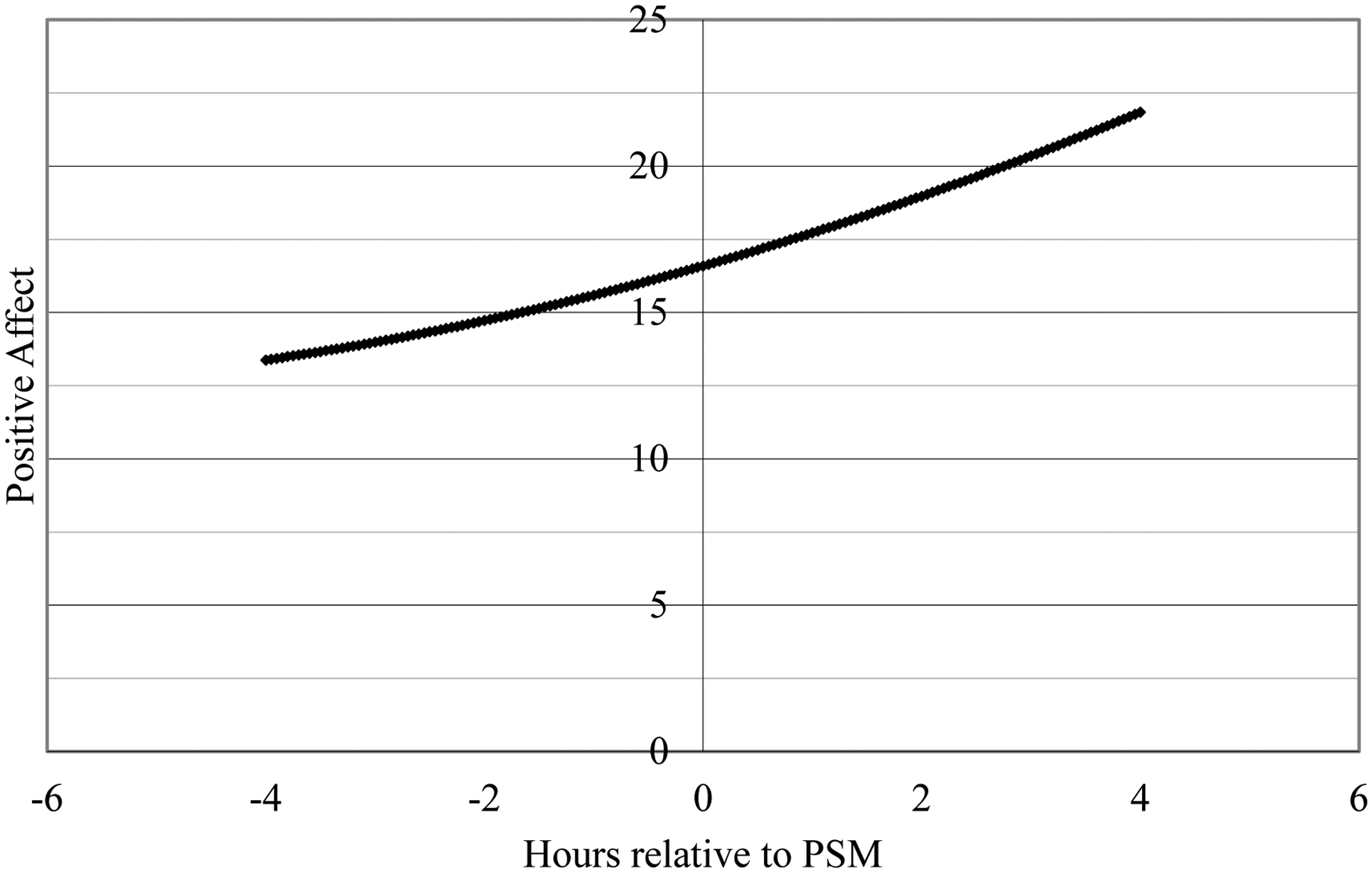
Prescription stimulant misuse (PSM) is common in young adult college students, at over 10% in the past year, and it is associated with other substance use and risk behaviors. Research focused on the real-time drivers of PSM is absent, impeding prevention and intervention. This research aimed to fill that gap by examining the relationships between affect, global stress, or academic stress and PSM via ecological momentary assessment (EMA); we also investigated baseline predictors of PSM frequency during the 21-day EMA period. Forty-one full-time college students (mean age: 20.5, 66% female) who endorsed current PSM (≥ 6 past-year episodes) participated. Participants were asked to complete EMA questions in response to 3 daily investigator-initiated prompts and after every PSM episode. Assessments were selected based on affect regulation (e.g., positive affect [PA], negative affect [NA]) and drug instrumentalization (e.g., academic stress and/or demands) theories of substance use. Mixed-effects linear models examined EMA data, and negative binomial regression analyses examined baseline predictors of PSM episode frequency. PA was higher on PSM days and increased post-PSM, whereas NA was unrelated to PSM. Although global and academic stress were largely unrelated to PSM, when the motive endorsed for PSM was "to study," pre-PSM ratings of academic demand and stress were significantly higher. Finally, a history of recreational motives (e.g., to get high) or higher levels of attention-deficit/hyperactivity disorder symptoms predicted a greater number of PSM episodes over the EMA period. The results offered mixed support for both affect regulation and instrumentalization as applied to PSM. (PsycInfo Database Record (c) 2021 APA, all rights reserved).
Conflict of interest statement
The authors have no conflicts of interest.
Figures
References
-
- Agresti A (2014). Categorical Data Analysis (3rd ed.). Hoboken, NJ: Wiley.
-
- Arria AM, Wilcox HC, Caldeira KM, Vincent KB, Garnier-Dykstra LM, & O’Grady KE (2013). Dispelling the myth of “smart drugs”: cannabis and alcohol use problems predict nonmedical use of prescription stimulants for studying. Addict Behav, 38(3), 1643–1650. doi: 10.1016/j.addbeh.2012.10.002 - DOI - PMC - PubMed
MeSH terms
Substances
Grants and funding
LinkOut - more resources
Full Text Sources
Research Materials
Miscellaneous