


Contribution of NKT cells to the immune response and pathogenesis triggered by respiratory viruses
- PMID: 32463330
- PMCID: PMC7549913
- DOI: 10.1080/21505594.2020.1770492
Contribution of NKT cells to the immune response and pathogenesis triggered by respiratory viruses
Abstract
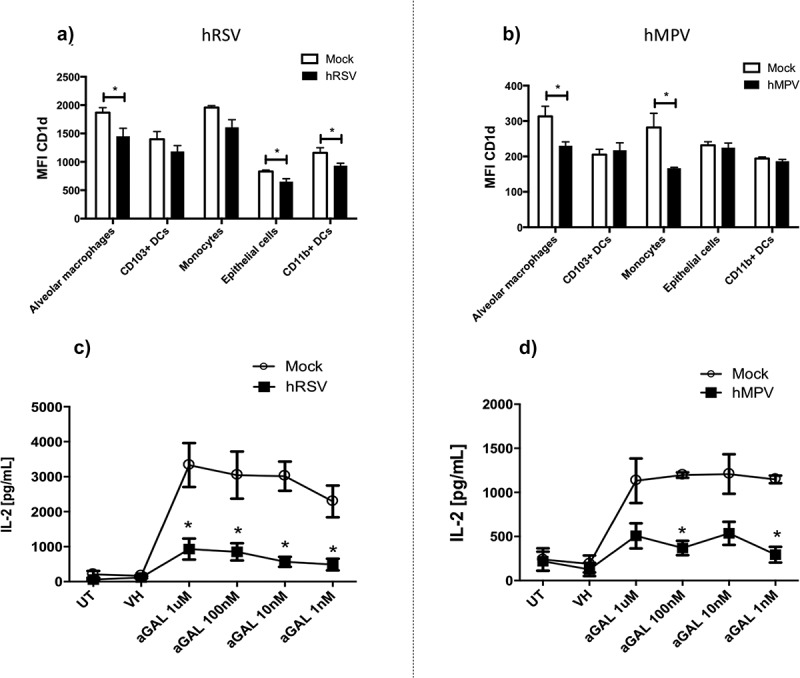
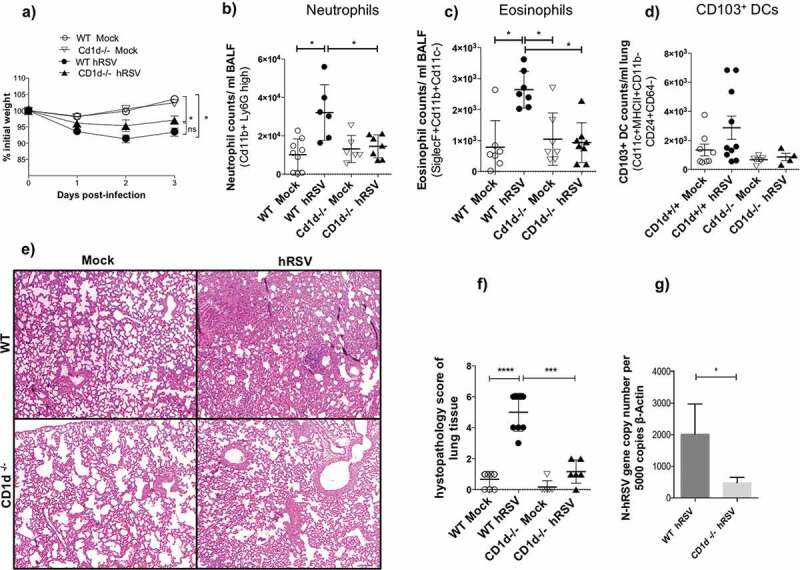
Human respiratory syncytial virus (hRSV) and human metapneumovirus (hMPV) cause acute respiratory tract infections in children worldwide. Natural killer T (NKT) cells are unconventional T lymphocytes, and their TCRs recognize glycolipids bound to the MHC-I-like molecule, CD1d. These cells modulate the inflammatory response in viral infections. Here, we evaluated the contribution of NKT cells in both hRSV and hMPV infections. A significant decrease in the number of neutrophils, eosinophils, and CD103+DCs infiltrating to the lungs, as well as an increased production of IFN-γ, were observed upon hRSV-infection in CD1d-deficient BALB/c mice, as compared to wild-type control mice. However, this effect was not observed in the CD1d-deficient BALB/c group, upon infection with hMPV. Importantly, reduced expression of CD1d in CD11b+ DCs and epithelial cells was found in hRSV -but not hMPV-infected mice. Besides, a reduction in the expression of CD1d in alveolar macrophages of lungs from hRSV- and hMPV-infected mice was found. Such reduction of CD1d expression interfered with NKT cells activation, and consequently IL-2 secretion, as characterized by in vitro experiments for both hRSV and hMPV infections. Furthermore, increased numbers of NKT cells recruited to the lungs in response to hRSV- but not hMPV-infection was detected, resulting in a reduction in the expression of IFN-γ and IL-2 by these cells. In conclusion, both hRSV and hMPV might be differently impairing NKT cells function and contributing to the immune response triggered by these viruses.
Keywords: Human respiratory syncytial virus; human metapneumovirus; natural killer T cells; pulmonary inflammation; viral infection.
Conflict of interest statement
SAP is a paid consultant for Vaccinex (Rochester, NY, USA), which is a privately held biotechnology company with preclinical programs for the development of NKT cells-based vaccines and immunotherapies. The other authors declare that the research was conducted in the absence of any commercial or financial relationships that could be construed as a potential conflict of interest.
Figures


References
-
- Liu J, Wu J, Qi F, et al. Natural helper cells contribute to pulmonary eosinophilia by producing IL-13 via IL-33/ST2 pathway in a murine model of respiratory syncytial virus infection. Int Immunopharmacol. 2015;28(1):337–343. - PubMed
Publication types
MeSH terms
Substances
Grants and funding
LinkOut - more resources
Full Text Sources
Other Literature Sources
Medical
Research Materials
