


Online Information Exchange and Anxiety Spread in the Early Stage of the Novel Coronavirus (COVID-19) Outbreak in South Korea: Structural Topic Model and Network Analysis
- PMID: 32463367
- PMCID: PMC7268668
- DOI: 10.2196/19455
Online Information Exchange and Anxiety Spread in the Early Stage of the Novel Coronavirus (COVID-19) Outbreak in South Korea: Structural Topic Model and Network Analysis
Abstract
Background: In case of a population-wide infectious disease outbreak, such as the novel coronavirus disease (COVID-19), people's online activities could significantly affect public concerns and health behaviors due to difficulty in accessing credible information from reliable sources, which in turn causes people to seek necessary information on the web. Therefore, measuring and analyzing online health communication and public sentiment is essential for establishing effective and efficient disease control policies, especially in the early stage of an outbreak.
Objective: This study aimed to investigate the trends of online health communication, analyze the focus of people's anxiety in the early stages of COVID-19, and evaluate the appropriateness of online information.
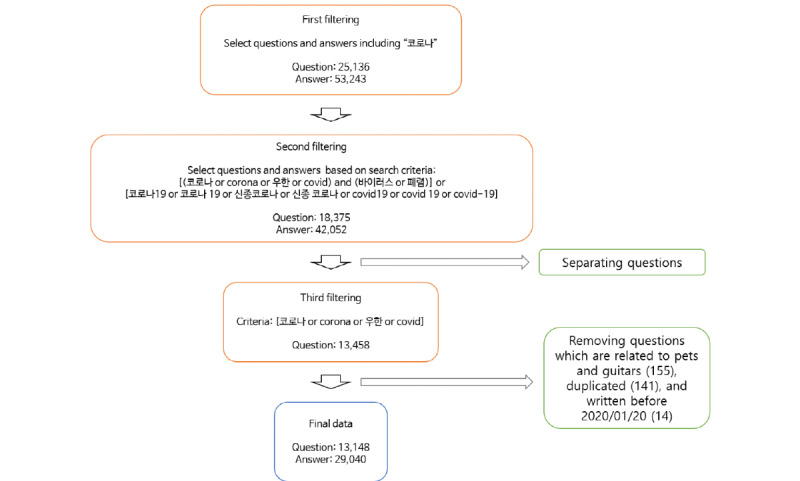
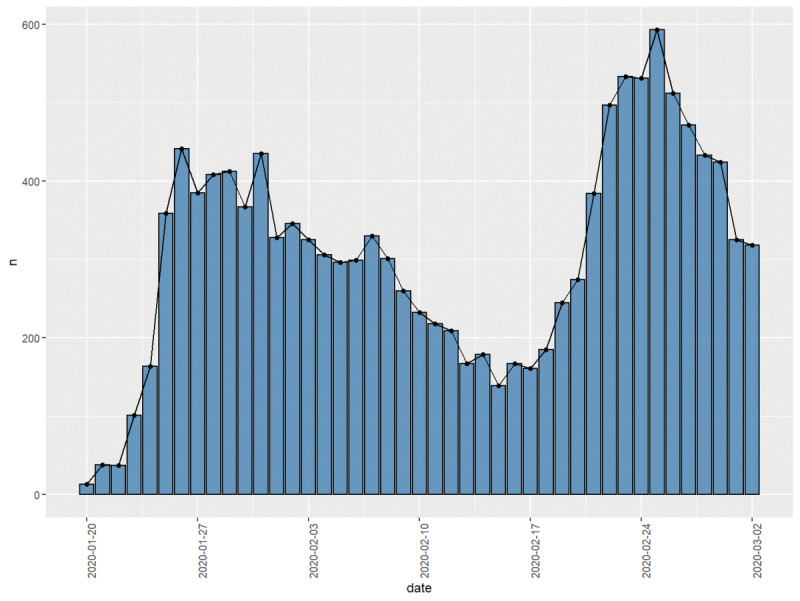
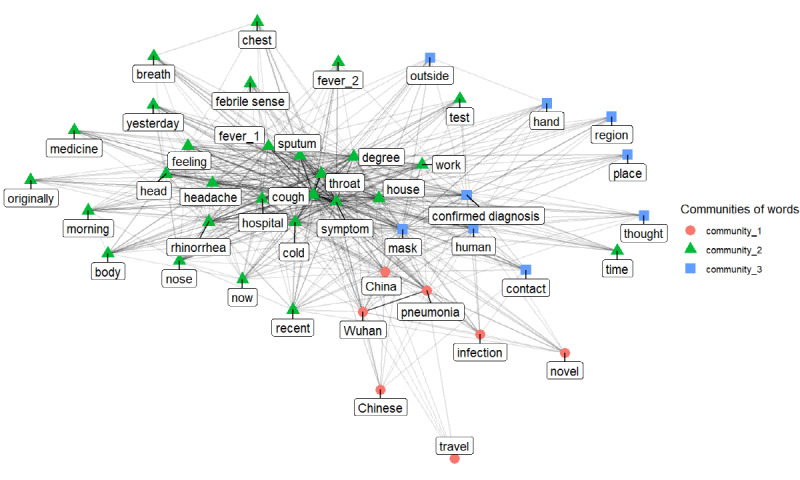
Methods: We collected 13,148 questions and 29,040 answers related to COVID-19 from Naver, the most popular Korean web portal (January 20, 2020, to March 2, 2020). Three main methods were used in this study: (1) the structural topic model was used to examine the topics in the online questions; (2) word network analysis was conducted to analyze the focus of people's anxiety and worry in the questions; and (3) two medical doctors assessed the appropriateness of the answers to the questions, which were primarily related to people's anxiety.
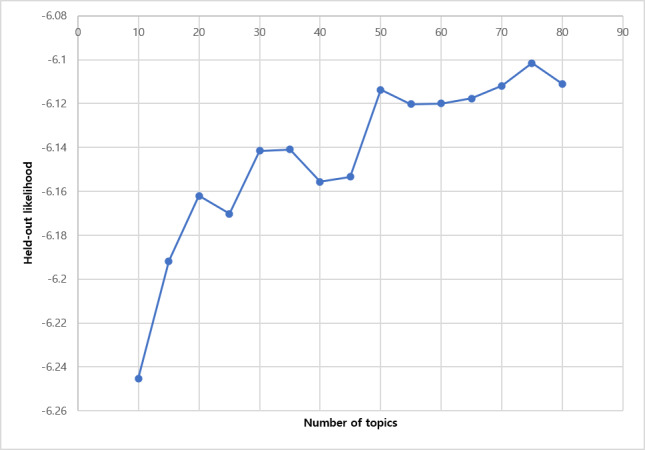
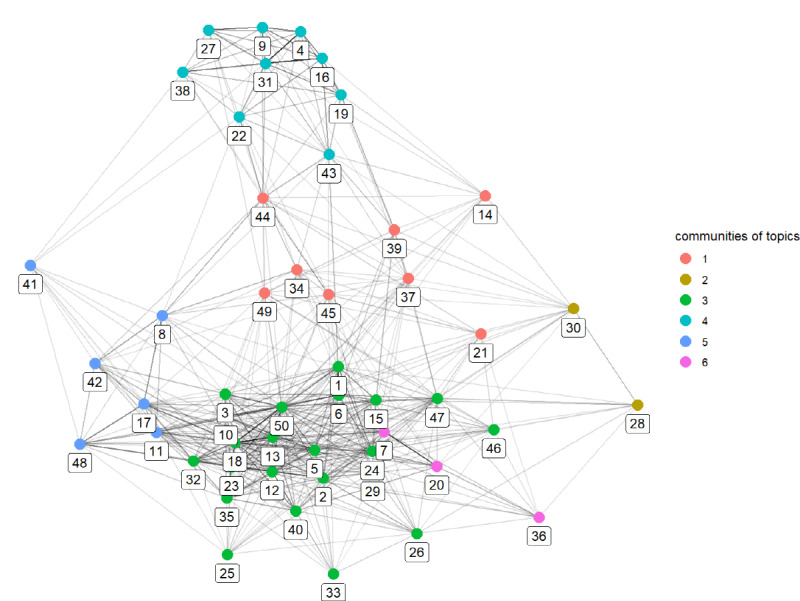
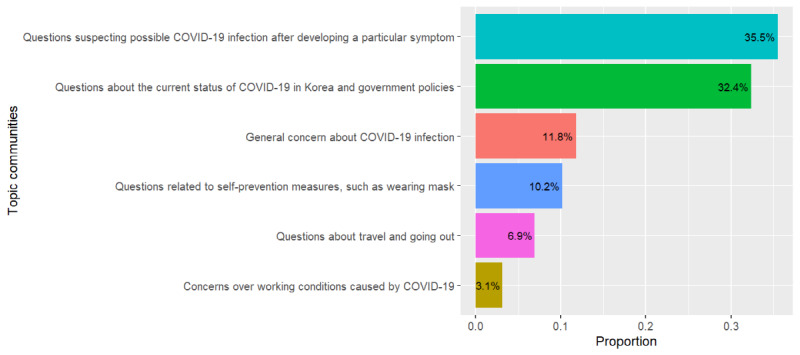
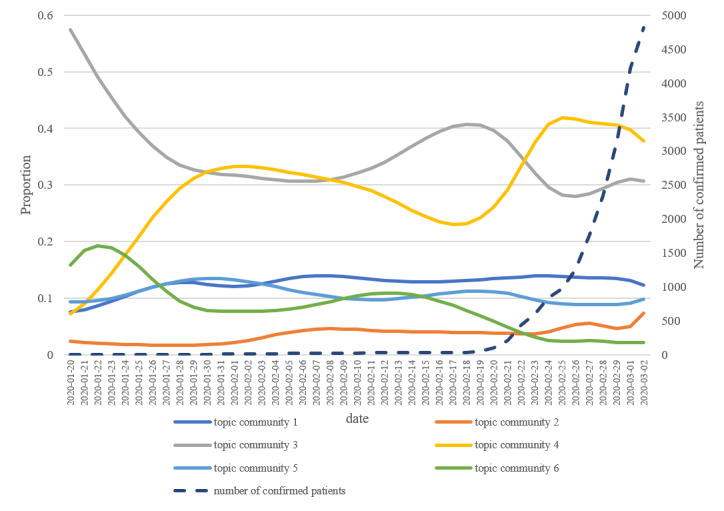
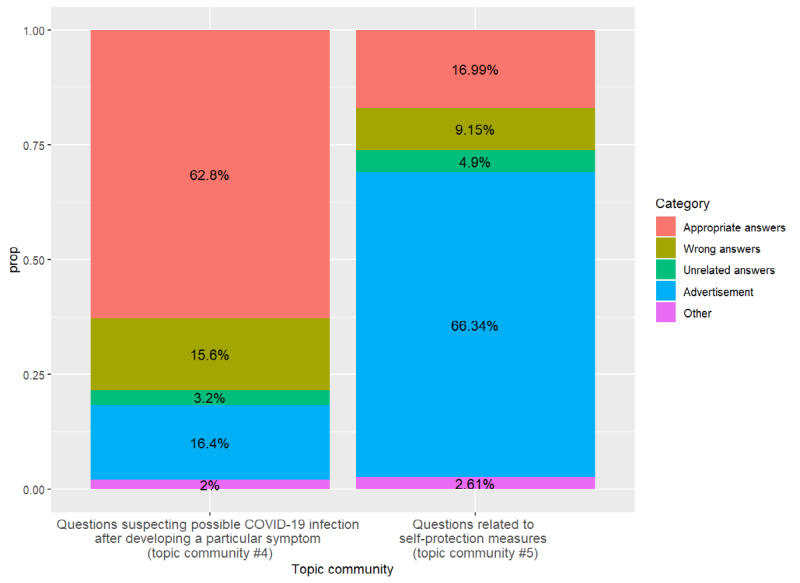
Results: A total of 50 topics and 6 cohesive topic communities were identified from the questions. Among them, topic community 4 (suspecting COVID-19 infection after developing a particular symptom) accounted for the largest portion of the questions. As the number of confirmed patients increased, the proportion of topics belonging to topic community 4 also increased. Additionally, the prolonged situation led to a slight increase in the proportion of topics related to job issues. People's anxieties and worries were closely related with physical symptoms and self-protection methods. Although relatively appropriate to suspect physical symptoms, a high proportion of answers related to self-protection methods were assessed as misinformation or advertisements.
Conclusions: Search activity for online information regarding the COVID-19 outbreak has been active. Many of the online questions were related to people's anxieties and worries. A considerable portion of corresponding answers had false information or were advertisements. The study results could contribute reference information to various countries that need to monitor public anxiety and provide appropriate information in the early stage of an infectious disease outbreak, including COVID-19. Our research also contributes to developing methods for measuring public opinion and sentiment in an epidemic situation based on natural language data on the internet.
Keywords: anxiety; coronavirus; health information exchange; online; pandemic; topic modeling.
©Wonkwang Jo, Jaeho Lee, Junli Park, Yeol Kim. Originally published in the Journal of Medical Internet Research (http://www.jmir.org), 02.06.2020.
Conflict of interest statement
Conflicts of Interest: None declared.
Figures
References
-
- World Health Organization. 2020. Apr 01, Coronavirus disease 2019 (COVID-19) situation report – 72 https://www.who.int/docs/default-source/coronaviruse/situation-reports/2....
-
- World Health Organization. 2020. Mar 07, WHO statement on cases of COVID-19 surpassing 100,000 https://www.who.int/news-room/detail/07-03-2020-who-statement-on-cases-o....
-
- Rizo CA, Lupea D, Baybourdy H, Anderson M, Closson T, Jadad AR. What Internet services would patients like from hospitals during an epidemic? Lessons from the SARS outbreak in Toronto. J Med Internet Res. 2005 Aug 03;7(4):e46. doi: 10.2196/jmir.7.4.e46. https://www.jmir.org/2005/4/e46/ - DOI - PMC - PubMed
-
- Gui X, Kou Y, Pine K, Chen Y. Managing uncertainty: using social media for risk assessment during a public health crisis. Proceedings of the CHI Conference on Human Factors in Computing Systems; CHI Conference on Human Factors in Computing Systems; May 2017; Denver, CO. 2017. May, pp. 4520–33. - DOI
MeSH terms
LinkOut - more resources
Full Text Sources
Medical
Research Materials
