The haemodynamics of the human placenta in utero
- PMID: 32463837
- PMCID: PMC7255609
- DOI: 10.1371/journal.pbio.3000676
The haemodynamics of the human placenta in utero
Abstract
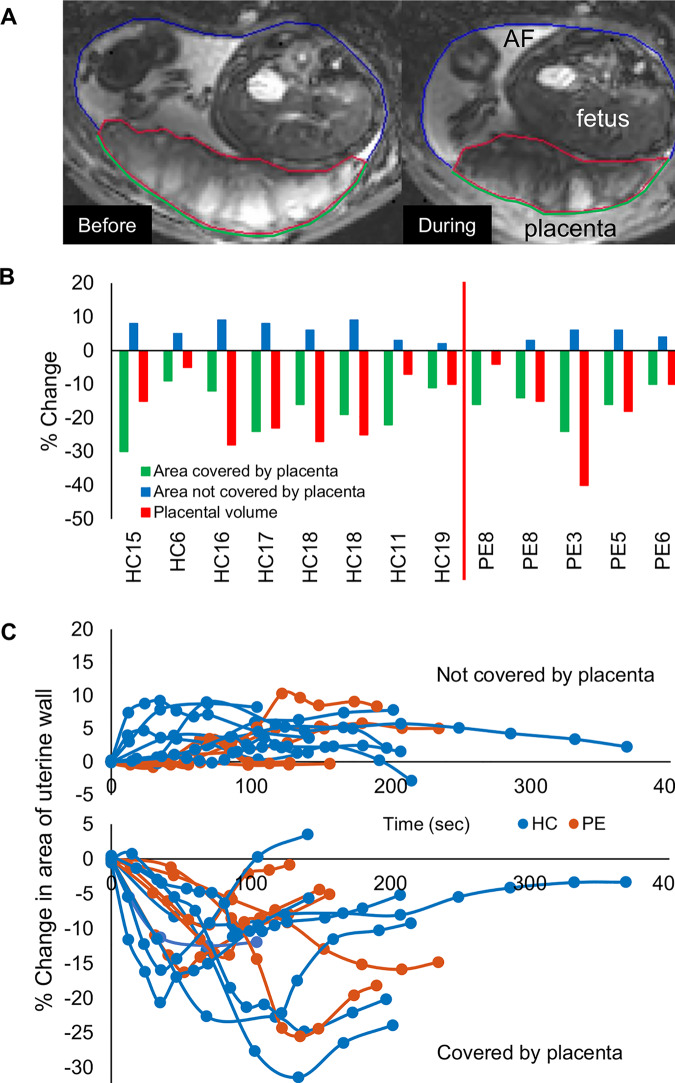
We have used magnetic resonance imaging (MRI) to provide important new insights into the function of the human placenta in utero. We have measured slow net flow and high net oxygenation in the placenta in vivo, which are consistent with efficient delivery of oxygen from mother to fetus. Our experimental evidence substantiates previous hypotheses on the effects of spiral artery remodelling in utero and also indicates rapid venous drainage from the placenta, which is important because this outflow has been largely neglected in the past. Furthermore, beyond Braxton Hicks contractions, which involve the entire uterus, we have identified a new physiological phenomenon, the 'utero-placental pump', by which the placenta and underlying uterine wall contract independently of the rest of the uterus, expelling maternal blood from the intervillous space.
Conflict of interest statement
The authors have declared that no competing interests exist.
Figures
References
-
- Peter Kaufmann. Comparative Placentation: Guinea Pig [Internet]. UCSF website. 2004 [cited 2019 Jan 12]. Available from: http://placentation.ucsd.edu/guinea.htm.
-
- McNanley T, Woods J. Placental Physiology [Internet]. Glob Libr Women’s Med. 2008. [cited 2020 May 11]. Available from: http://www.glowm.com/index.html?p=glowm.cml/section_view&articleid=195.
Publication types
MeSH terms
Substances
Grants and funding
LinkOut - more resources
Full Text Sources
Other Literature Sources
Miscellaneous