


Pancreatic Cancer and Cachexia-Metabolic Mechanisms and Novel Insights
- PMID: 32466362
- PMCID: PMC7352917
- DOI: 10.3390/nu12061543
Pancreatic Cancer and Cachexia-Metabolic Mechanisms and Novel Insights
Abstract
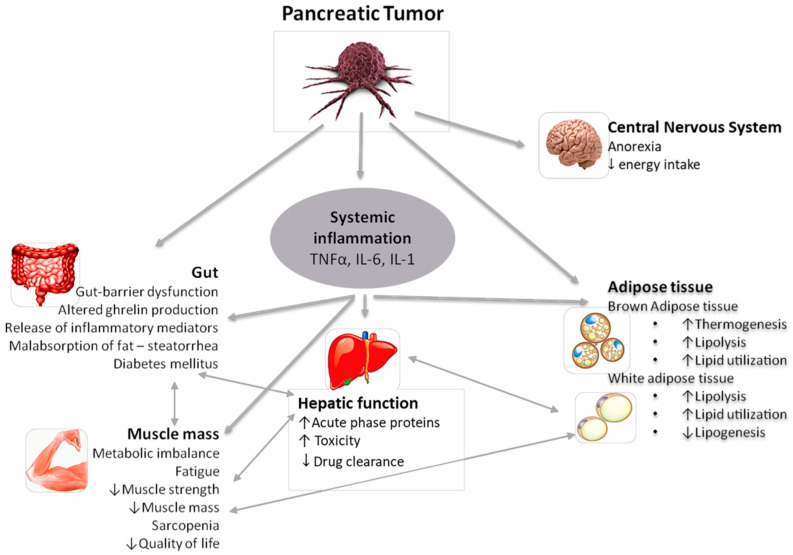
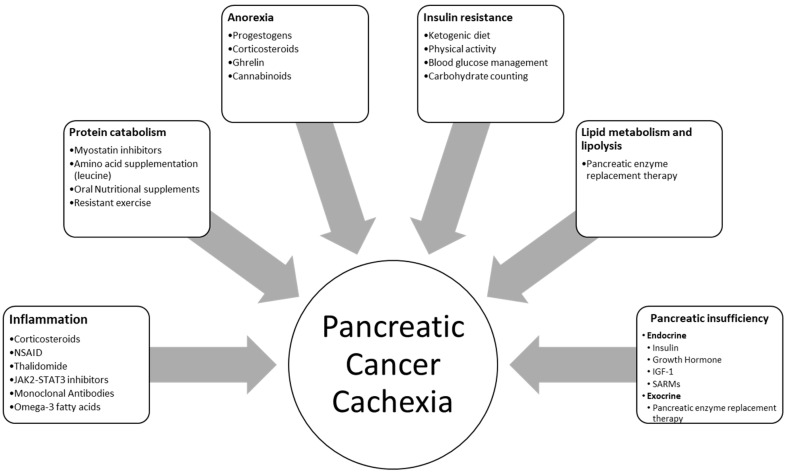
Cachexia is a major characteristic of multiple non-malignant diseases, advanced and metastatic cancers and it is highly prevalent in pancreatic cancer, affecting almost 70-80% of the patients. Cancer cachexia is a multifactorial condition accompanied by compromised appetite and changes in body composition, i.e., loss of fat. It is associated with lower effectiveness of treatment, compromised quality of life, and higher mortality. Understanding the complex pathways underlying the pathophysiology of cancer cachexia, new therapeutic targets will be unraveled. The interplay between tumor and host factors, such as cytokines, holds a central role in cachexia pathophysiology. Cytokines are possibly responsible for anorexia, hypermetabolism, muscle proteolysis, and apoptosis. In particular, cachexia in pancreatic cancer might be the result of the surgical removal of pancreas parts. In recent years, many studies have been carried out to identify an effective treatment algorithm for cachexia. Choosing the most appropriate treatment, the clinical effect and the risk of adverse effects should be taken under consideration. The purpose of this review is to highlight the pathophysiological mechanisms as well as the current ways of cachexia treatment in the pharmaceutical and the nutrition field.
Keywords: cachexia; pancreatic cancer; systemic inflammatory response.
Conflict of interest statement
No conflict of interest to be declared from the authors.
Figures
References
-
- de Matos-Neto E.M., Lima J.D., de Pereira W.O., Figuerêdo R.G., Riccardi D.M., Radloff K., das Neves R.X., Camargo R.G., Maximiano L.F., Tokeshi F., et al. Systemic Inflammation in Cachexia—Is Tumor Cytokine Expression Profile the Culprit? Front. Immunol. 2015;6:629. doi: 10.3389/fimmu.2015.00629. - DOI - PMC - PubMed
Publication types
MeSH terms
Substances
LinkOut - more resources
Full Text Sources
Medical
