


A phage-encoded anti-CRISPR enables complete evasion of type VI-A CRISPR-Cas immunity
- PMID: 32467331
- PMCID: PMC7975689
- DOI: 10.1126/science.abb6151
A phage-encoded anti-CRISPR enables complete evasion of type VI-A CRISPR-Cas immunity
Abstract
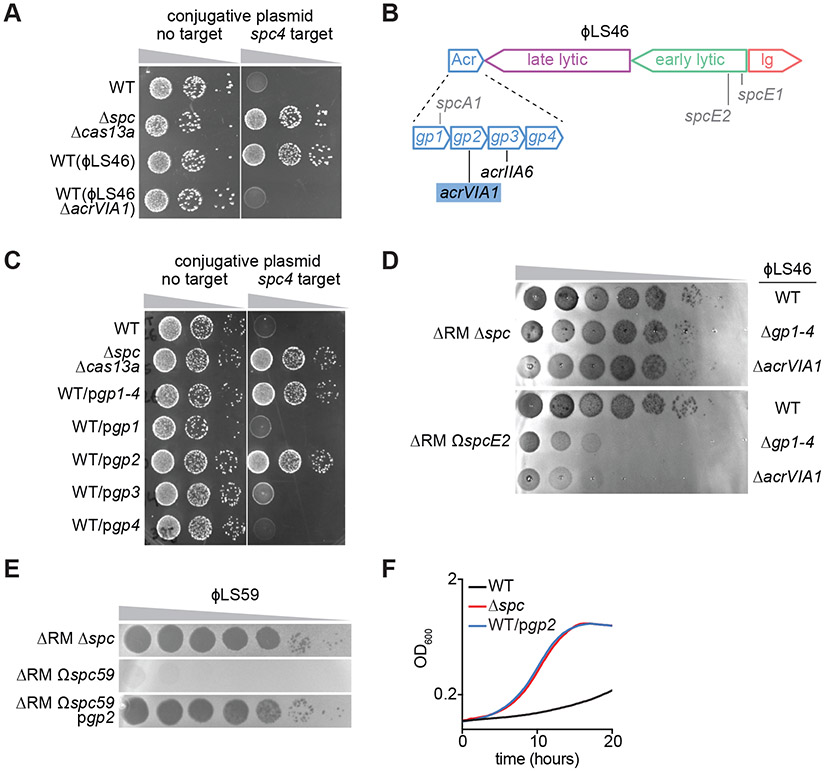
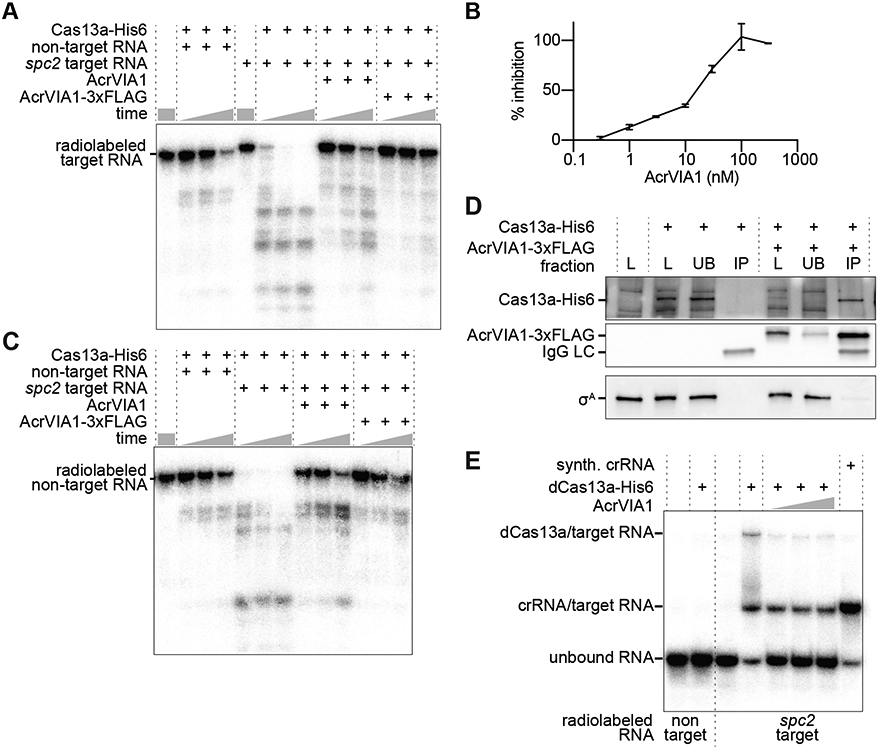
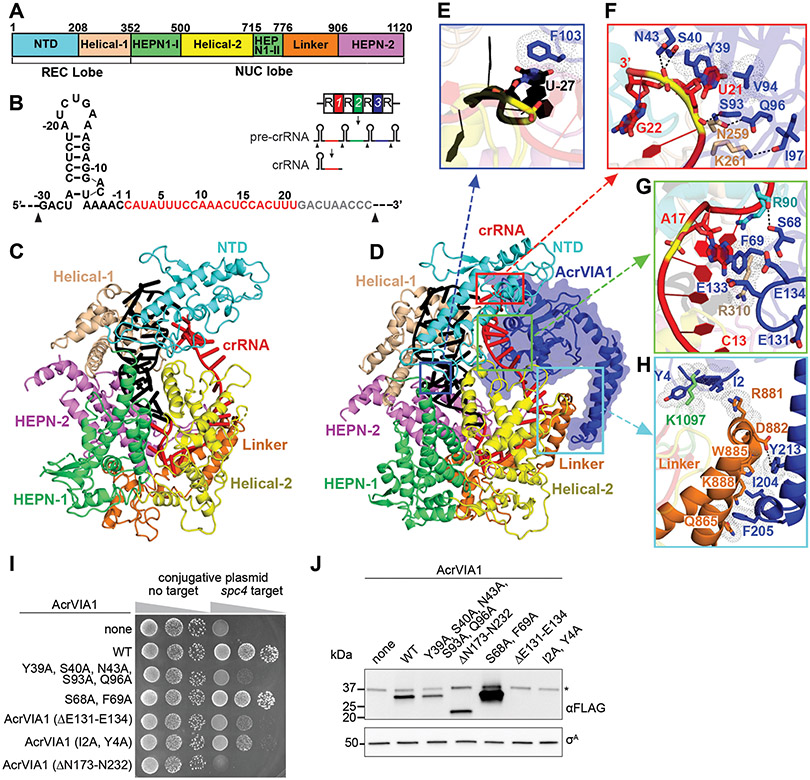
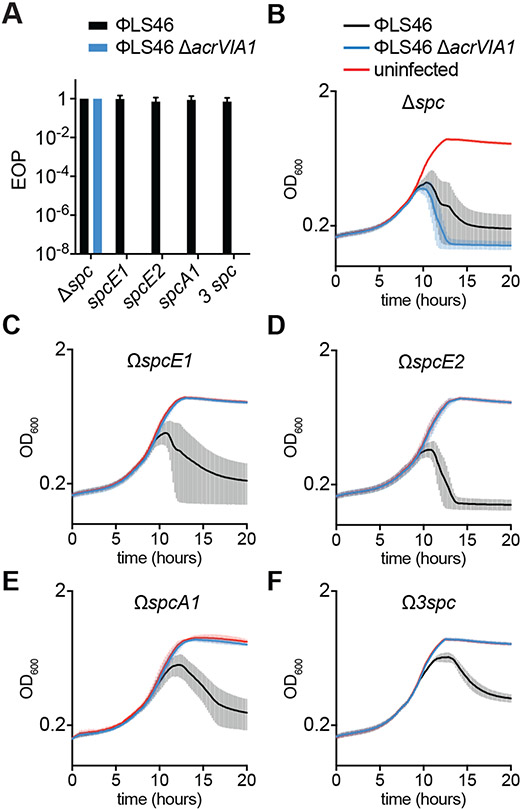
The CRISPR RNA (crRNA)-guided nuclease Cas13 recognizes complementary viral transcripts to trigger the degradation of both host and viral RNA during the type VI CRISPR-Cas antiviral response. However, how viruses can counteract this immunity is not known. We describe a listeriaphage (ϕLS46) encoding an anti-CRISPR protein (AcrVIA1) that inactivates the type VI-A CRISPR system of Listeria seeligeri Using genetics, biochemistry, and structural biology, we found that AcrVIA1 interacts with the guide-exposed face of Cas13a, preventing access to the target RNA and the conformational changes required for nuclease activation. Unlike inhibitors of DNA-cleaving Cas nucleases, which cause limited immunosuppression and require multiple infections to bypass CRISPR defenses, a single dose of AcrVIA1 delivered by an individual virion completely dismantles type VI-A CRISPR-mediated immunity.
Copyright © 2020, American Association for the Advancement of Science.
Figures
Comment in
-
Shutting down RNA-targeting CRISPR.Science. 2020 Jul 3;369(6499):31-32. doi: 10.1126/science.abc8243. Science. 2020. PMID: 32631881 No abstract available.
References
-
- Barrangou R et al., CRISPR provides acquired resistance against viruses in prokaryotes. Science 315, 1709–1712 (2007). - PubMed
-
- Bolotin A, Quinquis B, Sorokin A, Ehrlich SD, Clustered regularly interspaced short palindrome repeats (CRISPRs) have spacers of extrachromosomal origin. Microbiology 151, 2551–2561 (2005). - PubMed
-
- Mojica FJ, Diez-Villasenor C, Garcia-Martinez J, Soria E, Intervening sequences of regularly spaced prokaryotic repeats derive from foreign genetic elements. J. Mol. Evol 60, 174–182 (2005). - PubMed
-
- Pourcel C, Salvignol G, Vergnaud G, CRISPR elements in Yersinia pestis acquire new repeats by preferential uptake of bacteriophage DNA, and provide additional tools for evolutionary studies. Microbiology 151, 653–663 (2005). - PubMed
Publication types
MeSH terms
Substances
Supplementary concepts
Grants and funding
LinkOut - more resources
Full Text Sources
Other Literature Sources
