


Non-invasive brain stimulation for posttraumatic stress disorder: a systematic review and meta-analysis
- PMID: 32467579
- PMCID: PMC7256039
- DOI: 10.1038/s41398-020-0851-5
Non-invasive brain stimulation for posttraumatic stress disorder: a systematic review and meta-analysis
Abstract
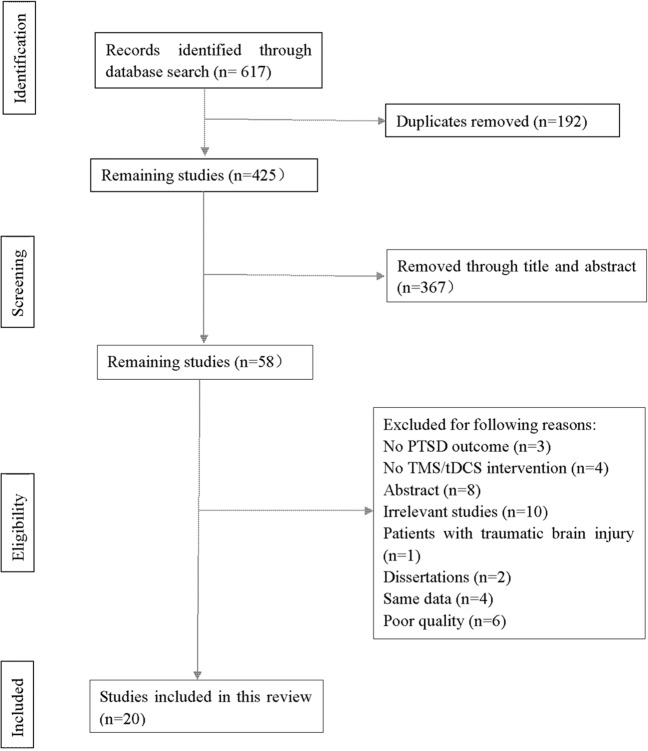
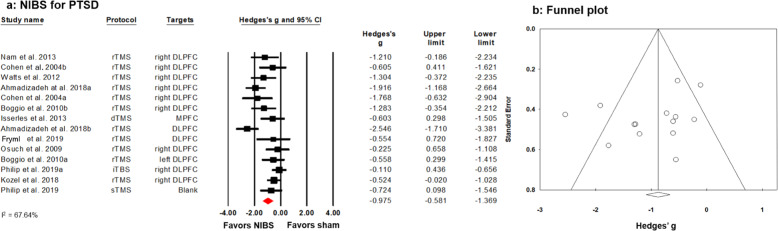
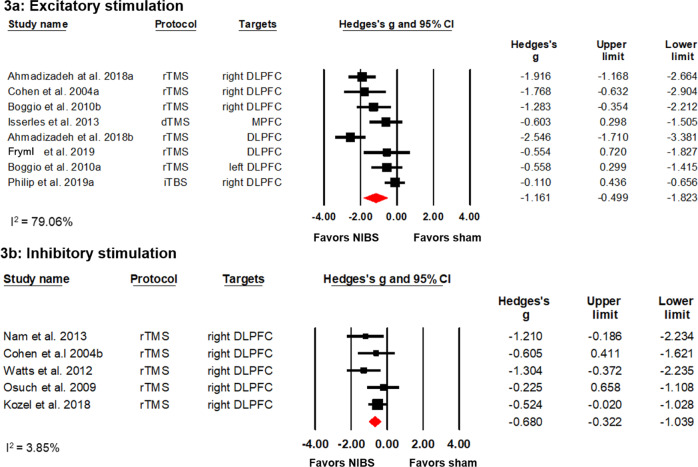
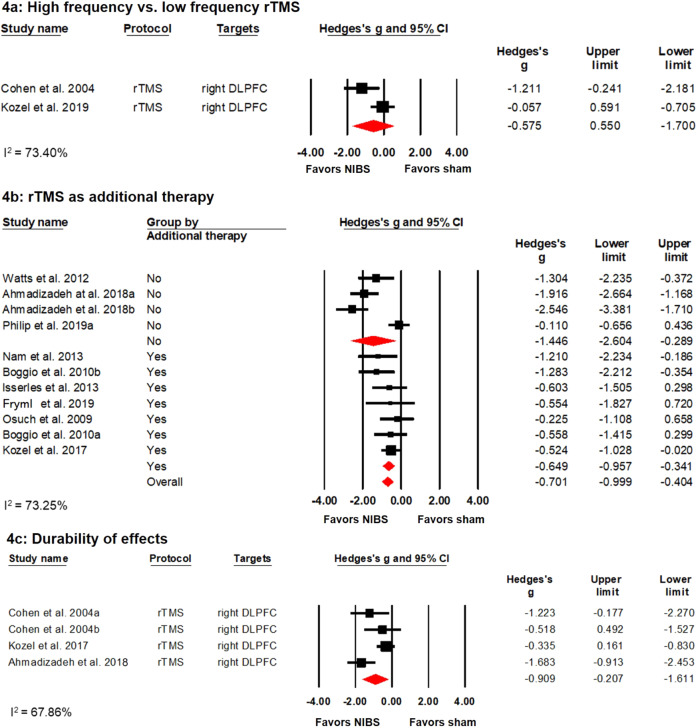
Approximately 7-9% of people develop posttraumatic stress disorder in their lifetime, but standard pharmacological treatment or psychotherapy shows a considerable individual variation in their effectiveness. Repetitive transcranial magnetic stimulation (rTMS) and transcranial direct current stimulation (tDCS) hold promise for the treatment of posttraumatic stress disorder. The objective of this meta-analysis was to summarize the existing evidence on the therapeutic effects of these brain stimulation treatments on posttraumatic core symptoms. We systematically retrieved articles published between 1st January 2000 and 1st January 2020 comparing the effects of active with sham stimulation or no intervention in posttraumatic patients from eight databases. Random-effects model was used for meta-analysis. Meta-regression and subgroup meta-analysis was performed to investigate the influence of stimulation dose and different stimulation protocols, respectively. 20 studies were included in this review, where of 11 randomized controlled trials were subjected to quantitative analysis. Active stimulation demonstrated significant reductions of core posttraumatic symptoms with a large effect size (Hedge's g = -0.975). Subgroup analysis showed that both excitatory and inhibitory rTMS of the right dorsolateral prefrontal cortex led to symptom reductions with a large (Hedges' g = -1.161, 95% CI, -1.823 to -0.499; p = 0.015) and medium effect size (Hedges' g = -0.680, 95% CI: -0.139 to -0.322; p ≤ 0.001) respectively. Results further indicated significant durability of symptom-reducing effects of treatments during a two to four weeks period post stimulation (Hedges' g = -0.909, 95% CI: -1.611 to -0.207; p = 0.011). rTMS of the right dorsolateral prefrontal cortex appears to have a positive effect in reducing core symptoms in patients with posttraumatic stress disorder.
Conflict of interest statement
The authors declare that they have no conflict of interest.
Figures
References
-
- American Psychiatric Association. Diagnostic and Statistical Manual of Mental Disorders: DSM-5. https://www.psychiatry.org/psychiatrists/practice/dsm.
-
- Morina N, Stam K, Pollet TV, Priebe S. Prevalence of depression and posttraumatic stress disorder in adult civilian survivors of war who stay in war-afflicted regions. A systematic review and meta-analysis of epidemiological studies. J. Affect Disord. 2018;239:328–338. - PubMed
-
- Bryant RA, et al. Acute and chronic posttraumatic stress symptoms in the emergendce of posttraumatic stress disorder a network analysis. JAMA Psychiatry. 2017;74:135–142. - PubMed
Publication types
MeSH terms
LinkOut - more resources
Full Text Sources
Medical
