


Quality measure of total ankle replacement outcomes in a non-designer centre
- PMID: 32467657
- PMCID: PMC7240183
- DOI: 10.1016/j.jor.2020.03.030
Quality measure of total ankle replacement outcomes in a non-designer centre
Erratum in
-
Erratum regarding missing Declaration of Competing Interest statements in previously published articles.J Orthop. 2020 Dec 15;24:291. doi: 10.1016/j.jor.2020.12.004. eCollection 2021 Mar-Apr. J Orthop. 2020. PMID: 33994700 Free PMC article.
Abstract
Background: Total ankle replacement (TAR) is a high-risk procedure with significant revision rates, post-op complications and implant failures. Long term follow-up data is less available for TAR compared to other joint replacement surgeries. To identify optimal follow-up parameters for patients with TAR, we conducted a study on the clinical outcomes and patient-reported outcome measurements (PROMs) in patients who had TAR performed in a non-designer's centre belonging to one of the hospitals of East Lancashire Hospitals NHS Trust (ELHT).
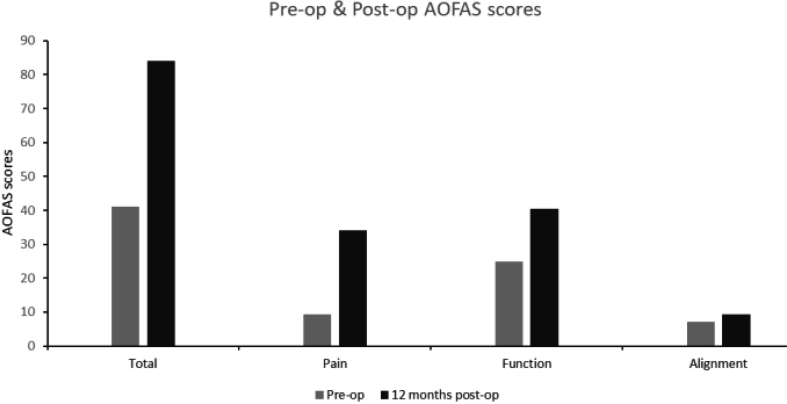
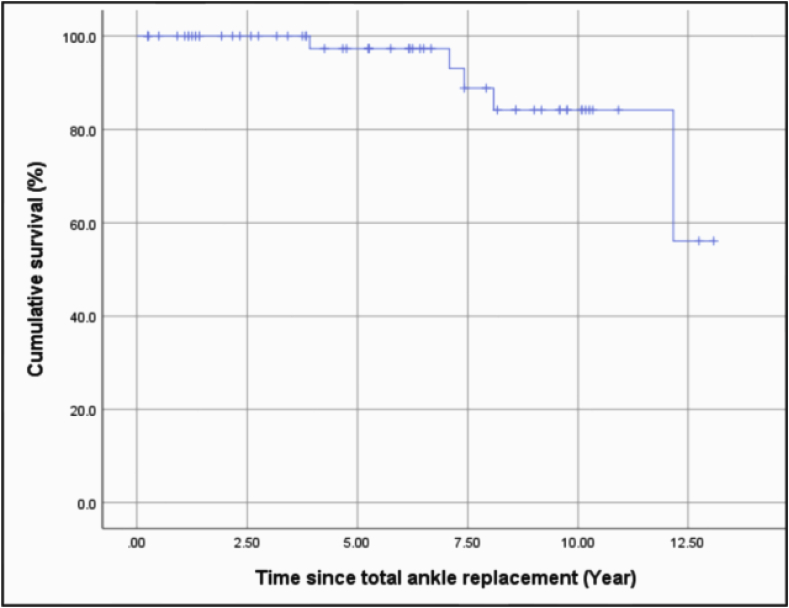
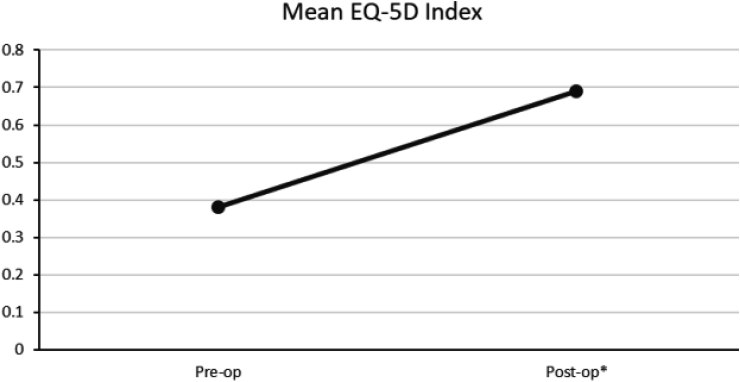
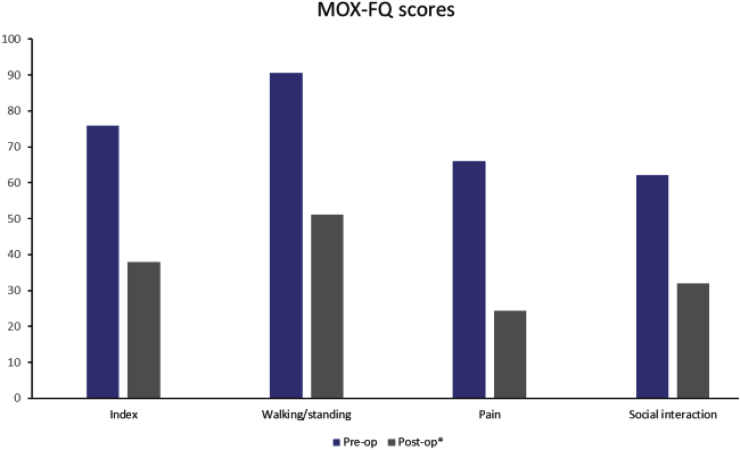
Methods: 60 TAR procedures were identified. Clinical outcomes being studied include post-op ankle range of movement (ROM), American Orthopaedic Foot & Ankle Society (AOFAS) Ankle-Hindfoot scores, reoperation/revision rates, radiological parameters and general surgical outcomes. A Kaplan-Meier survival analysis was also conducted. PROMs data included the EQ-5D index and the Manchester-Oxford Foot Questionnaire (MOX-FQ).
Results: Ankle range of movement and AOFAS scores improved from pre-op to post-op with statistical significance. The reoperation rate and revision rate were 3.3% and 8.3% respectively. 5-year survival of implant was 97.3% and 10-year survival was 84.2%. Overall PROMs data showed improvement from pre-op to post-op.
Conclusion: The clinical outcomes of TARs were comparable with conventional literature. Improvements in clinical, radiological and patient-reported outcomes were observed from pre-op to post-op. Further follow-up studies are required to assess the long-term survival of implants.
© 2020 Professor P K Surendran Memorial Education Foundation. Published by Elsevier B.V. All rights reserved.
Figures
References
LinkOut - more resources
Full Text Sources
Miscellaneous
