


Cell-specific conditional deletion of interleukin-1 (IL-1) ligands and its receptors: a new toolbox to study the role of IL-1 in health and disease
- PMID: 32468079
- PMCID: PMC7343756
- DOI: 10.1007/s00109-020-01928-5
Cell-specific conditional deletion of interleukin-1 (IL-1) ligands and its receptors: a new toolbox to study the role of IL-1 in health and disease
Abstract
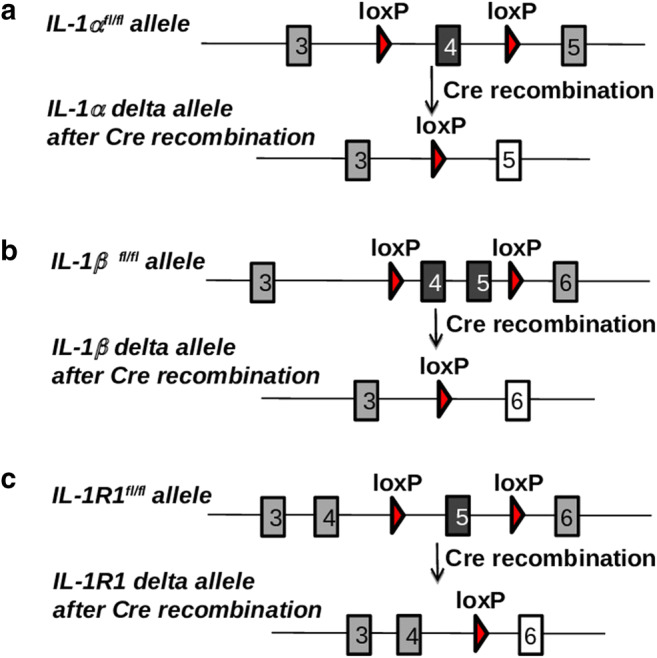
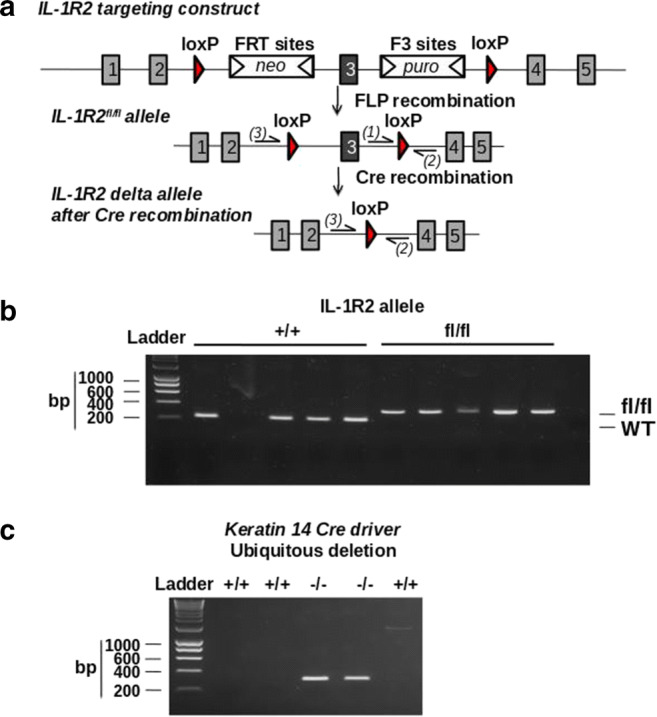
The pro-inflammatory cytokine interleukin-1 (IL-1) plays a key role in many physiological processes and during the inflammatory and immune response to most common diseases. IL-1 exists as two agonists, IL-1α and IL-1β that bind to the only signaling IL-1 type 1 receptor (IL-1R1), while a second decoy IL-1 type 2 receptor (IL-1R2) binds both forms of IL-1 without inducing cell signaling. The field of immunology and inflammation research has, over the past 35 years, unraveled many mechanisms of IL-1 actions, through in vitro manipulation of the IL-1 system or by using genetically engineered mouse models that lack either member of the IL-1 family in ubiquitous constitutive manner. However, the limitation of global mouse knockout technology has significantly hampered our understanding of the precise mechanisms of IL-1 actions in animal models of disease. Here we report and review the recent generation of new conditional mouse mutants in which exons of Il1a, Il1b, Il1r1, and Il1r2 genes flanked by loxP sites (fl/fl) can be deleted in cell-/tissue-specific constitutive or inducible manner by Cre recombinase expression. Hence, IL-1αfl/fl, IL-1βfl/fl, IL-1R1fl/fl, and IL-1R2fl/fl mice constitute a new toolbox that will provide a step change in our understanding of the cell-specific role of IL-1 and its receptor in health and disease and the potential development of targeted IL-1 therapies.
Keywords: Conditional deletion; Cre/loxP; IL-1; IL-1 receptors; Immunity; Inflammation.
Conflict of interest statement
The authors declare that they have no conflict of interest.
Figures
References
-
- Blomberg L, Hashizume K, Viebahn C. Blastocyst elongation, trophoblastic differentiation, and embryonic pattern formation. Reproduction. 2008;135:181–195. - PubMed
-
- Gadek-Michalska A, Tadeusz J, Rachwalska P, Bugajski J. Cytokines, prostaglandins and nitric oxide in the regulation of stress-response systems. Pharmacol Rep. 2013;65:1655–1662. - PubMed
-
- Marshall L, Born J. Brain-immune interactions in sleep. Int Rev Neurobiol. 2002;52:93–131. - PubMed
Publication types
MeSH terms
Substances
Grants and funding
LinkOut - more resources
Full Text Sources
Miscellaneous
