


Crohn's Disease Differentially Affects Region-Specific Composition and Aerotolerance Profiles of Mucosally Adherent Bacteria
- PMID: 32469069
- PMCID: PMC7676424
- DOI: 10.1093/ibd/izaa103
Crohn's Disease Differentially Affects Region-Specific Composition and Aerotolerance Profiles of Mucosally Adherent Bacteria
Abstract
Background: The intestinal microbiota play a key role in the onset, progression, and recurrence of Crohn disease (CD). Most microbiome studies assay fecal material, which does not provide region-specific information on mucosally adherent bacteria that directly interact with host systems. Changes in luminal oxygen have been proposed as a contributor to CD dybiosis.
Methods: The authors generated 16S rRNA data using colonic and ileal mucosal bacteria from patients with CD and without inflammatory bowel disease. We developed profiles reflecting bacterial abundance within defined aerotolerance categories. Bacterial diversity, composition, and aerotolerance profiles were compared across intestinal regions and disease phenotypes.
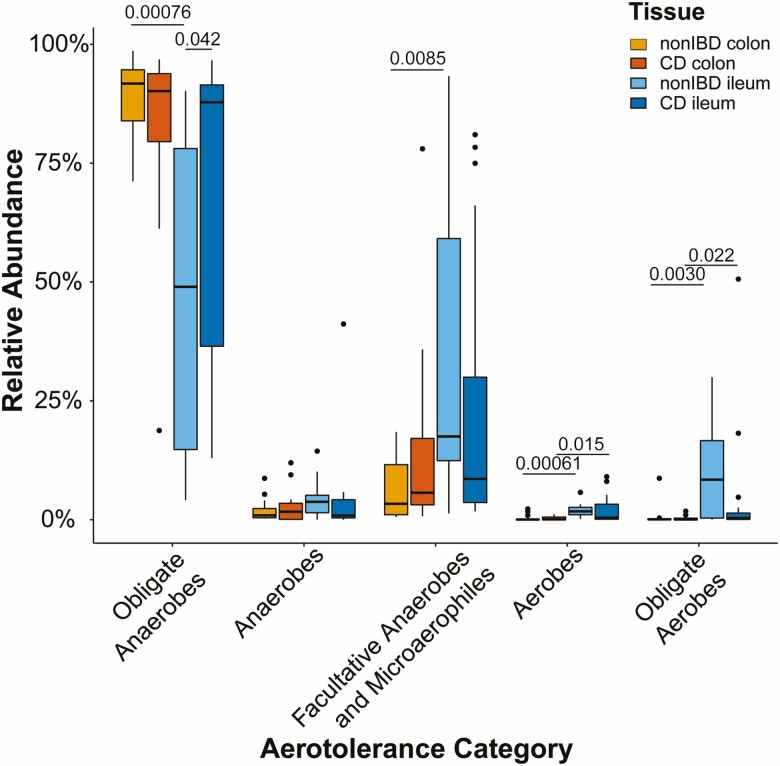
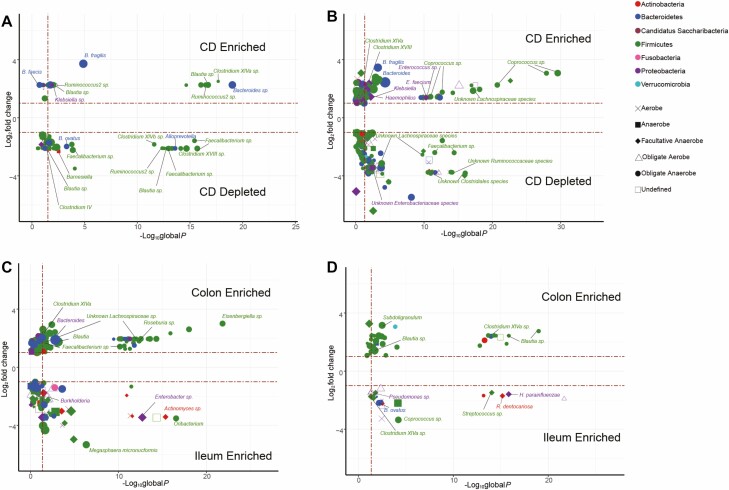
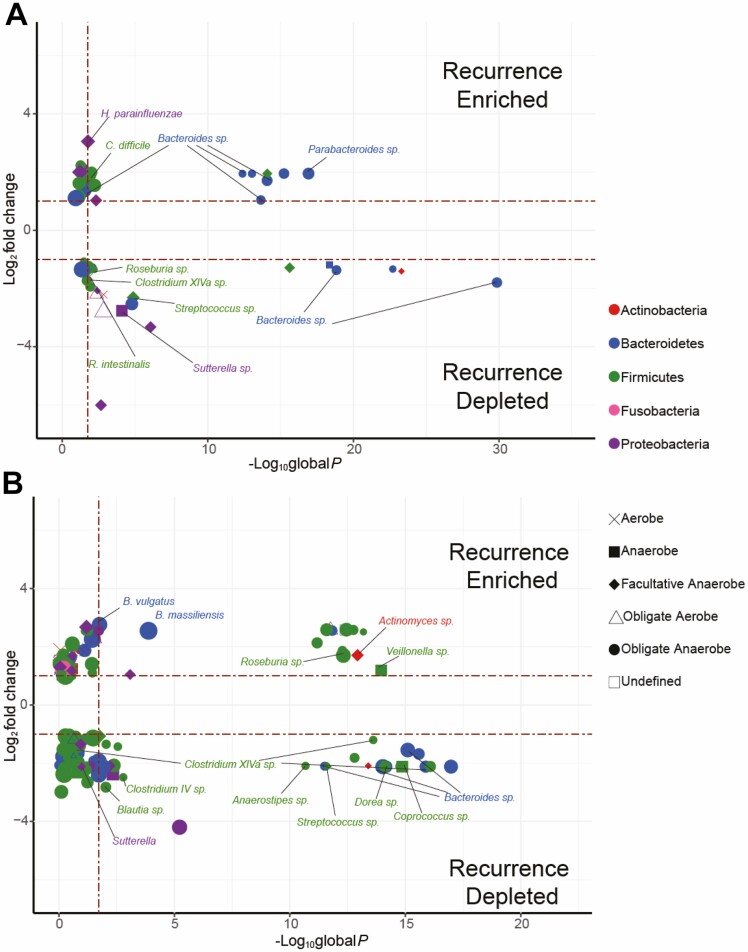
Results: Bacterial diversity decreased in CD in both the ileum and the colon. Aerotolerance profiles significantly differed between intestinal segments in patients without inflammatory bowel disease, although both were dominated by obligate anaerobes, as expected. In CD, high relative levels of obligate anaerobes were maintained in the colon and increased in the ileum. Relative abundances of similar and distinct taxa were altered in colon and ileum. Notably, several obligate anaerobes, such as Bacteroides fragilis, dramatically increased in CD in one or both intestinal segments, although specific increasing taxa varied across patients. Increased abundance of taxa from the Proteobacteria phylum was found only in the ileum. Bacterial diversity was significantly reduced in resected tissues of patients who developed postoperative disease recurrence across 2 independent cohorts, with common lower abundance of bacteria from the Bacteroides, Streptococcus, and Blautia genera.
Conclusions: Mucosally adherent bacteria in the colon and ileum show distinct alterations in CD that provide additional insights not revealed in fecal material.
Keywords: Crohn disease; IBD; microbiome; mucosally adherent microbiota; postoperative CD.
© 2020 Crohn’s & Colitis Foundation. Published by Oxford University Press. All rights reserved. For permissions, please e-mail: journals.permissions@oup.com.
Figures
References
-
- Eckburg PB, Relman DA. The role of microbes in Crohn’s disease. Clin Infect Dis. 2007;44:256–262. - PubMed
-
- Elson CO, Cong Y, McCracken VJ, et al. . Experimental models of inflammatory bowel disease reveal innate, adaptive, and regulatory mechanisms of host dialogue with the microbiota. Immunol Rev. 2005;206:260–276. - PubMed
Publication types
MeSH terms
Substances
Grants and funding
LinkOut - more resources
Full Text Sources
Medical
Molecular Biology Databases
