


Adaptive robot mediated upper limb training using electromyogram-based muscle fatigue indicators
- PMID: 32469912
- PMCID: PMC7259541
- DOI: 10.1371/journal.pone.0233545
Adaptive robot mediated upper limb training using electromyogram-based muscle fatigue indicators
Abstract
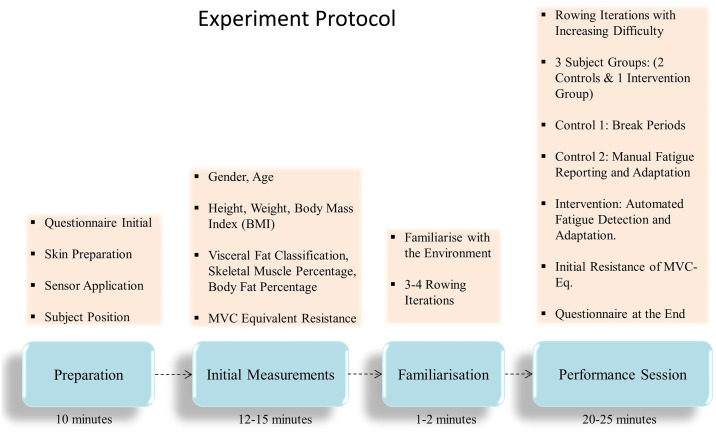
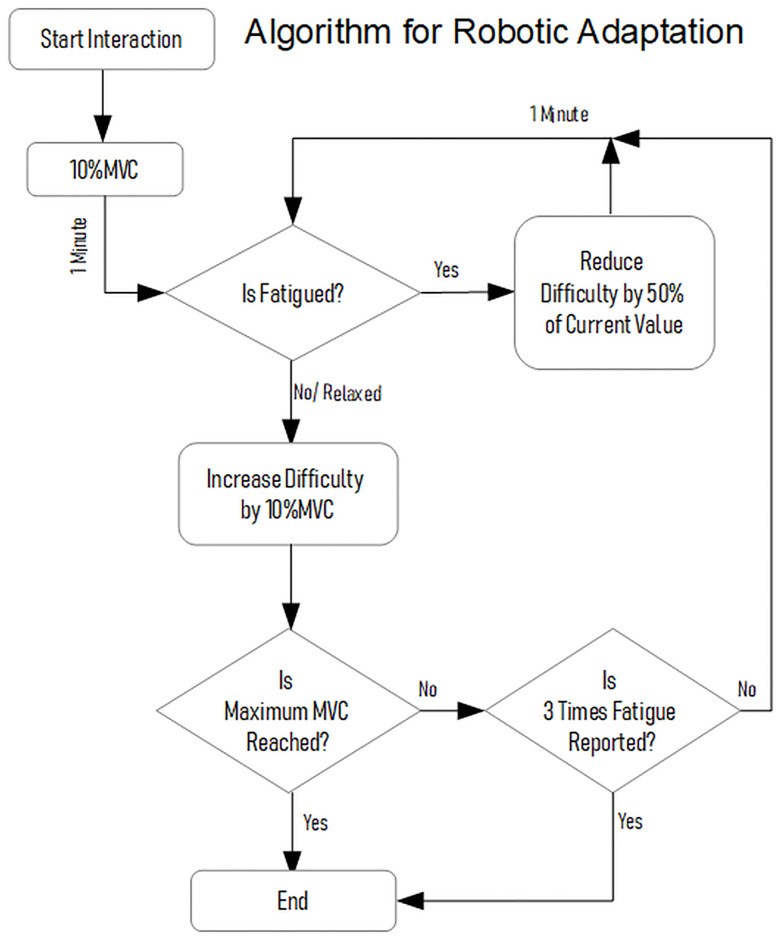
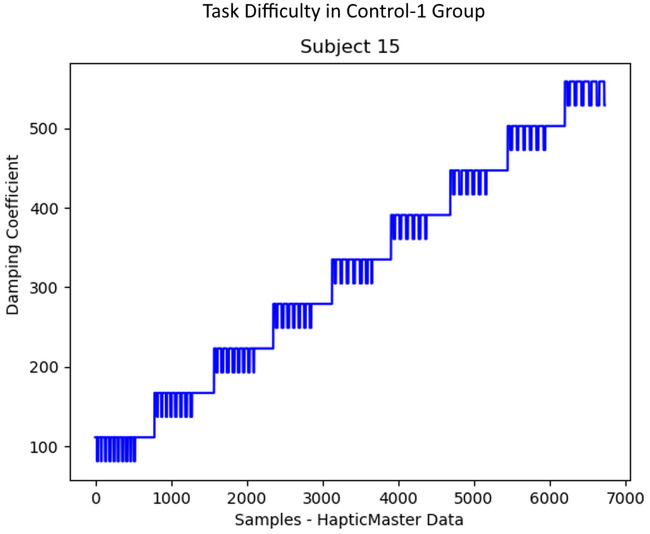
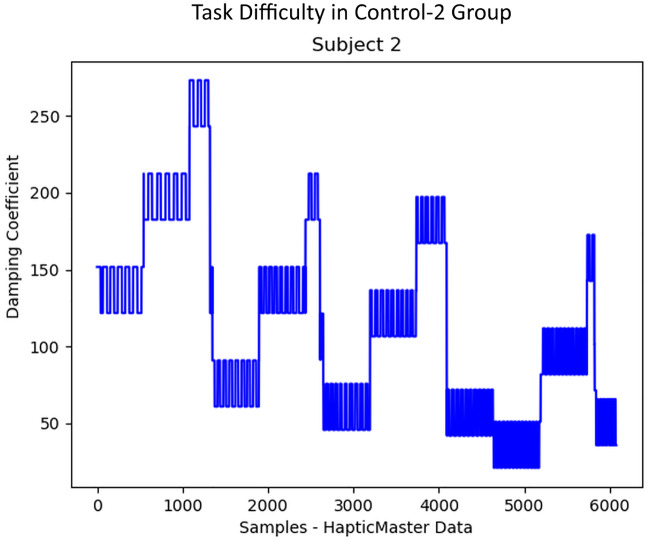
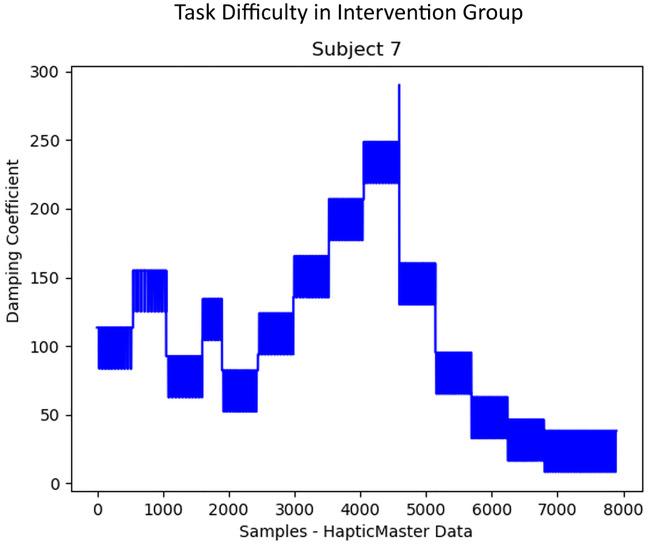
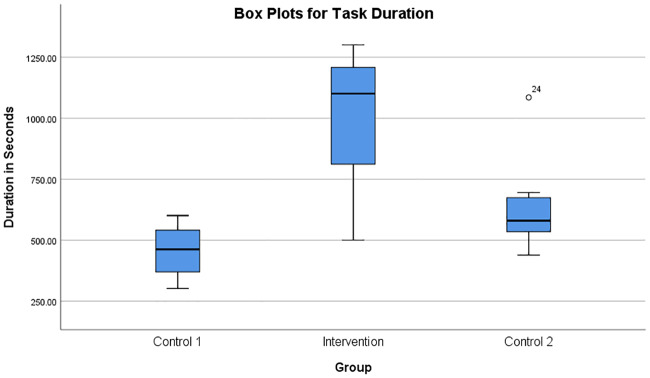
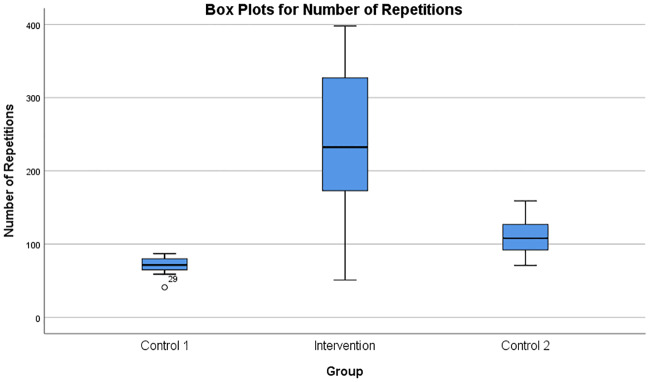
Studies on improving the adaptability of upper limb rehabilitation training do not often consider the implications of muscle fatigue sufficiently. In this study, electromyogram features were used as fatigue indicators in the context of human-robot interaction. They were utilised for auto-adaptation of the task difficulty, which resulted in a prolonged training interaction. The electromyogram data was collected from three gross-muscles of the upper limb in 30 healthy participants. The experiment followed a protocol for increasing the muscle strength by progressive strength training, that was an implementation of a known method in sports science for muscle training, in a new domain of robotic adaptation in muscle training. The study also compared how the participants in three experimental conditions perceived the change in task difficulty levels. One task benefitted from robotic adaptation (Intervention group) where the robot adjusted the task difficulty. The other two tasks were control groups 1 and 2. There was no difficulty adjustment at all in Control 1 group and the difficulty was adjusted manually in Control 2 group. The results indicated that the participants could perform a prolonged progressive strength training exercise with more repetitions with the help of a fatigue-based robotic adaptation, compared to the training interactions, which were based on manual/no adaptation. This study showed that it is possible to alter the level of the challenge using fatigue indicators, and thus, increase the interaction time. The results of the study are expected to be extended to stroke patients in the future by utilising the potential for adapting the training difficulty according to the patient's muscular state, and also to have a large number repetitions in a robot-assisted training environment.
Conflict of interest statement
The authors have declared that no competing interests exist.
Figures
References
-
- Goodrich MA, Schultz AC, Goodrich MA, Schultz AC. Human-Robot Interaction: A Survey. Foundations and Trends R in Human-Computer Interaction. 2007;1(3):203–275.
-
- David L Jaffe M, Nelson D, Thiemer J. Perspectives in Assistive Technology; 2012.
-
- Stein J, Krebs HI, Frontera WR, Fasoli SE, Hughes R, Hogan N. Comparison of two techniques of robot-aided upper limb exercise training after stroke. American journal of physical medicine & rehabilitation. 2004;83(9):720–8. - PubMed
-
- Xu G, Gao X, Chen S, Wang Q, Zhu B, Li J. A novel approach for robot-assisted upper-limb rehabilitation. International Journal of Advanced Robotic Systems. 2017;14(6):172988141773667.
MeSH terms
LinkOut - more resources
Full Text Sources
