


Health care workers in conflict and post-conflict settings: Systematic mapping of the evidence
- PMID: 32470071
- PMCID: PMC7259645
- DOI: 10.1371/journal.pone.0233757
Health care workers in conflict and post-conflict settings: Systematic mapping of the evidence
Abstract
Background: Health care workers (HCWs) are essential for the delivery of health care services in conflict areas and in rebuilding health systems post-conflict.
Objective: The aim of this study was to systematically identify and map the published evidence on HCWs in conflict and post-conflict settings. Our ultimate aim is to inform researchers and funders on research gap on this subject and support relevant stakeholders by providing them with a comprehensive resource of evidence about HCWs in conflict and post-conflict settings on a global scale.
Methods: We conducted a systematic mapping of the literature. We included a wide range of study designs, addressing any type of personnel providing health services in either conflict or post-conflict settings. We conducted a descriptive analysis of the general characteristics of the included papers and built two interactive systematic maps organized by country, study design and theme.
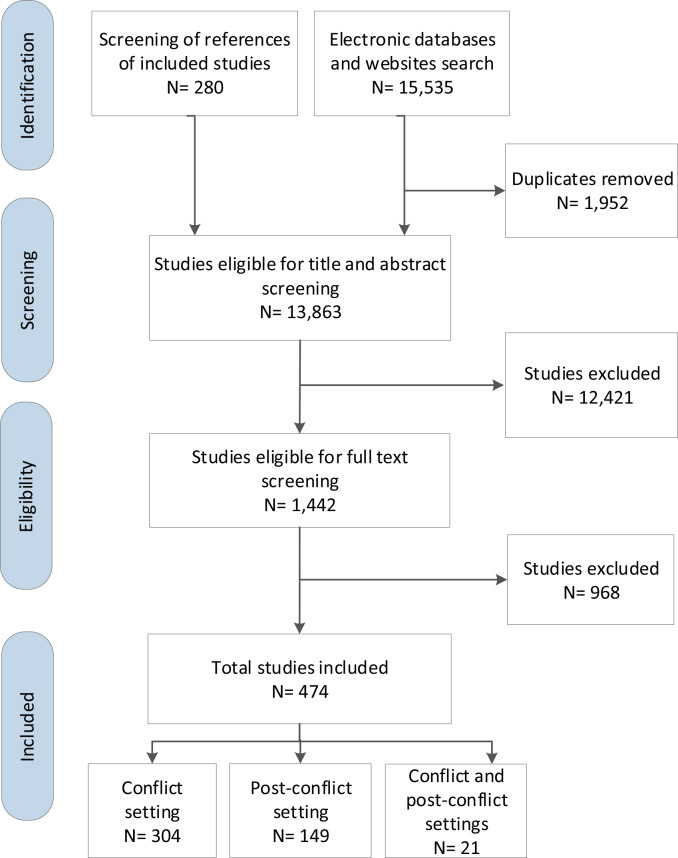
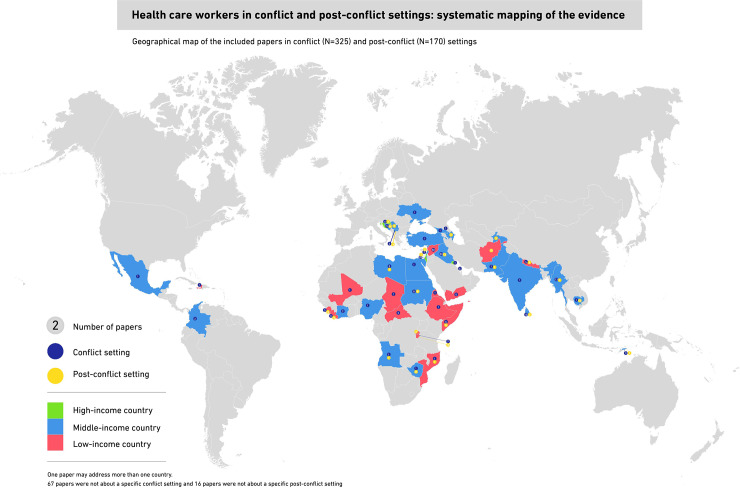
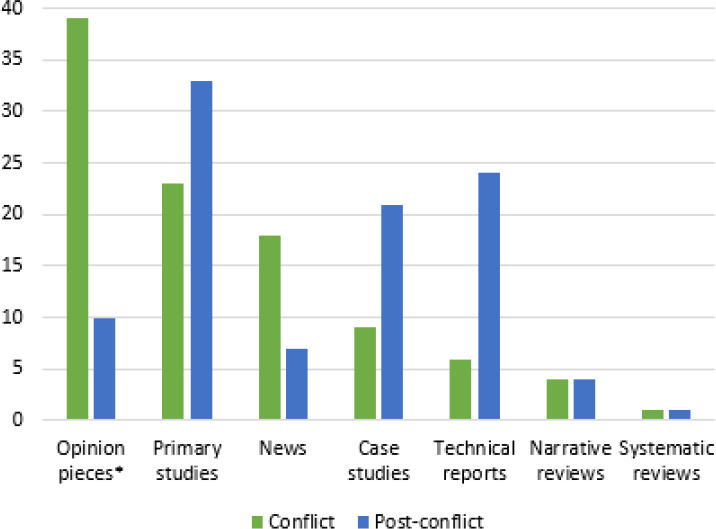
Results: Out of 13,863 identified citations, we included a total of 474 studies: 304 on conflict settings, 149 on post-conflict settings, and 21 on both conflict and post-conflict settings. For conflict settings, the most studied counties were Iraq (15%), Syria (15%), Israel (10%), and the State of Palestine (9%). The most common types of publication were opinion pieces in conflict settings (39%), and primary studies (33%) in post-conflict settings. In addition, most of the first and corresponding authors were affiliated with countries different from the country focus of the paper. Violence against health workers was the most tackled theme of papers reporting on conflict settings, while workforce performance was the most addressed theme by papers reporting on post-conflict settings. The majority of papers in both conflict and post-conflict settings did not report funding sources (81% and 53%) or conflicts of interest of authors (73% and 62%), and around half of primary studies did not report on ethical approvals (45% and 41%).
Conclusions: This systematic mapping provides a comprehensive database of evidence about HCWs in conflict and post-conflict settings on a global scale that is often needed to inform policies and strategies on effective workforce planning and management and in reducing emigration. It can also be used to identify evidence for policy-relevant questions, knowledge gaps to direct future primary research, and knowledge clusters.
Conflict of interest statement
The authors have declared that no competing interests exist.
Figures
References
-
- Conflict SHi. No Protection No Respect. 2016.
-
- Rubenstein RJHLS. Health in Postconflict and Fragile States. United States Institute of Peace. 2012;Special Report 301.
Publication types
MeSH terms
LinkOut - more resources
Full Text Sources
Miscellaneous
