


Percutaneous mastoid electrical stimulator improves Poststroke depression and cognitive function in patients with Ischaemic stroke: a prospective, randomized, double-blind, and sham-controlled study
- PMID: 32471373
- PMCID: PMC7257192
- DOI: 10.1186/s12883-020-01795-0
Percutaneous mastoid electrical stimulator improves Poststroke depression and cognitive function in patients with Ischaemic stroke: a prospective, randomized, double-blind, and sham-controlled study
Abstract
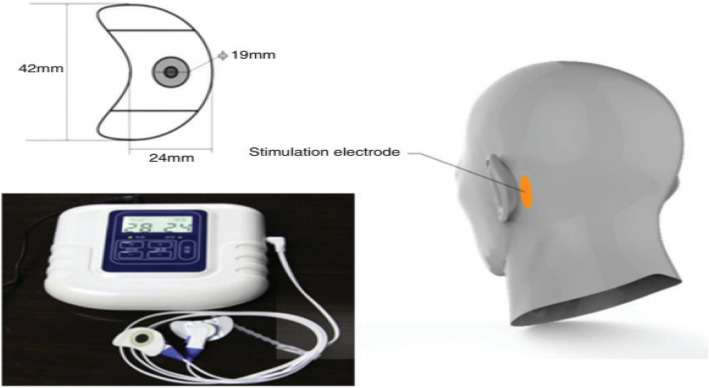
Background: Poststroke depression can lead to functional dependence, cognitive impairment and reduced quality of life. The aim of this study was to evaluate the effects of a percutaneous mastoid electrical stimulator (PMES) plus antidepressants on poststroke depression and cognitive function.
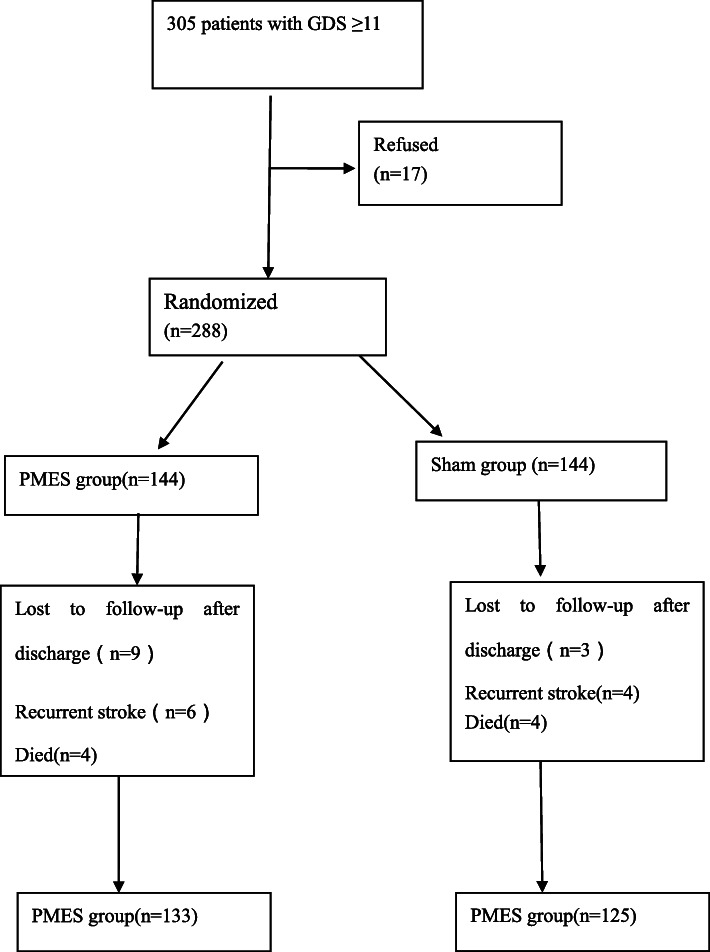
Methods: This study was a prospective, randomized, double-blind, and sham-controlled study. A total of 258 clinically depressed ischaemic stroke patients within 14 days of index stroke were randomly assigned to the PMES plus antidepressant (PMES group, N = 125) and sham plus antidepressant (sham group, N = 133) groups. All patients underwent the Montreal Cognitive Assessment (MoCA) and Hamilton Rating Scale for Depression (HRSD) test at 2 weeks (baseline), and 6 months(M6) after ischaemic stroke. Primary outcomes were the percentage of patients showing a treatment response (≥50% reduction in HRSD score) and depression remission (HRSD score ≤ 9) at 6 months. The secondary outcome was the percentage of patients with a MoCA score < 26.
Results: The percentages of patients showing a treatment response and depression remission were significantly higher in the PMES group than in the sham group (57.60% vs 41.35%, P = 0.009; 44.00% vs 29.32%, P = 0.014 respectively). The mean value of the HRSD score change [M (month)6-baseline] was significantly higher in the PMES group than in the sham group at 6 months (- 11.93 ± 5.32 vs - 10.48 ± 6.10, P = 0.036, respectively). The percentage of patients with MoCA scores < 26 was lower in the PEMS group than in the sham group (12.0% vs 24.06%, P = 0.012,respectively), and the mean value of the MoCA score change (M6-baseline) was higher in the PMES group than in the sham group (3.50 ± 2.55 vs 2.72 ± 2.52, P = 0.005, respectively).
Conclusion: These findings demonstrate that PMES adjunctive to antidepressant therapy is effective in reducing depression, achieving remission in the short term, and improving cognition.
Trial registration: This trial was retrospectively registered (registration number: ChiCTR1800016463) on 03 June 2018.
Keywords: Acute ischaemic stroke; Cognition; Percutaneous mastoid electrical stimulator; Poststroke depression.
Conflict of interest statement
The authors declare that they have no competing interests.
Figures
References
-
- Towfighi A, Ovbiagele B, El Husseini N, Hackett ML, Jorge RE, Kissela BM, Mitchell PH, Skolarus LE, Whooley MA, Williams LS. American Heart Association stroke council; council on cardiovascular and stroke nursing; and council on quality of care and outcomes research. Poststroke depression:a scientific statement for healthcare professionals from the American Heart Association/American stroke association. Stroke. 2017;48(2):e30–e43. doi: 10.1161/STR.0000000000000113. - DOI - PubMed
Publication types
MeSH terms
Substances
Grants and funding
LinkOut - more resources
Full Text Sources
Medical
