


The prevalence of social care in US health care settings depends on how and whom you ask
- PMID: 32471466
- PMCID: PMC7260787
- DOI: 10.1186/s12913-020-05338-8
The prevalence of social care in US health care settings depends on how and whom you ask
Abstract
Background: Despite unprecedented enthusiasm for integrating social risk screening and related interventions into US health care settings, we know relatively little about the extent to which these activities occur. We reviewed results from multiple national surveys that reported on the prevalence of social care activities.
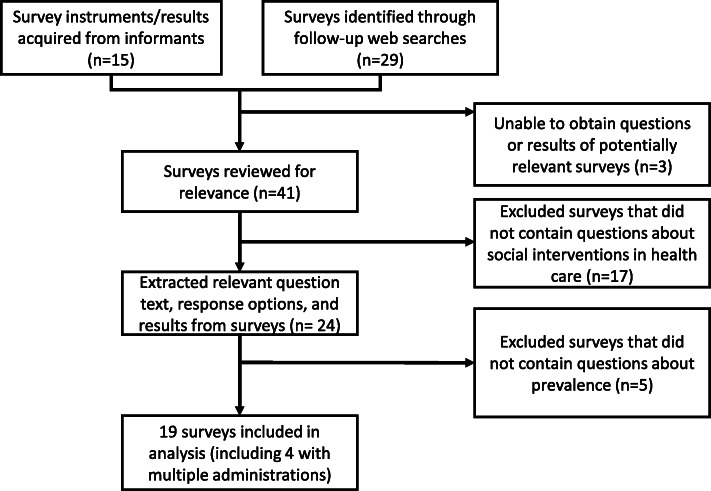
Methods: We used snowball sampling to solicit input from 29 expert informants who were asked to share any knowledge about survey instruments that included questions on the prevalence of social care-related activities conducted in health care settings. We subsequently ran web searches on recommended surveys to identify those fielded with a national sample and conducted between Jan 1, 2007 and May 31, 2019. Finally, we analyzed and compared results across surveys.
Results: We reviewed 23 total survey events (19 individual surveys and 4 that had been re-administered) that included questions on the extent of social care activities across health care disciplines and settings. Samples included a wide range of health care stakeholders (including payers, health care executives, providers, and patients.) Sample sizes ranged across the types of respondents: 95-120 respondents in surveys of payers; 44-757 in surveys of health care delivery leaders; 484-2333 in surveys of clinicians; and 500-7002 in surveys of patients. In eight cases, survey reports did not include response rates; another four reports described response rates under 25%. Fifteen of the 23 surveys incorporated questions on the prevalence of social risk screening; 17 included questions on social care intervention activities. Responses about the prevalence of both screening and interventions varied widely: between 15 and 100% of respondents reported their organization conducts screening for at least one social risk; 18-100% of respondents reported providing social care interventions. Between 3 and 22% of surveyed patients reported being screened or assisted with a social risk. In the four surveys that were administered in different years, we found no significant differences in results between survey administrations.
Conclusions: Findings suggest that caution is warranted in interpreting survey findings from any single survey since existing surveys report a wide range of prevalence estimates for social risk screening and interventions.
Keywords: Social care; Social determinants of health; Social risk screening.
Conflict of interest statement
The authors declare that they have no competing interests.
Figures
References
-
- Alderwick H, Hood-Ronick CM, Gottlieb LM. Medicaid investments to address social needs in Oregon and California. Health Aff. 2019;38(5):774–781. - PubMed
-
- Change Healthcare . Value-Based Care in America: State-by-State. 2019.
-
- Baer TE, Scherer EA, Fleegler EW, Hassan A. Food insecurity and the burden of health-related social problems in an urban youth population. J Adolesc Health. 2015;57(6):601–607. - PubMed
-
- Sandel Megan, Sheward Richard, Ettinger de Cuba Stephanie, Coleman Sharon, Heeren Timothy, Black Maureen M., Casey Patrick H., Chilton Mariana, Cook John, Cutts Diana Becker, Rose-Jacobs Ruth, Frank Deborah A. Timing and Duration of Pre- and Postnatal Homelessness and the Health of Young Children. Pediatrics. 2018;142(4):e20174254. - PubMed
-
- Gundersen C, Ziliak JP. Food insecurity and health outcomes. Health Aff. 2015;34(11):1830–1839. - PubMed
MeSH terms
Grants and funding
LinkOut - more resources
Full Text Sources
Medical
Miscellaneous
