


A structural equation modeling approach to understanding pathways linking survivorship care plans to survivor-level outcomes
- PMID: 32474862
- PMCID: PMC7577951
- DOI: 10.1007/s11764-020-00896-6
A structural equation modeling approach to understanding pathways linking survivorship care plans to survivor-level outcomes
Abstract
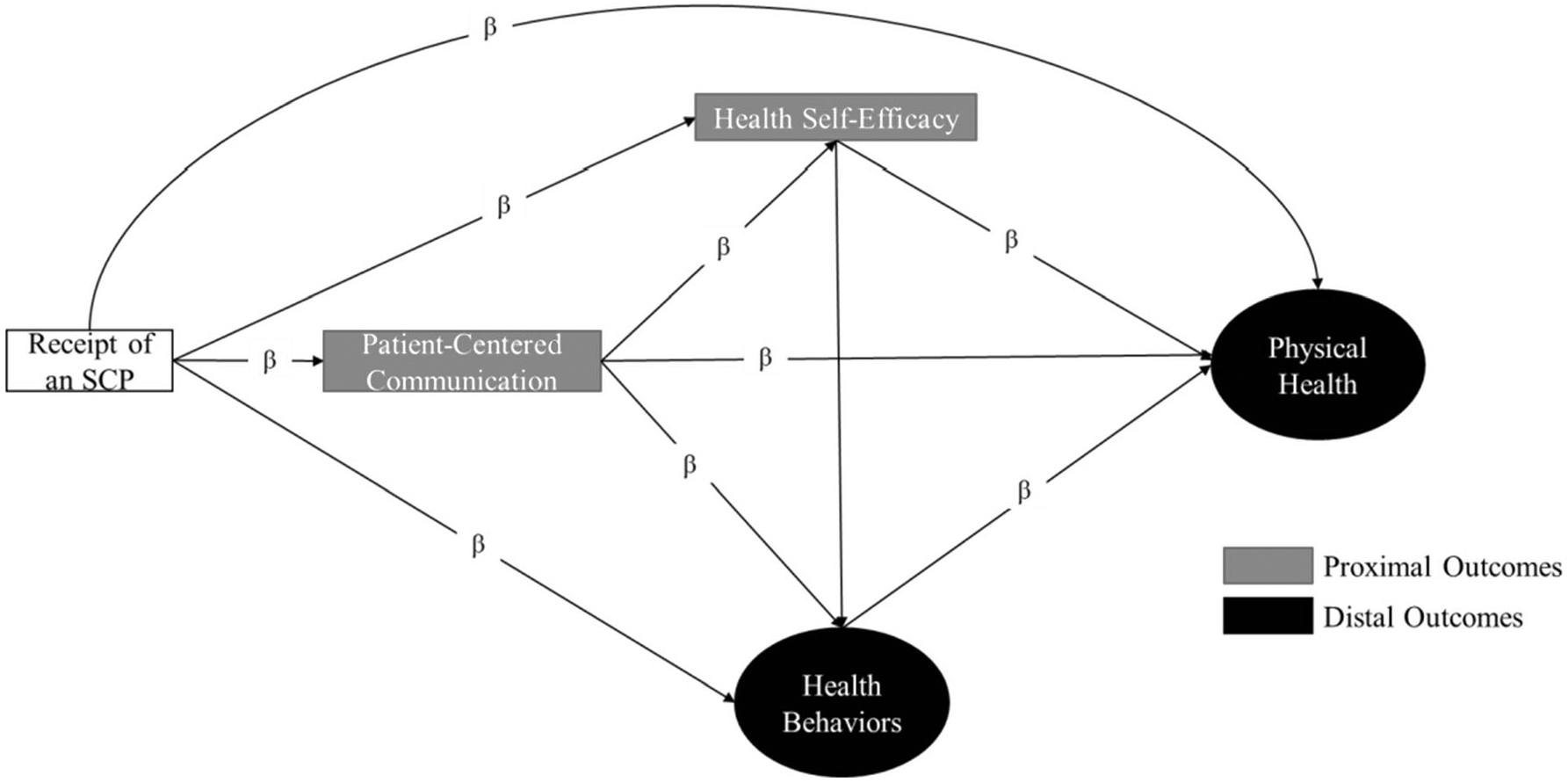
Purpose: Several high-profile organizations have mandated the delivery of survivorship care plans (SCPs) despite mixed evidence regarding the effectiveness of SCPs on key survivor-level outcomes. There is a need to understand the types of survivor-level outcomes the SCPs are likely to change. Informed by existing frameworks and the literature, the objective of this study was to understand the pathways linking the receipt of a SCP to key survivor-level outcomes including patient-centered communication (PCC), health self-efficacy, changes in health behaviors, and improvements in overall health.
Methods: We used structural equation modeling to test the direct and indirect pathways linking the receipt of an SCP to patient-centered communication (PCC), health self-efficacy, and latent measures of health behaviors and physical health in a nationally representative sample of breast and colorectal cancer survivors from the Health Information National Trends Survey.
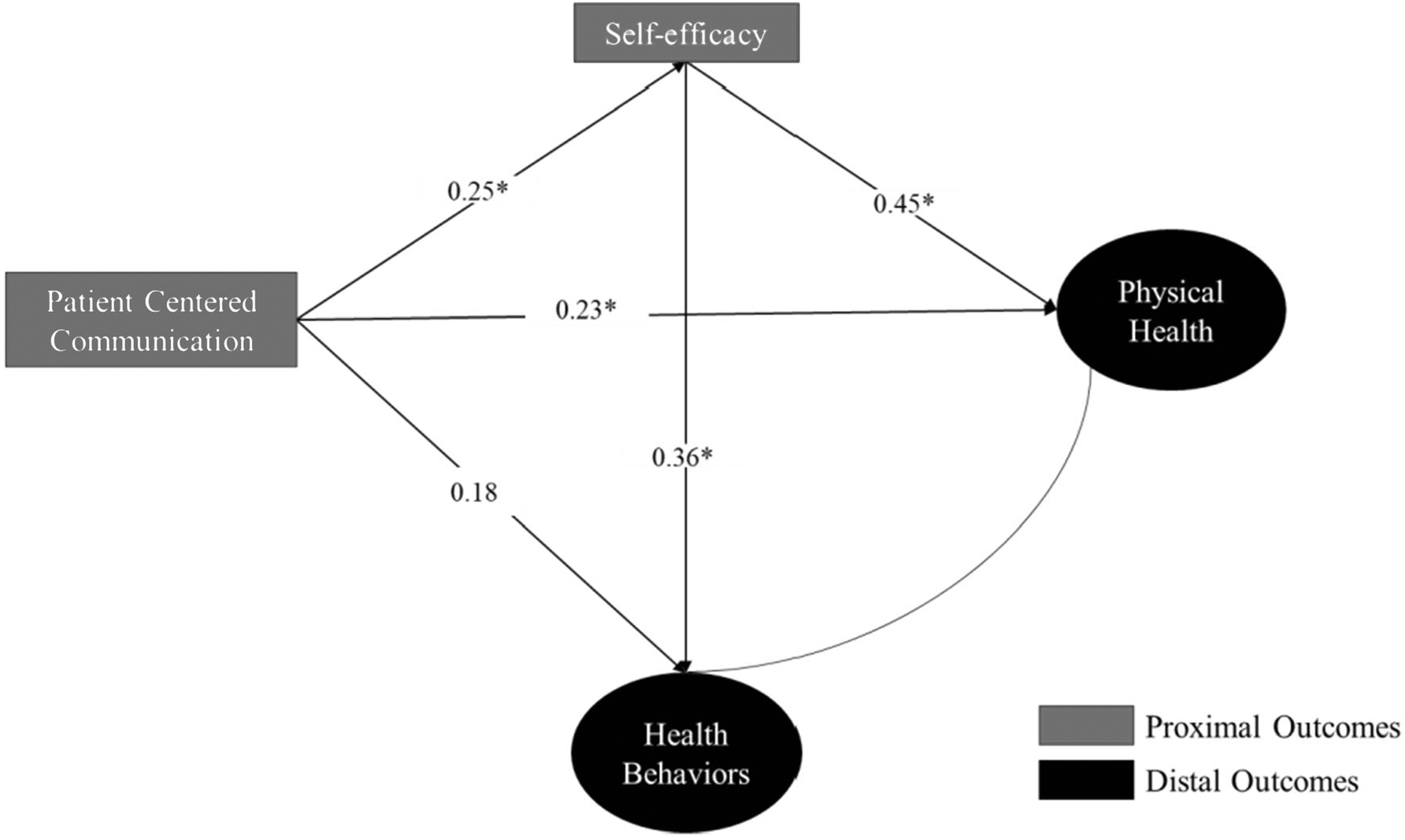
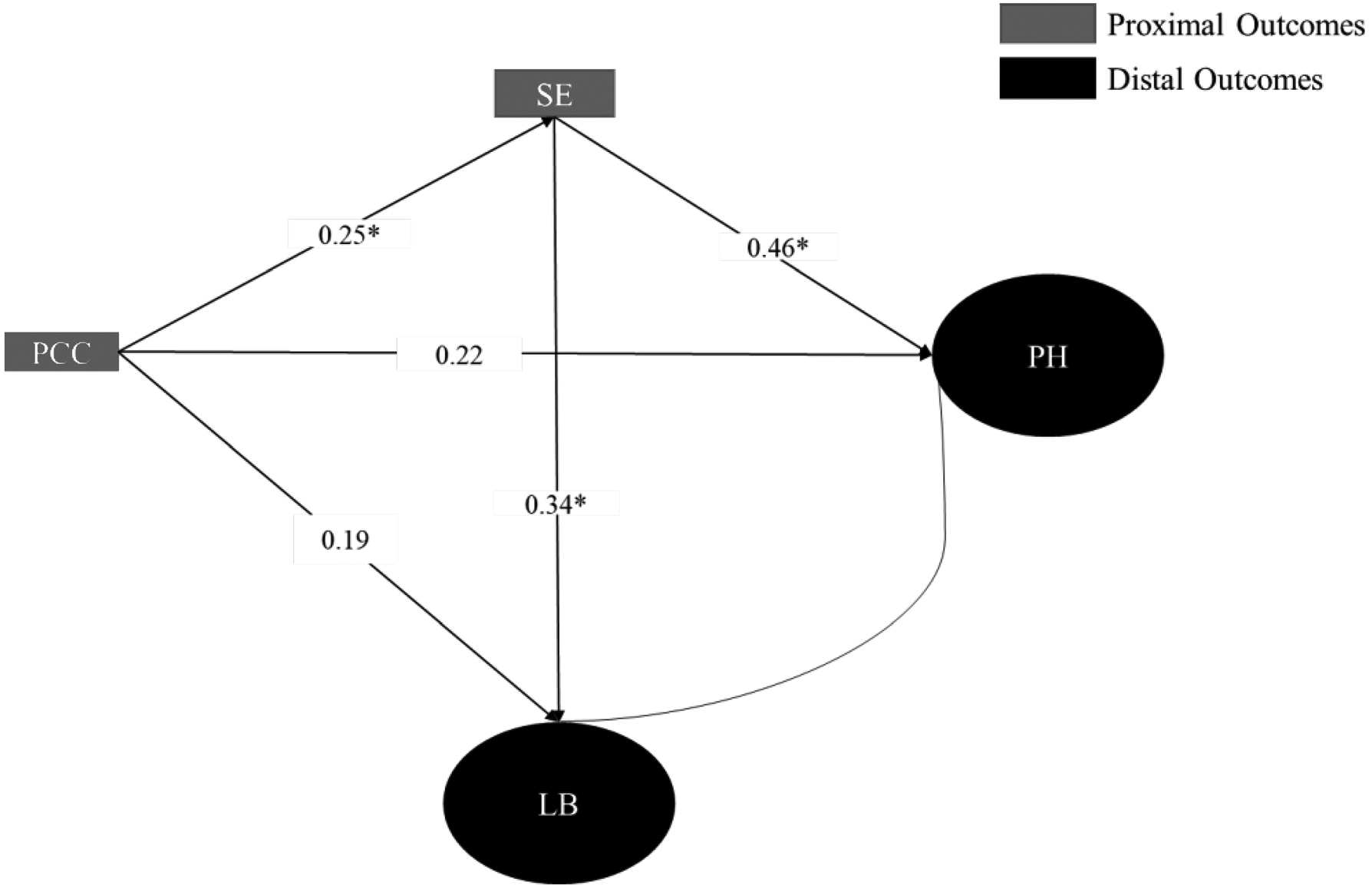
Results: The receipt of an SCP did not have a significant effect on key survivor-level outcomes and was removed from the final structural model. The final structural model fit the data adequately well (Chi-square p value = 0.03, RMSEA = 0.07, CFI = .88, and WRMR = 0.73). PCC had a significant direct effect on physical health but not on health behaviors. Health self-efficacy had a significant direct effect on physical health and health behaviors.
Conclusion: The receipt of an SCP alone is unlikely to facilitate changes in PCC, health self-efficacy, health behaviors, or physical health.
Implication for cancer survivors: A SCP is a single component of a larger model of survivorship care and should be accompanied by ongoing efforts that promote PCC, health self-efficacy, and changes in health behaviors resulting in improvements to physical health.
Keywords: Cancer survivors; Patient care planning; Patient relevant outcome; Patient-provider communication; Structural equation modeling.
Conflict of interest statement
Figures
References
-
- American College of Surgeons. Cancer program standards 2012: ensuring patient-centered care. In:2012.
-
- American Cancer Society. National Cancer Survivorship Resource Center systems policy and practice: Clinical Survivorship care overview. Washington, DC: 2011.
-
- Mayer DK, Shapiro CL, Jacobson P, McCabe MS. Assuring quality cancer survivorship care: we’ve only just begun. Am Soc Clin Oncol Educ Book Am Soc Clin Oncol Meeting. 2015:e583–91. - PubMed
-
- Ganz PA. Institute of Medicine report on delivery of high-quality cancer care. J Oncol Pract. 2014;10(3):193–5. - PubMed
-
- Cowens-Alvarado R, Sharpe K, Pratt-Chapman M, Willis A, Gansler T, Ganz PA, et al. Advancing survivorship care through the National Cancer Survivorship Resource Center. CA Cancer J Clin. 2013;63(3):147–50. - PubMed
Publication types
MeSH terms
Grants and funding
LinkOut - more resources
Full Text Sources
Medical
Miscellaneous
