


Eating and exercise behaviors in eating disorders and the general population during the COVID-19 pandemic in Australia: Initial results from the COLLATE project
- PMID: 32476163
- PMCID: PMC7300745
- DOI: 10.1002/eat.23317
Eating and exercise behaviors in eating disorders and the general population during the COVID-19 pandemic in Australia: Initial results from the COLLATE project
Abstract
Objective: Emerging evidence suggests that the coronavirus (COVID-19) pandemic may be negatively impacting mental health. The impact on eating and exercise behaviors is, however, currently unknown. This study aimed to identify changes in eating and exercise behaviors in an Australian sample among individuals with an eating disorder, and the general population, amidst the COVID-19 pandemic outbreak.
Method: A total of 5,469 participants, 180 of whom self-reported an eating disorder history, completed questions relating to changes in eating and exercise behaviors since the emergence of the pandemic, as part of the COLLATE (COvid-19 and you: mentaL heaLth in AusTralia now survEy) project; a national survey launched in Australia on April 1, 2020.
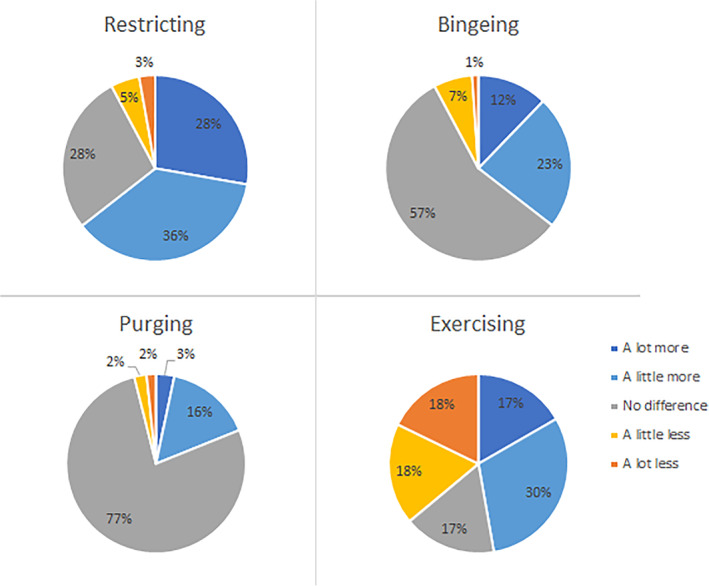
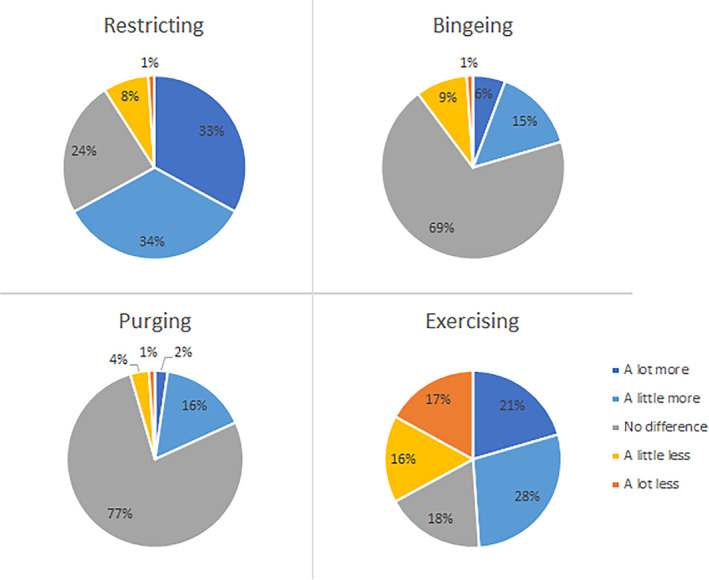
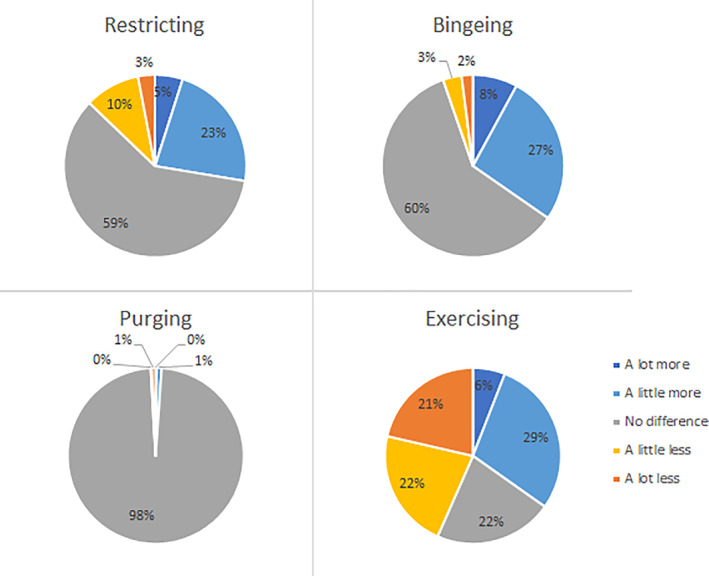
Results: In the eating disorders group, increased restricting, binge eating, purging, and exercise behaviors were found. In the general population, both increased restricting and binge eating behaviors were reported; however, respondents reported less exercise relative to before the pandemic.
Discussion: The findings have important implications for providing greater monitoring and support for eating disorder patients during the COVID-19 pandemic. In addition, the mental and physical health impacts of changed eating and exercise behaviors in the general population need to be acknowledged and monitored for potential long-term consequences.
Keywords: Australia; COVID-19; anorexia nervosa; coronavirus; eating disorder; national survey; pandemic.
© 2020 Wiley Periodicals, Inc.
Conflict of interest statement
The authors report no conflicts of interest.
Figures
References
-
- Bruce, B. , & Agras, W. S. (1992). Binge eating in females: A population‐based investigation. International Journal of Eating Disorders, 12(4), 365–373.
-
- Levine, M. P. (2012). Loneliness and eating disorders. The Journal of Psychology, 146(1–2), 243–257. - PubMed
Publication types
MeSH terms
Grants and funding
- GNT1088785/National Health and Medical Research Council of Australia/International
- GNT1142424/National Health and Medical Research Council of Australia/International
- GNT1154651/National Health and Medical Research Council of Australia/International
- GNT1161609/National Health and Medical Research Council of Australia/International
- GNT1159953/National Health and Medical Research Council of Australia/International
LinkOut - more resources
Full Text Sources
Medical
Miscellaneous
