Epidemiological investigation of porcine pseudorabies virus and its coinfection rate in Shandong Province in China from 2015 to 2018
- PMID: 32476312
- PMCID: PMC7263908
- DOI: 10.4142/jvs.2020.21.e36
Epidemiological investigation of porcine pseudorabies virus and its coinfection rate in Shandong Province in China from 2015 to 2018
Abstract
Background: Pseudorabies, also known as Aujeszky's disease, is caused by the pseudorabies virus (PRV) and has been recognized as a critical disease affecting the pig industry and a wide range of animals around the world, resulting in great economic losses each year. Shandong province, one of the most vital food animal-breeding regions in China, has a very dense pig population, within which pseudorabies infections were detected in recent years. The data, however, on PRV epidemiology and coinfection rates of PRV with other major swine diseases is sparse.
Objectives: This study aimed to investigate the PRV epidemiology in Shandong and analyze the current control measures.
Methods: In this study, a total number of 16,457 serum samples and 1,638 tissue samples, which were collected from 362 intensive pig farms (≥ 300 sows/farm) covered all cities in Shandong, were tested by performing enzyme-linked immunosorbent assay (ELISA) and polymerase chain reaction (PCR).
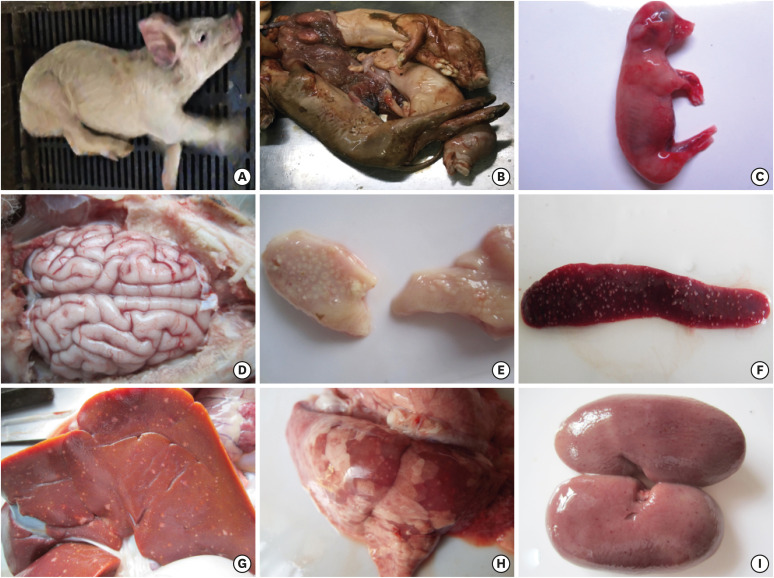
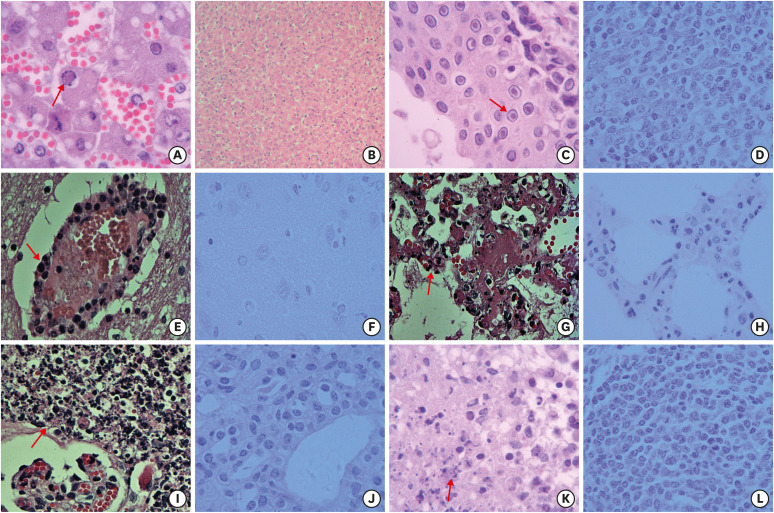
Results: Overall, 52.7% and 91.5% of the serum samples were positive for PRV-gE and -gB, respectively, based on ELISA results. In addition, 15.7% of the tissue samples were PCR positive for PRV. The coinfection rates of PRV with porcine circovirus type 2 (PCV2), porcine reproductive and respiratory syndrome virus, and classical swine fever virus were measured; coinfection with PCV2 was 35.0%, higher than those of the other two viruses. Macroscopic and microscopic lesions were observed in various tissues during histopathological examination.
Conclusions: The results demonstrate the PRV prevalence and its coinfection rates in Shandong province and indicate that pseudorabies is endemic in pig farms in this region. This study provides epidemiological data that can be useful in the prevention and control of pseudorabies in Shandong, China.
Keywords: Pseudorabies virus; coinfection; porcine circovirus; veterinary epidemiology.
© 2020 The Korean Society of Veterinary Science.
Conflict of interest statement
The authors have no conflicts of interest to declare.
Figures
References
-
- Mettenleiter TC. Aujeszky's disease (pseudorabies) virus: the virus and molecular pathogenesis--state of the art, June 1999. Vet Res. 2000;31(1):99–115. - PubMed
-
- Crandell RA. Pseudorabies (Aujeszky's disease) Vet Clin North Am Large Anim Pract. 1982;4(2):321–331. - PubMed
-
- Rziha HJ, Mettenleiter TC, Ohlinger V, Wittmann G. Herpesvirus (pseudorabies virus) latency in swine: occurrence and physical state of viral DNA in neural tissues. Virology. 1986;155(2):600–613. - PubMed
-
- Müller T, Hahn EC, Tottewitz F, Kramer M, Klupp BG, Mettenleiter TC, Freuling C. Pseudorabies virus in wild swine: a global perspective. Arch Virol. 2011;156(10):1691–1705. - PubMed
MeSH terms
Grants and funding
LinkOut - more resources
Full Text Sources