


Longitudinal Changes in Cardiac Structure and Function in Severe Obesity: 11-Year Follow-Up in the Utah Obesity Study
- PMID: 32476544
- PMCID: PMC7429060
- DOI: 10.1161/JAHA.119.014542
Longitudinal Changes in Cardiac Structure and Function in Severe Obesity: 11-Year Follow-Up in the Utah Obesity Study
Abstract
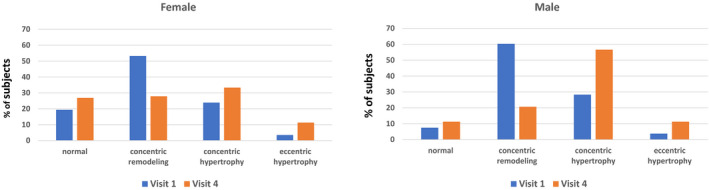
Background Progressive cardiac remodeling and worsening myocardial function over time have been proposed as potential mediators of heart failure in obesity. Methods and Results We serially assessed cardiac structure and function in 254 subjects participating in a longitudinal study of obesity. Demographic, clinical, laboratory, and echocardiographic features were determined at baseline and 2-, 6-, and 11-year follow-up. We measured body mass index (BMI) exposure as the area under the curve of the BMI at each of the 4 visits. At enrollment, mean age of the subjects was 47 years, 79% were women, mean BMI was 44 kg/m2, 26% had diabetes mellitus, 48% had hypertension, and 53% had hyperlipidemia. Between baseline and 11 years, BMI increased by 1.1 and 0.3 kg/m2 in men and women, respectively. There were modest increases in left ventricular (LV) end-diastolic volume, LV mass, and left atrial volume, and significant decreases in early/late mitral diastolic flow velocity ratio and E wave deceleration time. However, there were no significant changes in LV ejection fraction or ratio of early mitral diastolic flow velocity/early mitral annular velocity, whereas right ventricular fractional area change increased. Significant predictors of the change in LV mass were male sex, baseline BMI, BMI area under the curve, and change in LV stroke volume, but not smoking, hypertension, or diabetes mellitus. Conclusions In long-standing, persistent severe obesity, there was evidence of cardiac remodeling over a period of 11 years, but no clear worsening of systolic or diastolic function. Measures of remodeling were most strongly related to BMI. The observed changes might predispose to heart failure with preserved ejection fraction, but are not classic for an evolving dilated cardiomyopathy.
Keywords: heart failure; hypertension; hypertrophy; obesity.
Figures

References
-
- Kenchaiah S, Evans JC, Levy D, Wilson PW, Benjamin EJ, Larson MG, Kannel WB, Vasan RS. Obesity and the risk of heart failure. N Engl J Med. 2002;347:305–313. - PubMed
-
- Pandey A, Cornwell WK III, Willis B, Neeland IJ, Gao A, Leonard D, DeFina L, Berry JD. Body mass index and cardiorespiratory fitness in mid‐life and risk of heart failure hospitalization in older age: findings from the Cooper Center Longitudinal Study. JACC Heart Fail. 2017;5:367–374. - PubMed
-
- Spies C, Farzaneh‐Far R, Na B, Kanaya A, Schiller NB, Whooley MA. Relation of obesity to heart failure hospitalization and cardiovascular events in persons with stable coronary heart disease (from the Heart and Soul Study). Am J Cardiol. 2009;104:883–889. - PubMed
Publication types
MeSH terms
Grants and funding
LinkOut - more resources
Full Text Sources
Medical
