


Consequences of climate-induced vegetation changes exceed those of human disturbance for wild impala in the Serengeti ecosystem
- PMID: 32477568
- PMCID: PMC7246078
- DOI: 10.1093/conphys/coz117
Consequences of climate-induced vegetation changes exceed those of human disturbance for wild impala in the Serengeti ecosystem
Abstract
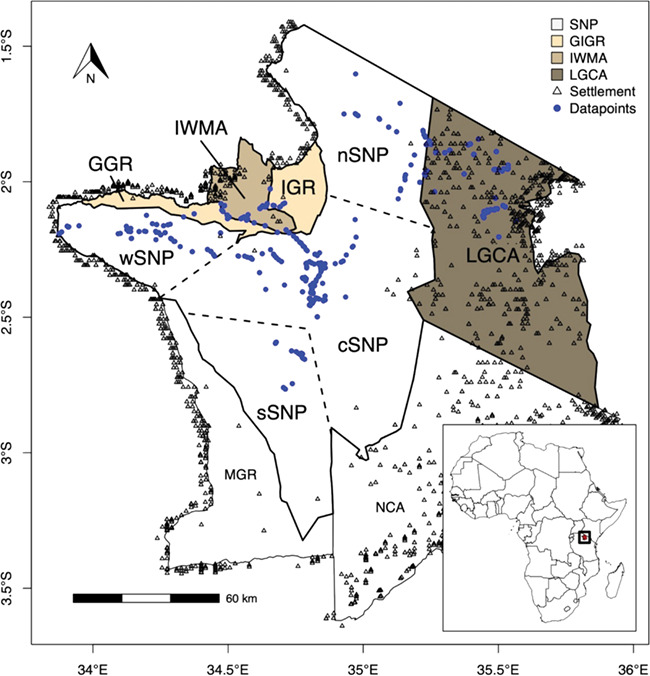
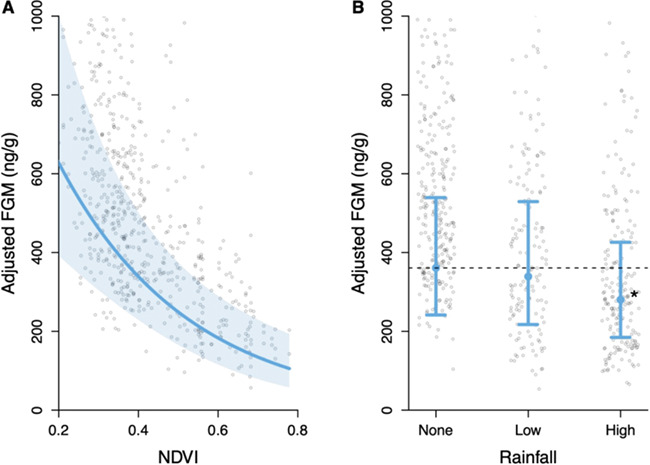
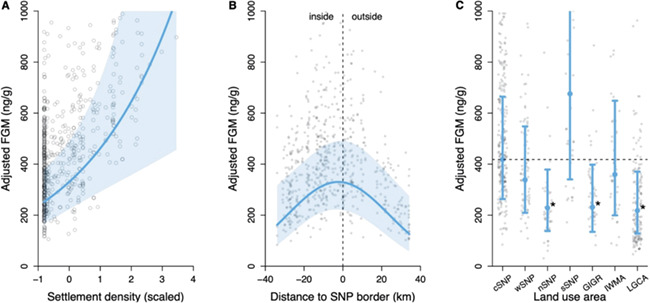
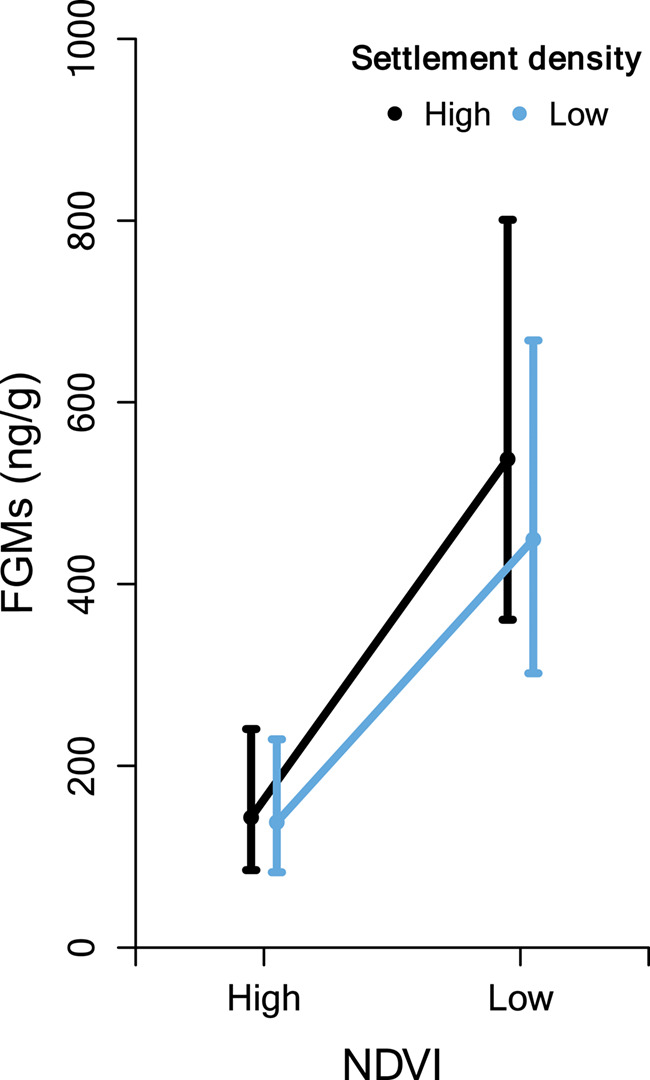
In East Africa, climate change is predicted to reduce vegetation quality, and pervasive human disturbance has already resulted in significant declines in biodiversity. We studied the combined effects of reduced forage quality and human disturbance on faecal glucocorticoid metabolite (FGM) concentrations. We predicted that decreasing nutritional quality and increasing human disturbance would have an additive positive effect on FGM levels in wild impala (Aepyceros melampus). Employing a space-for-time approach, we used normalized difference vegetation index (NDVI) as a measure of forage quality, combined with spatially explicit proxies of human disturbance across areas of different protection management strategies in the Serengeti ecosystem. We collected 639 faecal samples, spread over 4 years, including both wet and dry seasons. Impala FGM levels increased significantly with declining NDVI and, to a lesser extent, with increasing proxies for human disturbance. However, we found no interaction between the two, such that impala had elevated FGM levels with low NDVI and low FGM levels with high NDVI regardless of human disturbance levels. This implies that impala will have high FGM levels if forage quality is poor, even with significant protection and reduced human disturbance. Understanding how animals respond to and cope with changes in forage quality and human land use across different protected areas is important for conservationists and managers to better protect species at risk and predict population viability.
Keywords: NDVI; conservation; cortisol; forage quality; protected areas; stress; ungulate.
© The Author(s) 2020. Published by Oxford University Press and the Society for Experimental Biology.
Figures
References
-
- Ahlering MA, Maldonado JE, Eggert LS, Fleischer RC, Western D, Brown JL (2013) Conservation outside protected areas and the effect of human-dominated landscapes on stress hormones in Savannah elephants. Conserv Biol 27, 569–575. - PubMed
-
- Ahlering MA, Millspaugh JJ, Woods RJ, Western D, Eggert LS (2011) Elevated levels of stress hormones in crop-raiding male elephants. Anim Conserv, 14 124–130.
-
- Averbeck C (2001) Population ecology of impala (Aepyceros melampus) and community-based wildlife conservation in Uganda. PhD Thesis PhD 183.
-
- Bates D, Mächler M, Bolker B, Walker S (2015) Fitting linear mixed-effects models using lme4. J Stat Softw 67: 1–48.
LinkOut - more resources
Full Text Sources
