


A Comparative Analysis of Speed and Accuracy for Three Off-the-Shelf De-Identification Tools
- PMID: 32477643
- PMCID: PMC7233098
A Comparative Analysis of Speed and Accuracy for Three Off-the-Shelf De-Identification Tools
Abstract
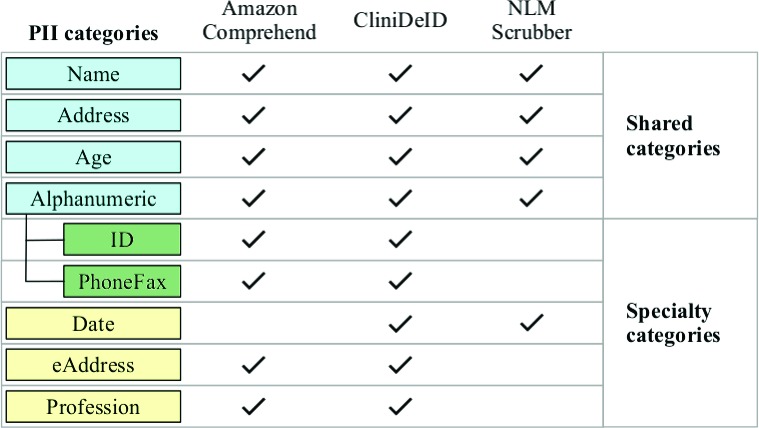
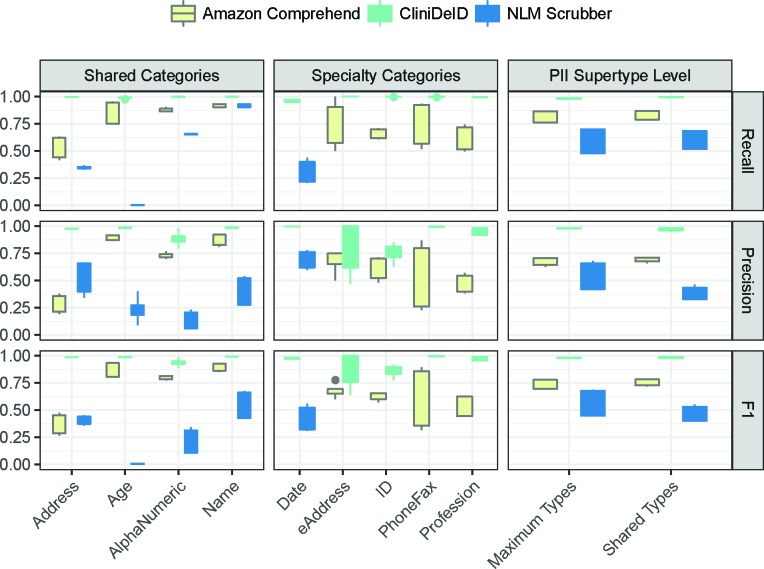
A growing quantity of health data is being stored in Electronic Health Records (EHR). The free-text section of these clinical notes contains important patient and treatment information for research but also contains Personally Identifiable Information (PII), which cannot be freely shared within the research community without compromising patient confidentiality and privacy rights. Significant work has been invested in investigating automated approaches to text de-identification, the process of removing or redacting PII. Few studies have examined the performance of existing de-identification pipelines in a controlled comparative analysis. In this study, we use publicly available corpora to analyze speed and accuracy differences between three de-identification systems that can be run off-the-shelf: Amazon Comprehend Medical PHId, Clinacuity's CliniDeID, and the National Library of Medicine's Scrubber. No single system dominated all the compared metrics. NLM Scrubber was the fastest while CliniDeID generally had the highest accuracy.
©2020 AMIA - All rights reserved.
Figures
References
-
- Meystre SM, Savova GK, Kipper-Schuler KC, Hurdle JF. Extracting information from textual documents in the electronic health record: a review of recent research. Yearbook of medical informatics. 2008:128–44. - PubMed
-
- HIPAA Privacy Rule, 45 CFR Part 160, Part 164(A,E). U.S. Department of Health and Humans Services. 2002
-
- Federal Policy for the Protection of Human Subjects (’Common Rule’) [Internet] 2009 [cited 2018-1120]; Available from: https://www.hhs.gov/ohrp/regulations-and-policy/regulations/common-rule/....
Grants and funding
LinkOut - more resources
Full Text Sources