


A type IV collagenase inhibitor, N-hydroxy-3-phenyl-2-(4-phenylbenzenesulfonamido) propanamide (BiPS), suppresses skin injury induced by sulfur mustard
- PMID: 32479919
- PMCID: PMC7470515
- DOI: 10.1016/j.taap.2020.115078
A type IV collagenase inhibitor, N-hydroxy-3-phenyl-2-(4-phenylbenzenesulfonamido) propanamide (BiPS), suppresses skin injury induced by sulfur mustard
Abstract
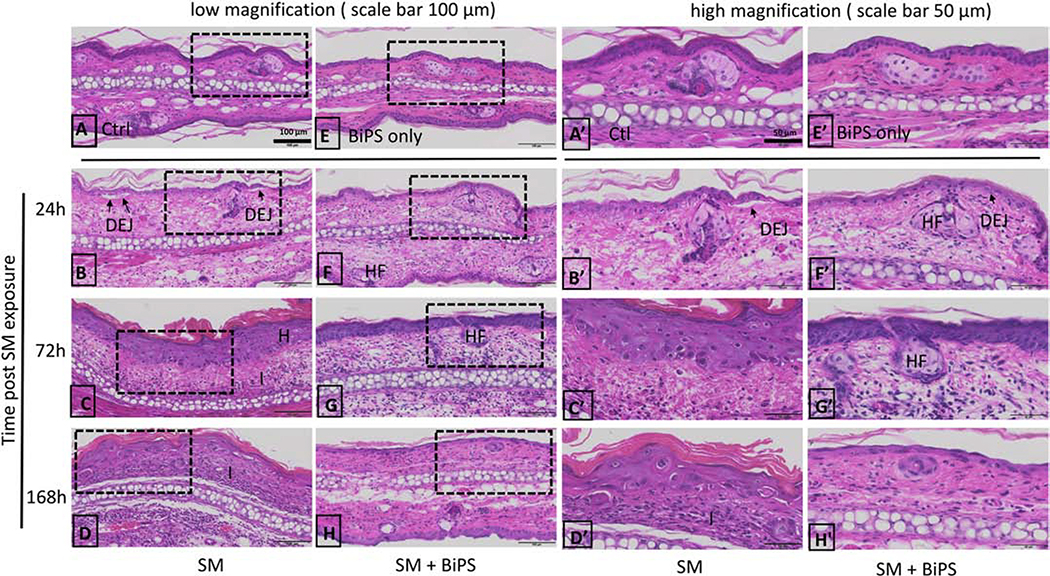
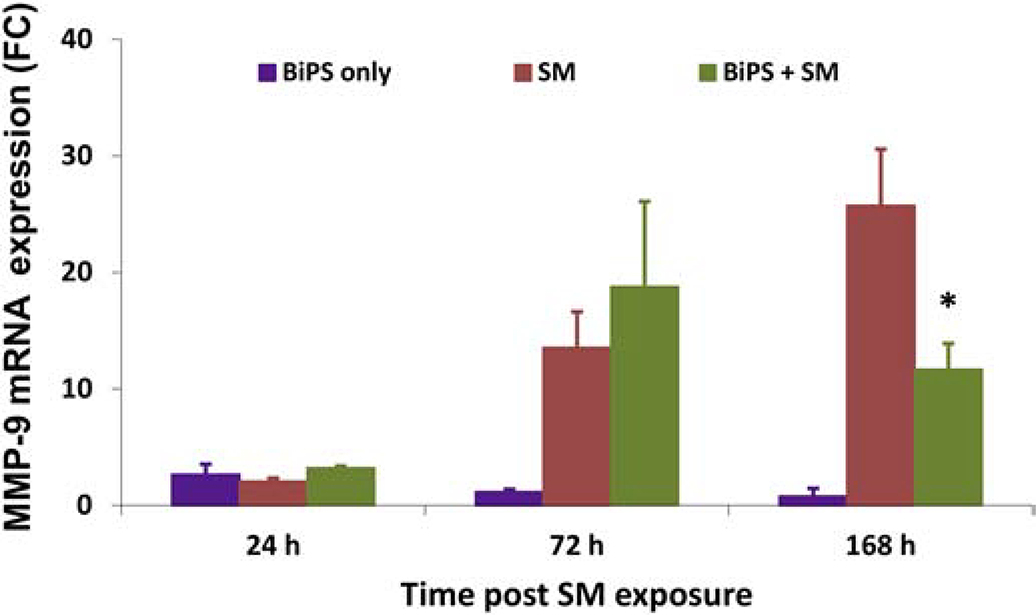
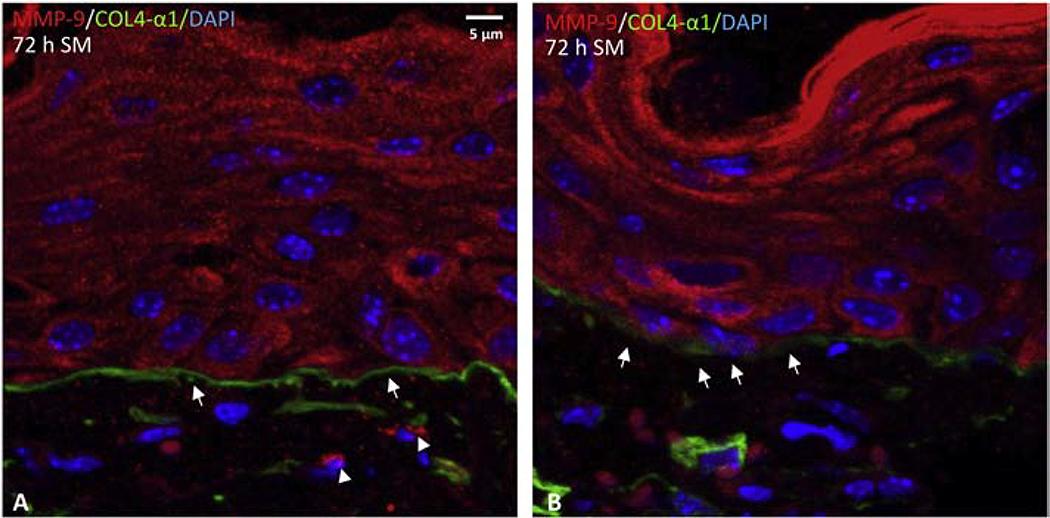
Sulfur mustard (SM) is a highly toxic blistering agent thought to mediate its action, in part, by activating matrix metalloproteinases (MMPs) in the skin and disrupting components of the basement membrane zone (BMZ). Type IV collagenases (MMP-9) degrade type IV collagen in the skin, a major component of the BMZ at the dermal-epidermal junction. In the present studies, a type IV collagenase inhibitor, N-hydroxy-3-phenyl-2-(4-phenylbenzenesulfonamido) propanamide (BiPS), was tested for its ability to protect the skin against injury induced by SM in the mouse ear vesicant model. SM induced inflammation, epidermal hyperplasia and microblistering at the dermal/epidermal junction of mouse ears 24-168 h post-exposure. This was associated with upregulation of MMP-9 mRNA and protein in the skin. Dual immunofluorescence labeling showed increases in MMP-9 in the epidermis and in the adjacent dermal matrix of the SM injured skin, as well as breakdown of type IV collagen in the basement membrane. Pretreatment of the skin with BiPS reduced signs of SM-induced cutaneous toxicity; expression of MMP-9 mRNA and protein was also downregulated in the skin by BiPS. Following BiPS pretreatment, type IV collagen appeared intact and was similar to control skin. These results demonstrate that inhibiting type IV collagenases in the skin improves basement membrane integrity after exposure to SM. BiPS may hold promise as a potential protective agent to mitigate SM induced skin injury.
Keywords: Basement Membrane; MMP-9; Matrix Metalloproteinase Inhibitor; Sulfur Mustard; Type IV Collagen.
Copyright © 2020 Elsevier Inc. All rights reserved.
Conflict of interest statement
Declaration of Competing Interest The authors declare that there are no conflicts of interest.
Figures






References
-
- Amano S, 2016. Characterization and mechanisms of photoageing-related changes in skin. Damages of basement membrane and dermal structures. Exp Dermatol 25 Suppl 3, 14–19. - PubMed
-
- Bellon G, Martiny L, Robinet A, 2004. Matrix metalloproteinases and matrikines in angiogenesis. Crit Rev Oncol Hematol 49, 203–220. - PubMed
Publication types
MeSH terms
Substances
Grants and funding
LinkOut - more resources
Full Text Sources
Medical
Research Materials
Miscellaneous
