


Isokinetic back training is more effective than core stabilization training on pain intensity and sports performances in football players with chronic low back pain: A randomized controlled trial
- PMID: 32481345
- PMCID: PMC7249999
- DOI: 10.1097/MD.0000000000020418
Isokinetic back training is more effective than core stabilization training on pain intensity and sports performances in football players with chronic low back pain: A randomized controlled trial
Abstract
Background: Isokinetic training (IKT) and core stabilization training (CST) are commonly used for balance training in musculoskeletal conditions. The knowledge about the effective implementation of these training protocols on sports performances in university football players with chronic low back pain (LBP) is lacking.
Objective: To find and compare the effects of IKT and CST on sports performances in university football players with chronic LBP.
Design: Randomized, double-blinded controlled study.
Setting: University hospital.
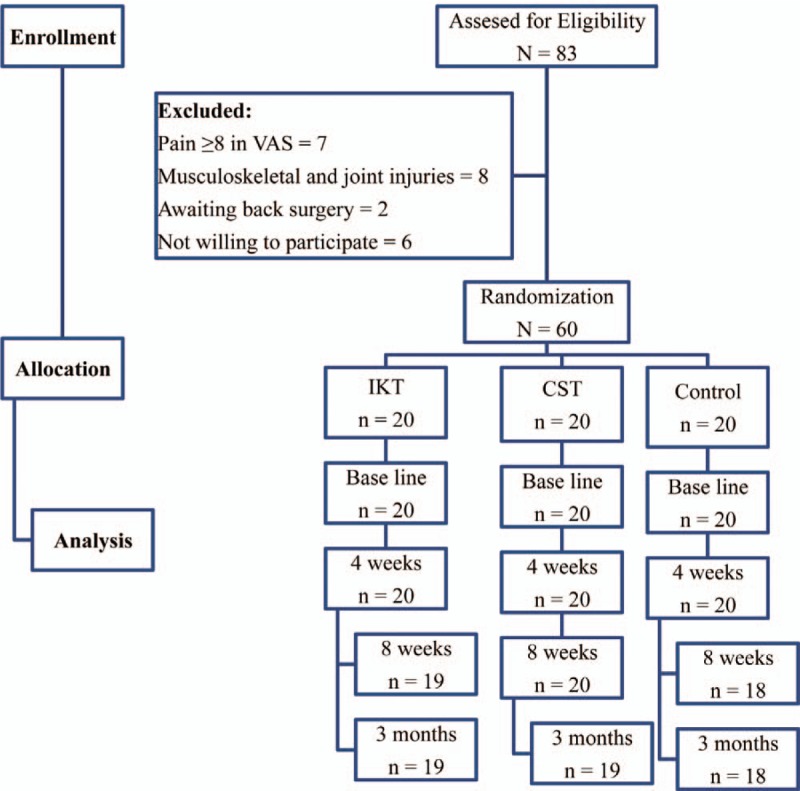
Participants: Sixty LBP participants divided into isokinetic group (IKT; n = 20), core stabilization group (CST; n = 20), and the control group (n = 20) and received respected exercises for 4 weeks.
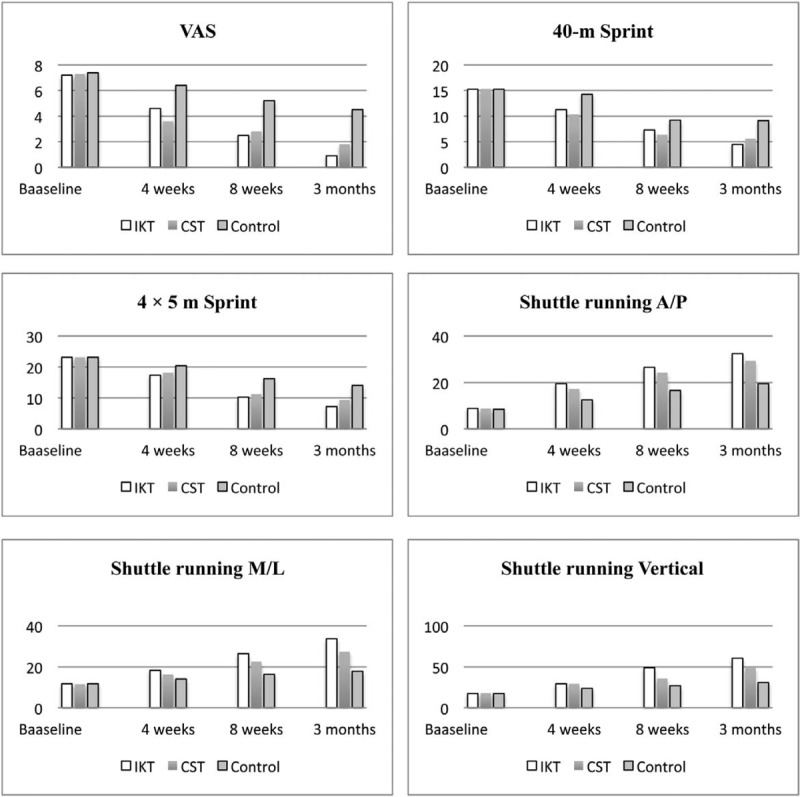
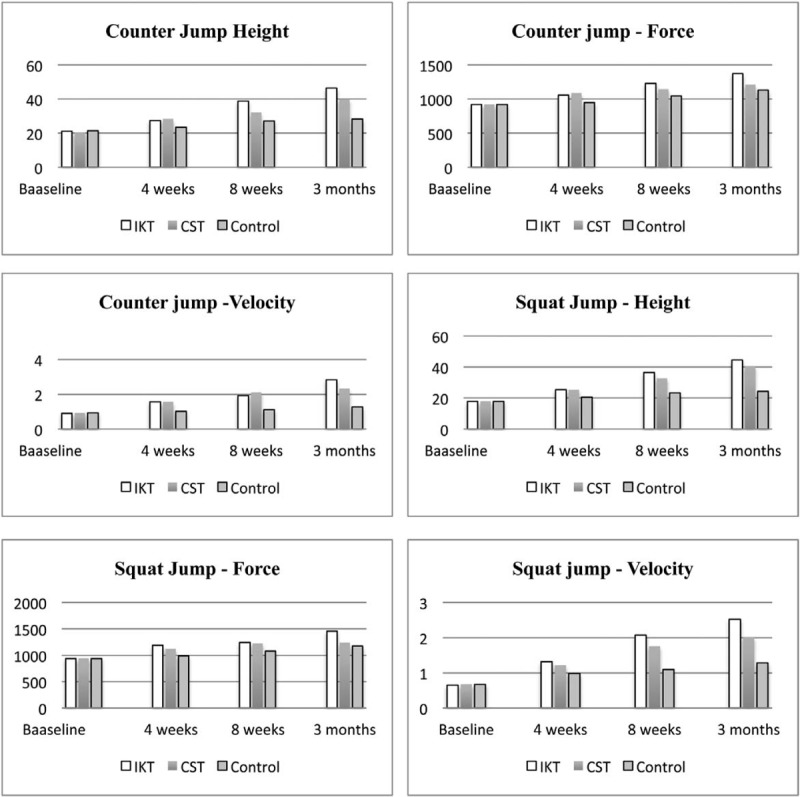
Outcome measures: Clinical (pain intensity and player wellness) and sports performances (40 m sprint, 4 × 5 m sprint, submaximal shuttle running, counter movement jump, and squat jump) scores were measured at baseline, after 4 weeks, 8 weeks, and 3 months.
Results: Four weeks following training IKT group shows more significant changes in pain intensity and player wellness scores than CST and control groups (P ≤ .001). Sports performance variables (40 m sprint, 4 × 5 m sprint, submaximal shuttle running, counter movement jump and squat jump) scores also show significant improvement in IKT group than the other 2 groups (P ≤ .001).
Conclusion: This study suggests that training through IKT improves pain intensity and sports performances than CST in university football players with chronic LBP.
Conflict of interest statement
The authors have no funding and conflicts of interest to disclose.
Figures
References
-
- Micheli LJ, Wood R. Back pain in young athletes. Arch Pediatr Adolesc Med 1995;149:15–8. - PubMed
-
- Silsupadol P, Siu KC, Shumway-Cook A, et al. Training of balance under single- and dual-task conditions in older adults with balance impairment. Phys Ther 2006;86:269–81. - PubMed
-
- Ferreira ML, Sherrington C, Smith K, et al. Physical activity improves strength, balance and endurance in adults aged 40-65 years: a systematic review. J Physiother 2012;58:145–56. - PubMed
Publication types
MeSH terms
LinkOut - more resources
Full Text Sources
Medical
Miscellaneous
