Review
. 2020 May 28;10(6):56.
doi: 10.3390/bios10060056.

Wearable Skin Sensors and Their Challenges: A Review of Transdermal, Optical, and Mechanical Sensors

Affiliations
Review

Wearable Skin Sensors and Their Challenges: A Review of Transdermal, Optical, and Mechanical Sensors

Ammar Ahmad Tarar et al. Biosensors (Basel). .

Abstract

Wearable technology and mobile healthcare systems are both increasingly popular solutions to traditional healthcare due to their ease of implementation and cost-effectiveness for remote health monitoring. Recent advances in research, especially the miniaturization of sensors, have significantly contributed to commercializing the wearable technology. Most of the traditional commercially available sensors are either mechanical or optical, but nowadays transdermal microneedles are also being used for micro-sensing such as continuous glucose monitoring. However, there remain certain challenges that need to be addressed before the possibility of large-scale deployment. The biggest challenge faced by all these wearable sensors is our skin, which has an inherent property to resist and protect the body from the outside world. On the other hand, biosensing is not possible without overcoming this resistance. Consequently, understanding the skin structure and its response to different types of sensing is necessary to remove the scientific barriers that are hindering our ability to design more efficient and robust skin sensors. In this article, we review research reports related to three different biosensing modalities that are commonly used along with the challenges faced in their implementation for detection. We believe this review will be of significant use to researchers looking to solve existing problems within the ongoing research in wearable sensors.

Keywords: MEMS; lab on a chip; wearable sensors.


Conflict of interest statement

The authors declare no conflict of interest.

Figures
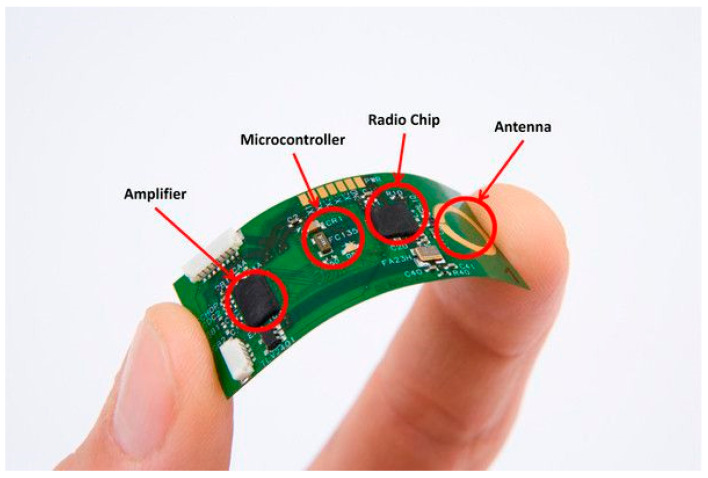
Figure 1
Figure 1
Flexible electrocardiograph (ECG) sensor with its components (courtesy of IMEC, the Netherlands).
Figure 2
Figure 2
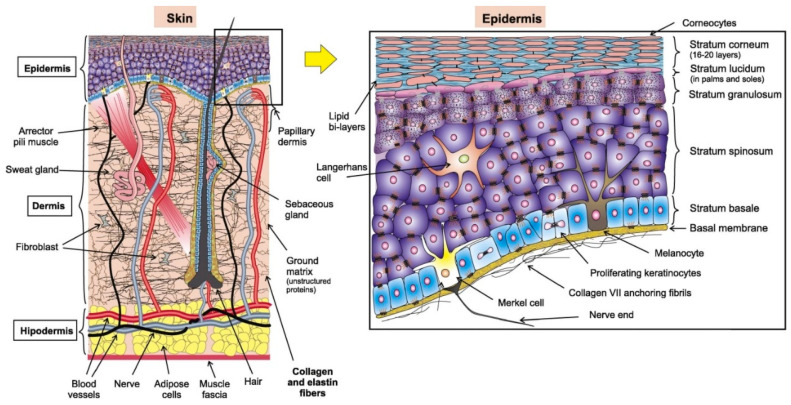
Illustration of the different layers of the skin.
Figure 3
Figure 3
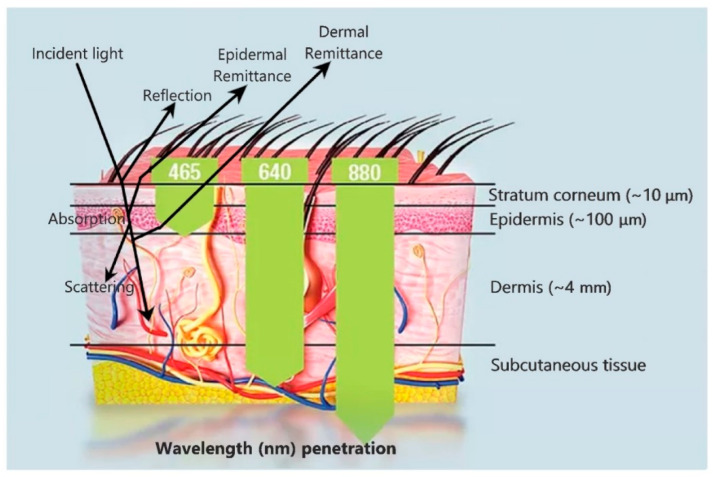
Incident light shows reflection, absorption, and scattering phenomena at different locations in skin layers, (Green downward pointing arrows). Light penetration into the skin with respect to its wavelength.
Figure 4
Figure 4
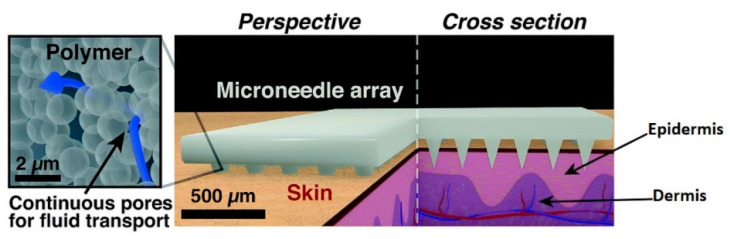
Schematic diagram of microneedles inserted into the skin for interstitial fluid extraction [69].
Figure 5
Figure 5
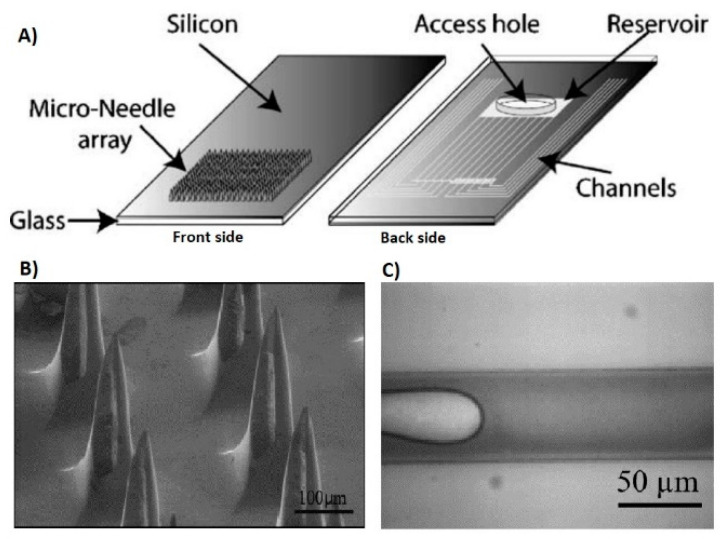
(A) Structure of microneedle Array, (B) SEM image of Snake Fang microneedle design, (C) Transdermal extraction leading to interstitial fluid in micro channels [85].
Figure 6
Figure 6
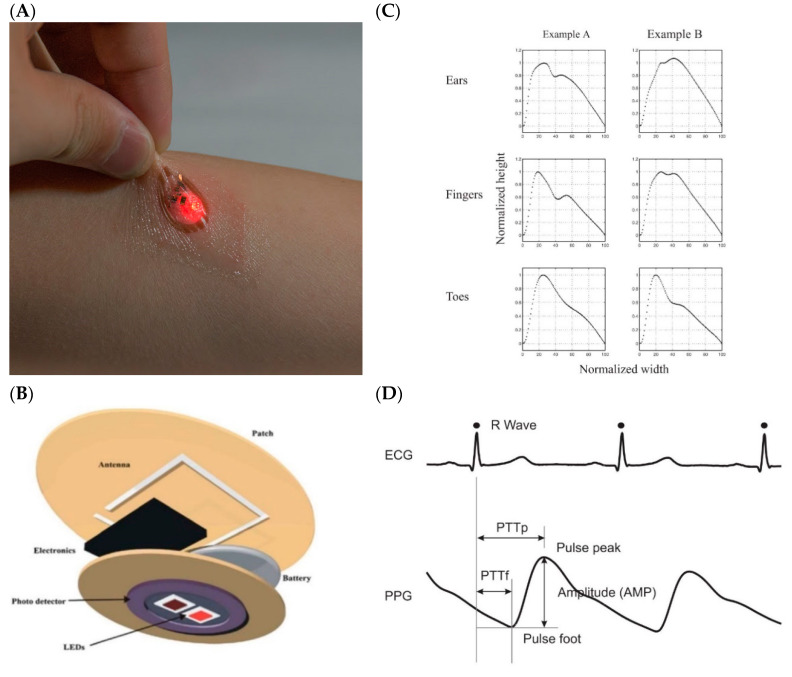
(A) Optical sensor mounted on skin, (B) Basic diagram of a wireless photoplethysmography (PPG) sensor, (C) PPG signal collected from three different locations, (D) Comparison of the PPG signal with ECG signal.
Figure 7
Figure 7
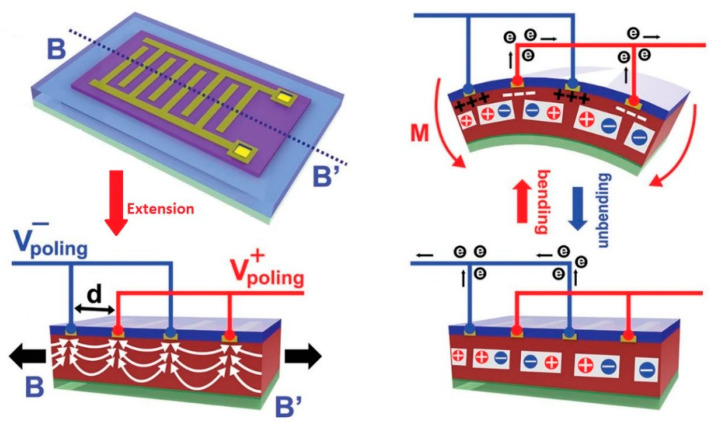
Schematic Diagram of working of flexible Piezoelectric sensors [140].
Figure 8
Figure 8
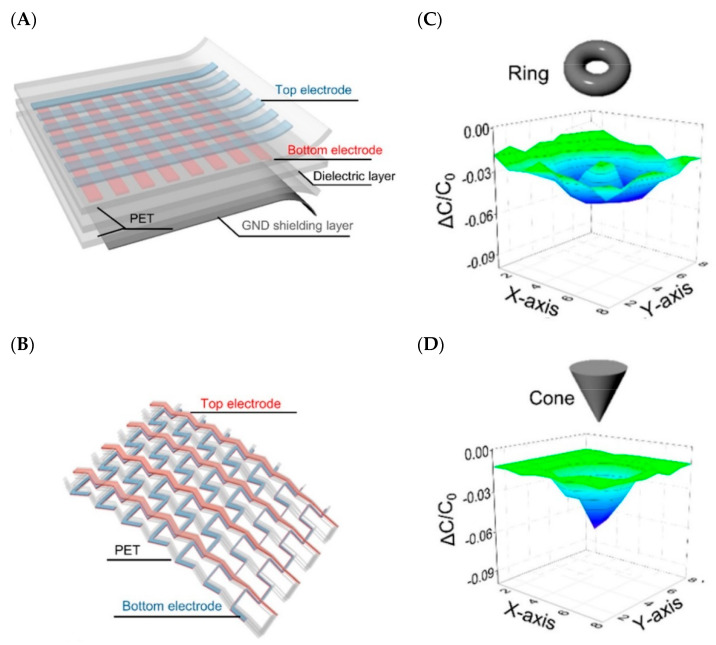
(A) Graphene-based flexible capacitive sensor, (B) The mesh-like internal structure shows the top electrode as red and bottom as blue, (C) Detection of Ring shape, (D) Detection of Cone shape [157].
Figure 9
Figure 9
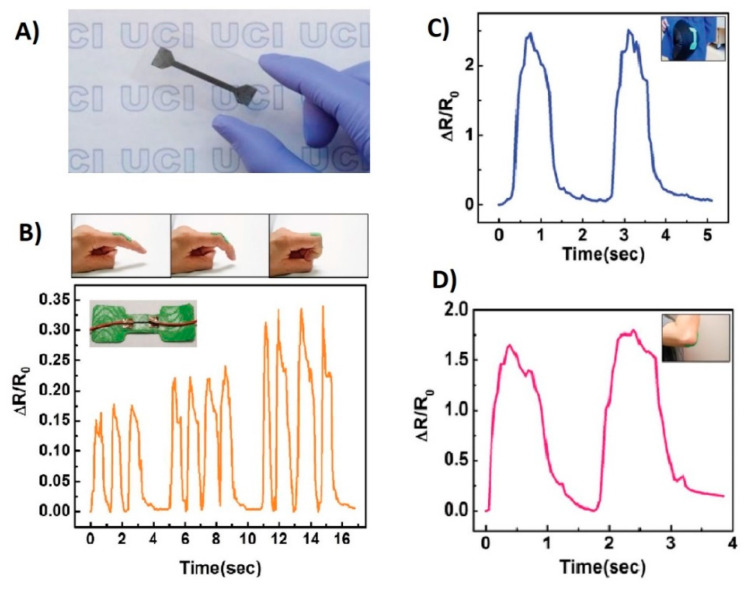
(A) Flexible carbon nanotubes (CNT)-based piezoresistive strain sensor, (B) change in relative resistance due to bending of the finger, (C) due to the movement of knee joint, (D) elbow joint [41].
Figure 10
Figure 10
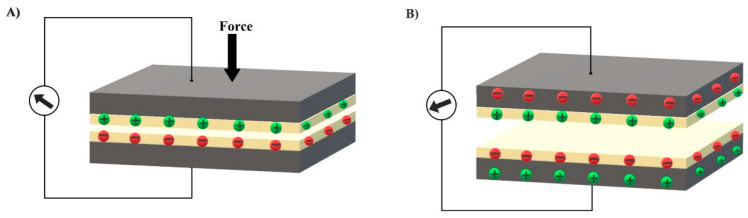
Flexible triboelectric sensor’s schematic illustration (A) transduction principle when force is applied, (B) potential difference produced when force is released.

References

    1. Cima M.J. Next-generation wearable electronics. Nat. Publ. Gr. 2014;32:642–643. - PubMed
    1. Elenko E., Underwood L., Zohar D. Defining digital medicine. Nat. Biotechnol. 2015;33:456–461. - PubMed
    1. Kwak M.K., Jeong H.E., Suh K.Y. Rational design and enhanced biocompatibility of a dry adhesive medical skin patch. Adv. Mater. 2011 doi: 10.1002/adma.201101694. - DOI - PubMed
    1. Aquilina O. A brief history of cardiac pacing. Images Paediatr. Cardiol. 2006;8:17–81. - PMC - PubMed
    1. Lo R., Li P.-Y., Saati S. A passive MEMS drug delivery pump for treatment of ocular diseases. Biomed. Microdevices. 2009 doi: 10.1007/s10544-009-9313-9. - DOI - PubMed