


Antimicrobial Resistance Pattern of Escherichia coli Isolated from Frozen Chicken Meat in Bangladesh
- PMID: 32481680
- PMCID: PMC7350304
- DOI: 10.3390/pathogens9060420
Antimicrobial Resistance Pattern of Escherichia coli Isolated from Frozen Chicken Meat in Bangladesh
Abstract
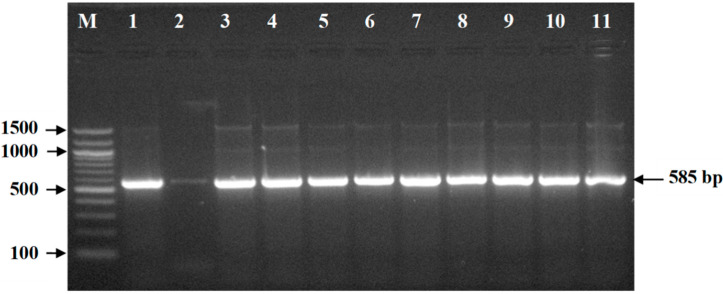
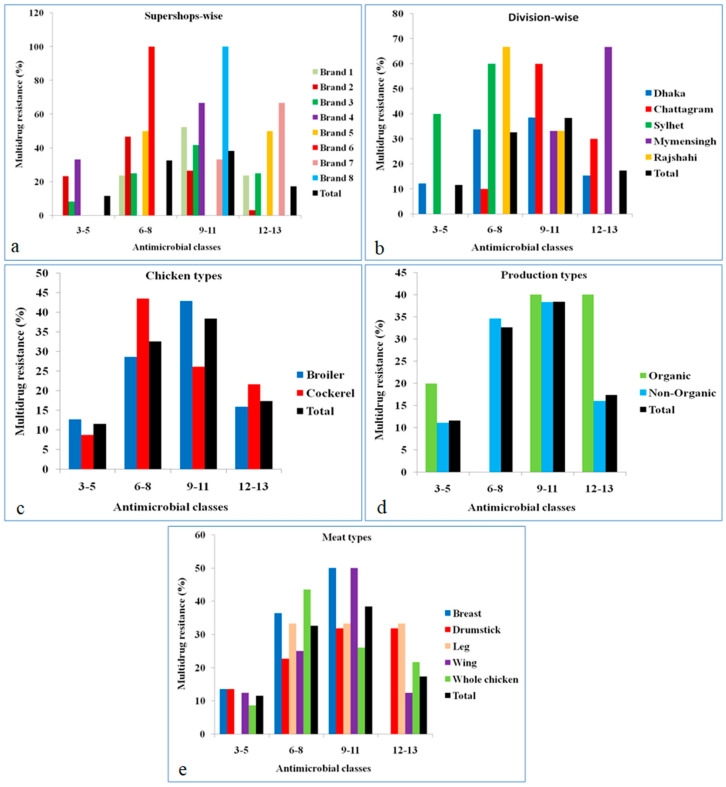
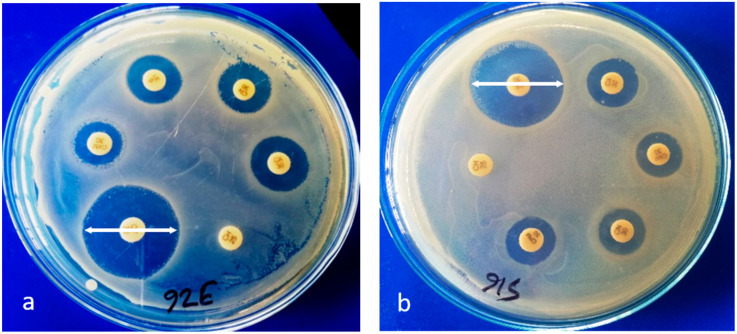
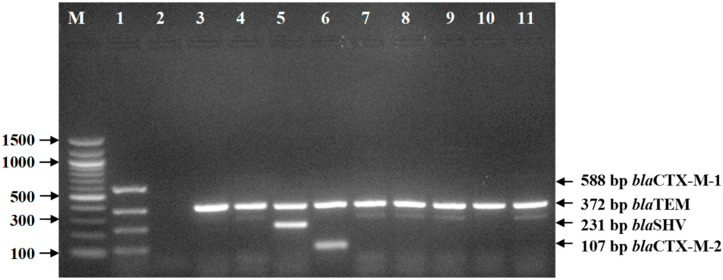
Escherichia coli is known as one of the most important foodborne pathogens in humans, and contaminated chicken meat is an important source of foodborne infection with this bacterium. The occurrence of extended-spectrum β-lactamase (ESBL)-producing E. coli (ESBL-Ec), in particular, in chicken meat is considered a global health problem. This study aimed to determine the magnitude of E. coli, with special emphasis on ESBL-Ec, along with their phenotypic antimicrobial resistance pattern in frozen chicken meat. The study also focused on the determination of ESBL-encoding genes in E. coli. A total of 113 frozen chicken meat samples were purchased from 40 outlets of nine branded supershops in five megacities in Bangladesh. Isolation and identification of E. coli were done based on cultural and biochemical properties, as well as PCR assay. The resistance pattern was determined by the disc diffusion method. ESBL-encoding genes were determined by multiplex PCR. The results showed that 76.1% of samples were positive for E. coli, of which 86% were ESBL producers. All the isolates were multidrug-resistant (MDR). Resistance to 9-11 and 12-13 antimicrobial classes was observed in 38.4% and 17.4% isolates, respectively, while only 11.6% were resistant to 3-5 classes. Possible extensive drug resistance (pXDR) was found in 2.3% of isolates. High single resistance was observed for oxytetracycline (93%) and amoxicillin (91.9%), followed by ampicillin (89.5%), trimethoprim-sulfamethoxazole, and pefloxacin (88.4%), and tetracycline (84.9%). Most importantly, 89.6% of isolates were resistant to carbapenems. All the isolates were positive for the blaTEM gene. However, the blaSHV and blaCTX-M-2 genes were identified in two ESBL-non producer isolates. None of the isolates carried the blaCTX-M-1 gene. This study provided evidence of the existence of MDR and pXDR ESBL-Ec in frozen chicken meat in Bangladesh, which may pose a risk to human health if the meat is not properly cooked or pickled raw only. This emphasizes the importance of the implementation of good slaughtering and processing practices by the processors.
Keywords: Bangladesh; ESBL; Escherichia coli; MDR; antimicrobial resistance; frozen chicken meat.
Conflict of interest statement
The authors declare that they have no competing interests. The funders had no role in the study design, data collection and analysis, manuscript preparation, or decision to publish the manuscript.
Figures

References
-
- Davis G.S., Waits K., Nordstrom L., Grande H., Weaver B., Papp K., Horwinski J., Koch B., Hungate B.A., Liu C.M., et al. Antibiotic-resistant Escherichia coli from retail poultry meat with different antibiotic use claims. BMC Microbiol. 2018;18:174. doi: 10.1186/s12866-018-1322-5. - DOI - PMC - PubMed
-
- Addis M., Sisay D. A review on major food borne bacterial illnesses. J. Trop. Dis. 2015;3:176–183.
Grants and funding
LinkOut - more resources
Full Text Sources
