. 2020 Sep 1;130(9):4546-4560.
doi: 10.1172/JCI136068.

FTY720 reactivates cryptococcal granulomas in mice through S1P receptor 3 on macrophages

Affiliations

FTY720 reactivates cryptococcal granulomas in mice through S1P receptor 3 on macrophages

Arielle M Bryan et al. J Clin Invest. .

Abstract

FTY720 is a treatment for relapsing remitting multiple sclerosis (MS). It is an analog of sphingosine-1-phosphate (S1P) and targets S1P receptors 1, 3, 4, and 5. Recent reports indicate an association between long-term exposure to FTY720 and cases of cryptococcal infection. Here, we studied the effect of FTY720 and its derivative, BAF312, which only target S1P receptors 1 and 5, in a mouse model of cryptococcal infection. We found that treatment with FTY720, but not with BAF312, led to decreased survival and increased organ burden in mouse cryptococcal granulomas. Both FTY720 and BAF312 caused a profound CD4+ and CD8+ T cell depletion in blood and lungs but only treatment with FTY720 led to cryptococcal reactivation. Treatment with FTY720, but not with BAF312, was associated with disorganization of macrophages and with M2 polarization at the granuloma site. In a cell system, FTY720 decreased phagocytosis and production of reactive oxygen species by macrophages, a phenotype recapitulated in the S1pr3-/- knockout macrophages. Our results suggest that FTY720 reactivates cryptococcosis from the granuloma through a S1P receptor 3-mediated mechanism and support the rationale for development of more-specific receptor modulators for therapeutic use of MS.

Keywords: Fungal infections; Immunology; Infectious disease; Macrophages; Multiple sclerosis.


Conflict of interest statement

Conflict of interest: MDP is a cofounder and Chief Scientific Officer of MicroRid Technologies Inc. TMQ is the Director of Translational Research at FirstString Inc. BNH is a director at Novartis Institutes for BioMedical Research.

Figures

Figure 1
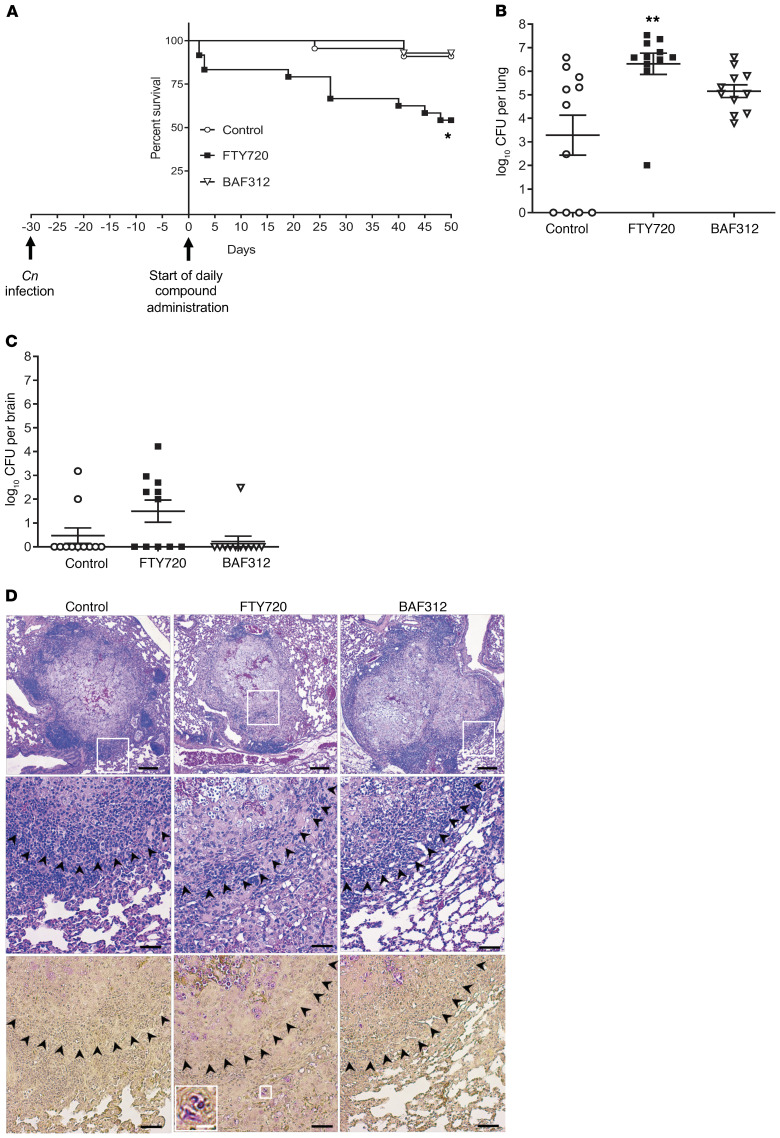
Figure 1. Mice treated with FTY720 30 days after infection have decreased survival and an increase in C.
neoformansgrowth in granulomas. (A) Mice were infected for 30 days with C. neoformans Δgcs1 before daily compound oral administration and survival of mice was monitored. All compounds were given at a dose of 1 mg/kg/day. Survival curves were compared using the log-rank (Mantel-Cox) test. For FTY720, n = 16 mice; BAF312, n = 14 mice; and vehicle control (H2O), n = 14 mice. *P = 0.0025. (B and C) After 50 days of daily compound administration or when mice lost more than 20% body weight, mice were sacrificed and organs were analyzed for CFUs. For FTY720, n = 11 mice; BAF312, n = 11 mice; and vehicle control (H2O), n = 11 mice. Organ burden was compared using 1-way ANOVA with Bonferroni’s multiple comparisons post hoc test. P values were corrected for multiplicity using the Bonferroni’s adjustment. **P = 0.0016. All error bars represent SEM. (D) After 50 days of daily compound administration, 4 lungs were isolated for histology using H&E stain (top 2 rows) and mucicarmine (bottom row). C. neoformans cells stain magenta in mucicarmine. Scale bars: 200 μm (top row), 50 μm (middle and bottom rows), and 12.5 μm (inset, white bar). The white boxes indicate the enlarged area and the black arrowheads denote the border of the granuloma.
Figure 2
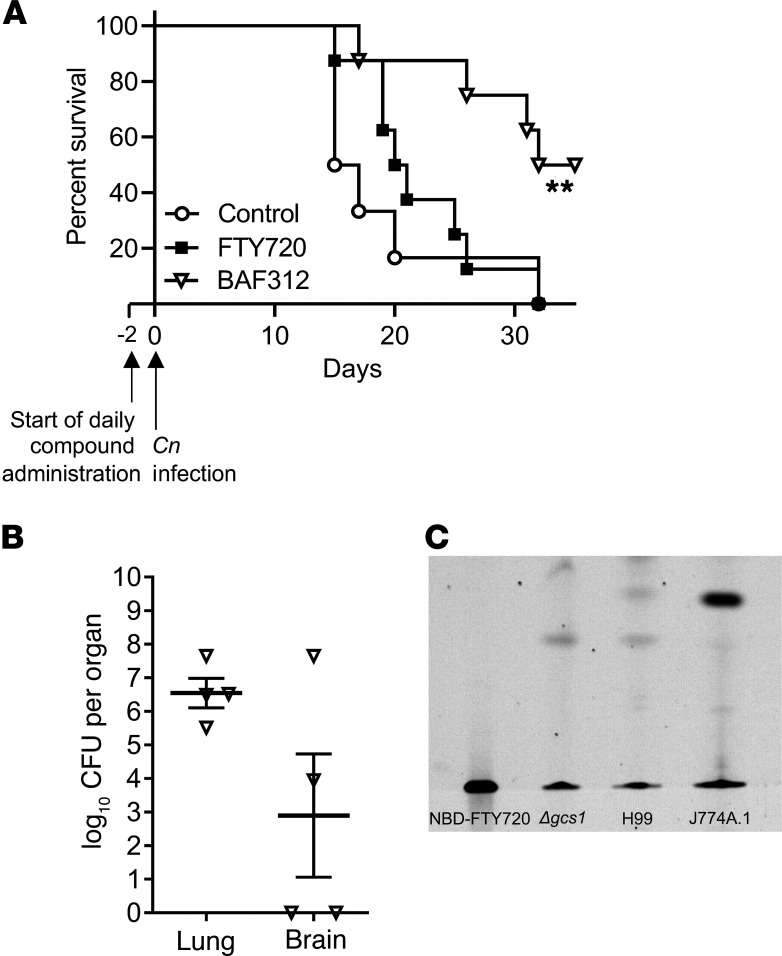
Figure 2. BAF212 increases survival in mice after primary infection with WT C.neoformans H99.
(A) Mice received compound daily via gavage (FTY720, n = 8; BAF312, n = 8; or vehicle control [H2O], n = 8) starting 2 days before intranasal infection with C. neoformans H99 and survival of mice was monitored. Survival curves were compared using the log-rank (Mantel-Cox). **P = 0.0083. (B) After 40 days of daily compound administration, BAF312 mice that survived were euthanized and analyzed for CFUs in the lung and the brain, n = 4. All error bars represent SEM. (C) NBD-FTY720 was added to the media of either mammalian cells (J774A.1) or C. neoformans cells (Δgcs1 and H99) at a concentration of 2 μg/mL. NBD-FTY720 was extracted from the media and evaluated via thin layer chromatography, n = 3 independent experiments.
Figure 3
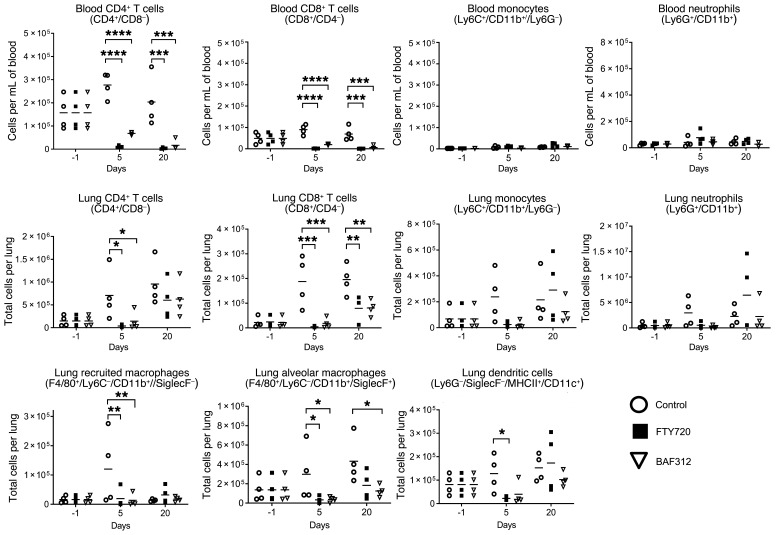
Figure 3. FTY720 and BAF312 both cause a decrease in T cells and innate immune cells in the lung and blood.
Mice were infected for 30 days with C. neoformans Δgcs1 before FTY720, BAF312, or vehicle control (H2O) administration. For the blood analysis, n = 4 mice per group at each time point and for lungs, n = 4 mice per group at each time point (1 day before compound administration [day –1], day 5, and day 20 after compound administration). Experiment was conducted 2 times. For lung samples, leukocytes were labeled intravascularly to distinguish between cells in the lung parenchyma and vasculature before staining to identify immune cell populations. Statistical significance was determined using 2-way repeated measures ANOVA with Bonferroni’s multiple comparisons post hoc test. P values were corrected for multiplicity using the Bonferroni’s adjustment. *P < 0.05, **P < 0.01, ***P < 0.001, ****P < 0.0001 compared with the control. Adjusted P values available in Supplemental Table 1.
Figure 4
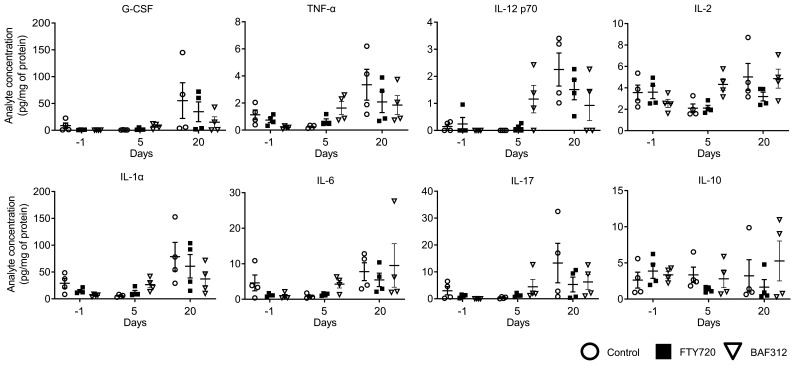
Figure 4. FTY720 does not induce a major change in lung cytokine profiles compared with BAF312.
Mice were infected for 30 days with C. neoformans Δgcs1 before FTY720, BAF312, or vehicle control (H2O) administration. For the lung analysis, n = 4 mice per group at each time point (before compound administration [day –1], day 5, and day 20 after compound administration) were used. Cytokine levels (pg/mL) were normalized to protein concentration (mg/mL) determined by the Bradford assay. All error bars represent SEM.
Figure 5
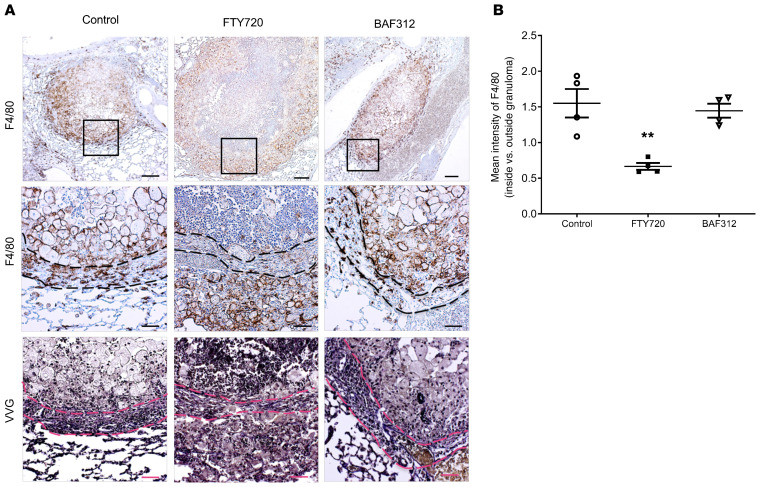
Figure 5. Treatment with FTY720 but not BAF312 affects macrophage organization in the granuloma structure.
(A) Mice were infected for 30 days with C. neoformans Δgcs1 before FTY720, BAF312, or vehicle control (H2O) administration. At day 60 after compound administration lungs were processed for F4/80 immunohistochemistry and Verhoeff–Van Gieson (VVG) staining. Scale bars: 200 μm (top), 50 μm (middle and bottom). Black box indicates enlarged area. The dashed line indicates the fibrotic granuloma layer identified by the red collagen and black elastin staining in VVG. (B) The mean intensity of F4/80 staining inside and outside the bounds of the granuloma, as delineated by the collagen deposition seen in VVG, was quantified using Image J software, n = 4. All error bars represent SEM. Comparisons were done with 1-way ANOVA with Bonferroni’s multiple comparisons post hoc test. P value was corrected for multiplicity using the Bonferroni’s adjustment. **P = 0.0021 compared with control.
Figure 6
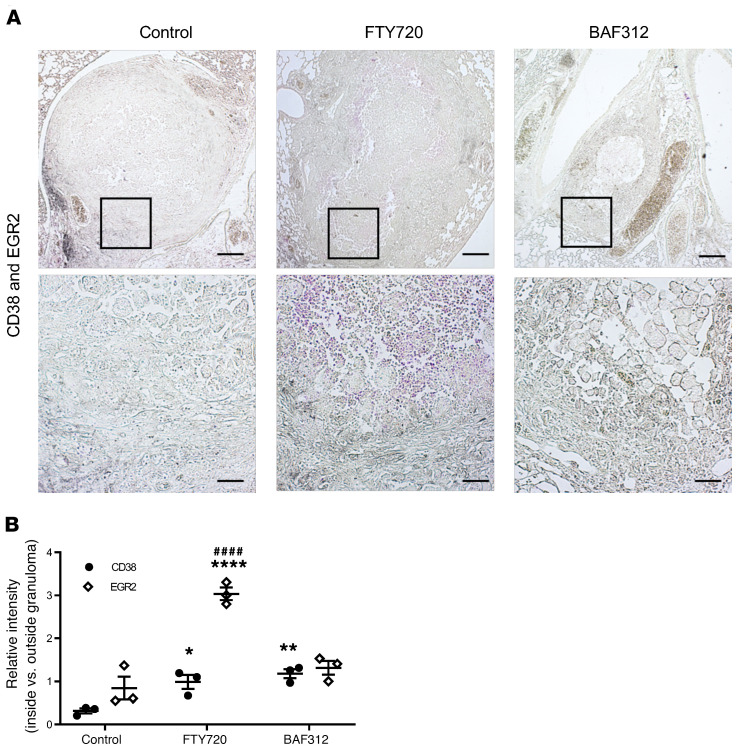
Figure 6. Treatment with FTY720 but not BAF312 affects M2 macrophage polarization in the granuloma structure.
(A) Mice were infected for 30 days with C. neoformans Δgcs1 before FTY720, BAF312, or vehicle control (H2O) administration. At day 60 after compound administration, lungs were processed for CD38 (gray) and EGR2 (magenta) immunohistochemistry to assess for M1 and M2 macrophage polarization, respectively. Scale bars: 200 μm (top), 50 μm (bottom). (B) The relative intensity of CD38 and EGR2 staining inside versus outside the bounds of the granuloma, as delineated by the collagen deposition seen in VVG of Figure 5, was quantified using Image J software, n = 3. All error bars represent SEM. Comparisons were done with 2-way ANOVA with Bonferroni’s multiple comparisons post hoc test. P value was corrected for multiplicity using Bonferroni’s adjustment. *P = 0.0393, **P = 0.0084, ****P < 0.0001 compared with the control. ####P < 0.0001 compared with BAF312.
Figure 7
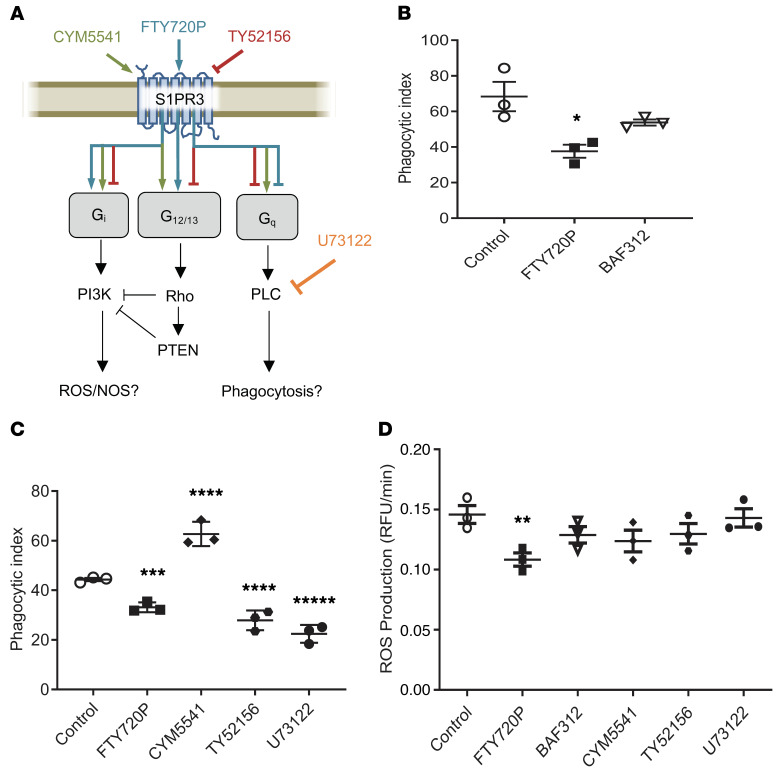
Figure 7. FTY720 impairs phagocytosis and ROS in macrophages.
(A) A schematic of pathways downstream of S1PR3 in macrophages as well as the reported activity of the compounds used in C and D is shown. (B) Primary alveolar macrophages isolated from WT mice were treated overnight with 1 nM of indicated compound, n = 3. Cells were subsequently coincubated with opsonized C. neoformans Δgcs1 and phagocytic index was calculated by microscopic observation. Experiment was conducted 3 times. (C) Primary alveolar macrophages isolated from WT mice were treated with indicated compound for 1 hour, n = 3 each. Phagocytic index was performed as in B. Experiment was conducted 3 times. (D) Primary alveolar macrophages from WT mice were treated overnight with the respective compound and analysis of ROS production was performed, n = 3. Experiment was conducted 3 times. All error bars represent SEM and statistical comparisons were done using the 2-sided Student’s t test (B: *P = 0.0313) or 1-way ANOVA with Bonferroni’s multiple comparisons post hoc test. P values were corrected for multiplicity using the Bonferroni’s adjustment (C: ***P = 0.0098, ****P < 0.001, *****P < 0.0001; D: **P = 0.0218).
Figure 8
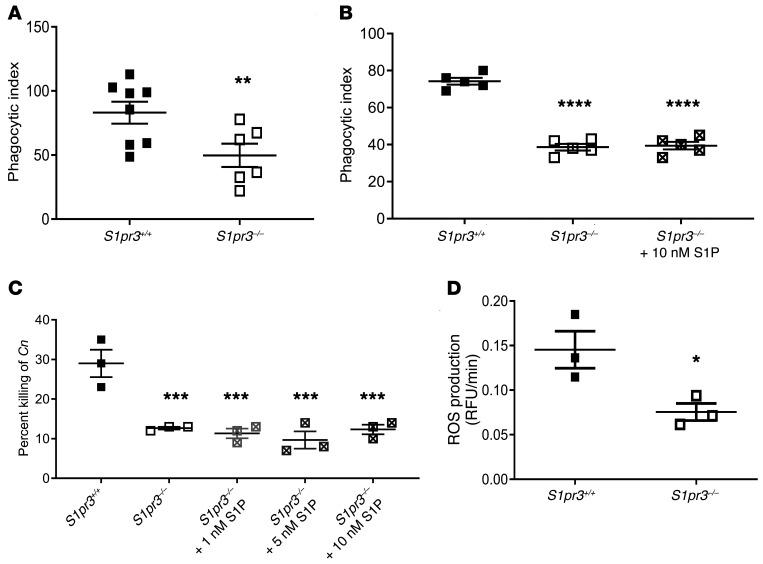
Figure 8. S1P/S1PR3 signaling is required for phagocytosis, ROS production, and intracellular killing of C. neoformans Δgcs1.
(A) Primary alveolar macrophages isolated from WT (n = 8) and S1PR3 deficient (n = 6) mice were coincubated with opsonized C. neoformans Δgcs1 and phagocytic index was calculated by microscopic observation. Experiment was conducted 3 times. (B) Phagocytic index for primary alveolar macrophages isolated from mice of indicated genotype (n = 5 each) with and without S1P supplementation were calculated as in A. Experiment was conducted 3 times. (C) Primary alveolar macrophages isolated from mice of indicated genotype (n = 3) with and without S1P supplementation were coincubated with opsonized C. neoformans Δgcs1. After incubation, culture media were plated onto YPD agar. Percentage of killing was calculated as the difference in CFUs of Δgcs1 incubated with or without macrophages. Experiment was conducted 5 times. (D) Primary alveolar macrophages of the indicated genotype (n = 3) were analyzed for ROS production after coincubation with opsonized C. neoformans Δgcs1. Experiment was conducted 5 times. All error bars represent SEM and statistical comparisons were done using 2-sided Student’s t test (*P = 0.0378, **P = 0.0222) or 1-way ANOVA with Bonferroni’s multiple comparisons post hoc test. P values were corrected for multiplicity using the Bonferroni’s adjustment (***P < 0.001, ****P < 0.0001, compared with control).
Figure 9
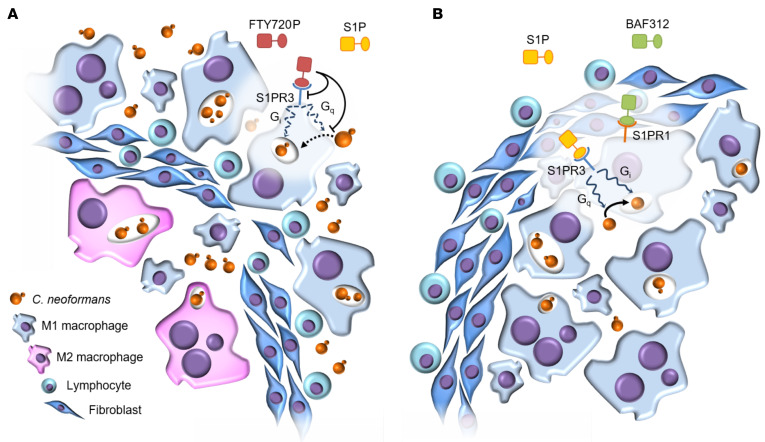
Figure 9. Model of FTY720 versus BAF312 action on cryptococcal reactivation.
(A) When FTY720 is administered, the FTY720-phosphate (FTY720P) affects S1PR3 (along with S1PR1, S1PR4, and S1PR5; not illustrated). This leads to decreased phagocytosis, intracellular killing, and ROS production, which disrupt the maintenance of the granuloma. Fungal cells are able to replicate and escape to cause a reactivation. Granuloma structure is altered; macrophages are found outside of the fibrotic granuloma layer and those remaining inside the granuloma show an M2 polarization. (B) When BAF312 is administered, S1PR3 signaling is unaffected, granuloma organization is maintained, and no reactivation takes place.

References

    1. Perfect JR, Casadevall A. Cryptococcosis. Infect Dis Clin North Am. 2002;16(4):837–874. doi: 10.1016/S0891-5520(02)00036-3. - DOI - PubMed
    1. Casadevall A, Coelho C, Alanio A. Mechanisms of Cryptococcus neoformans-mediated host damage. Front Immunol. 2018;9:855. - PMC - PubMed
    1. Rajasingham R, et al. Global burden of disease of HIV-associated cryptococcal meningitis: an updated analysis. Lancet Infect Dis. 2017;17(8):873–881. doi: 10.1016/S1473-3099(17)30243-8. - DOI - PMC - PubMed
    1. Pyrgos V, Seitz AE, Steiner CA, Prevots DR, Williamson PR. Epidemiology of cryptococcal meningitis in the US: 1997-2009. PLoS ONE. 2013;8(2):e56269. doi: 10.1371/journal.pone.0056269. - DOI - PMC - PubMed
    1. Grebenciucova E, Reder AT, Bernard JT. Immunologic mechanisms of fingolimod and the role of immunosenescence in the risk of cryptococcal infection: A case report and review of literature. Mult Scler Relat Disord. 2016;9:158–162. doi: 10.1016/j.msard.2016.07.015. - DOI - PubMed

Publication types

MeSH terms

Substances