. 2020 Jul 10;6(7):1976-1997.
doi: 10.1021/acsinfecdis.0c00326. Epub 2020 Jun 24.

Biosynthesis, Mechanism of Action, and Inhibition of the Enterotoxin Tilimycin Produced by the Opportunistic Pathogen Klebsiella oxytoca

Affiliations

Biosynthesis, Mechanism of Action, and Inhibition of the Enterotoxin Tilimycin Produced by the Opportunistic Pathogen Klebsiella oxytoca

Evan M Alexander et al. ACS Infect Dis. .

Abstract

Tilimycin is an enterotoxin produced by the opportunistic pathogen Klebsiella oxytoca that causes antibiotic-associated hemorrhagic colitis (AAHC). This pyrrolobenzodiazepine (PBD) natural product is synthesized by a bimodular nonribosomal peptide synthetase (NRPS) pathway composed of three proteins: NpsA, ThdA, and NpsB. We describe the functional and structural characterization of the fully reconstituted NRPS system and report the steady-state kinetic analysis of all natural substrates and cofactors as well as the structural characterization of both NpsA and ThdA. The mechanism of action of tilimycin was confirmed using DNA adductomics techniques through the detection of putative N-2 guanine alkylation after tilimycin exposure to eukaryotic cells, providing the first structural characterization of a PBD-DNA adduct formed in cells. Finally, we report the rational design of small-molecule inhibitors that block tilimycin biosynthesis in whole cell K. oxytoca (IC50 = 29 ± 4 μM) through the inhibition of NpsA (KD = 29 ± 4 nM).

Keywords: Klebsiella oxytoca; adenylation; microbiome; nonribosomal peptide synthetase; pyrrolobenzodiazepine; tilimycin.


Conflict of interest statement

The authors declare no competing financial interests.

Figures
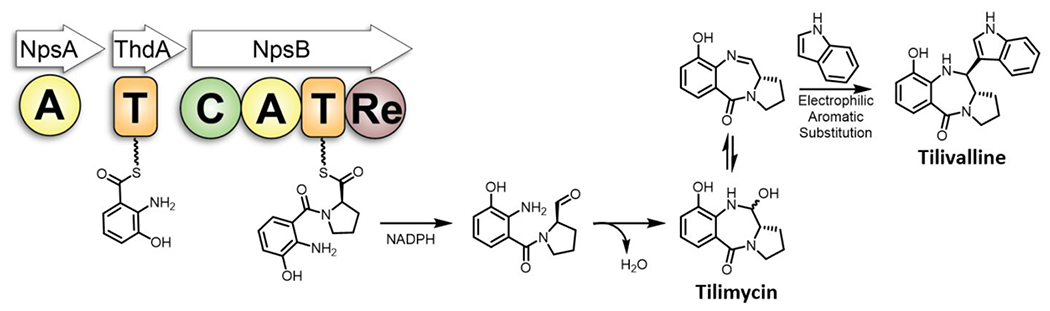
Figure 1.
Figure 1.
The NRPS pathway for the biosynthesis of tilimycin. Reductive release of the dipeptide affords l-N-(3-hydroxyanthraniloyl)prolinal that spontaneously cyclizes to a mixture of diastereomeric aminals known as tilimycin that are in equilibrium with the imine species. Non-enzymatic condensation with indole yields tilivalline. A = adenylation domain, T = thiolation domain, C = condensation domain, Re = thioester-reductase domain.
Figure 2:
Figure 2:
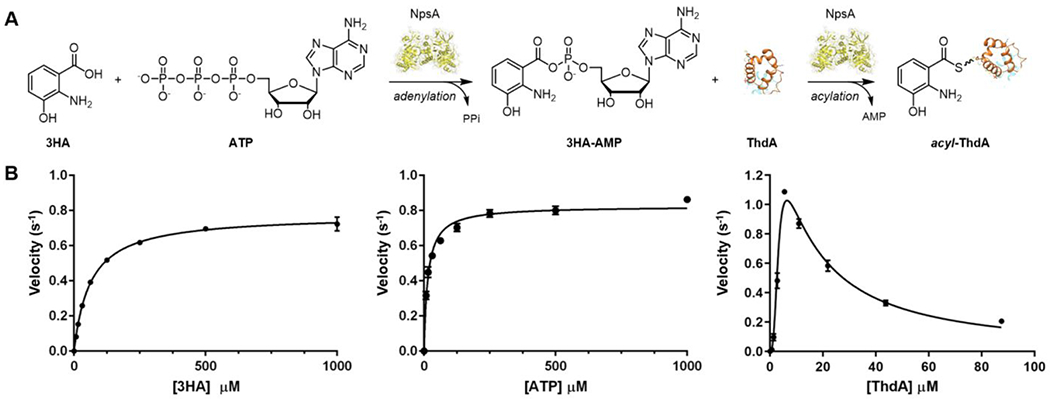
A) Adenylation-ligation enzymatic reaction catalyzed by NpsA. B) Initial velocity vs substrate concentration [3HA], [ATP] and [ThdA]. Data were fit to the Michaelis-Menten equation or substrate inhibition model. Each reaction contained 5 mM ATP and 20 μM ThdA (for varying 3HA), 500 μM 3-HA and 20 μM ThdA (for varying 3-ATP), 500 μM 3HA and 5 mM ATP (for varying ThdA) in 50 mM Tris, 150 mM NaCl, 10 mM MgCl2 pH 8 buffer with 20 nM NpsA. Data are average (±SD) of triplicate experiments.
Figure 3.
Figure 3.
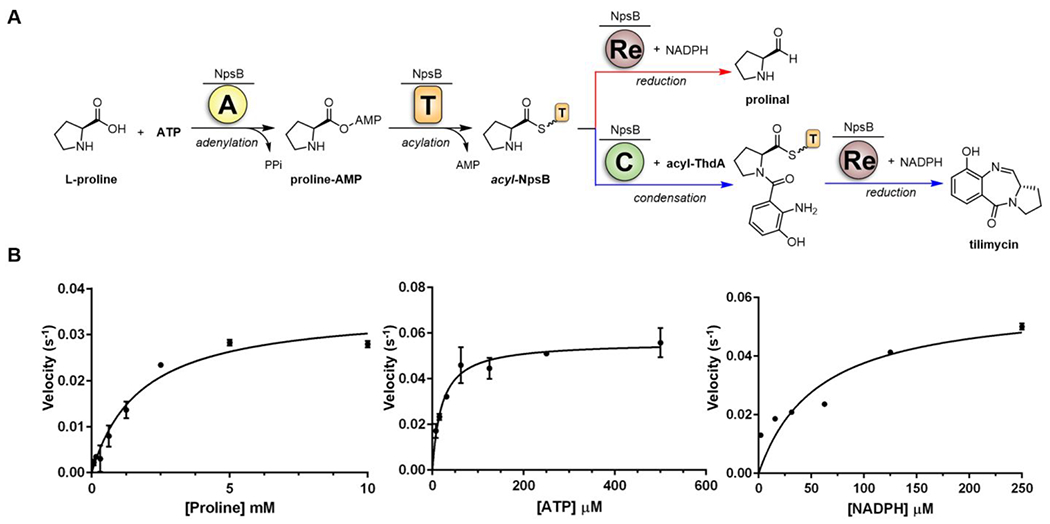
A) Overall enzymatic reaction catalyzed by NpsB. The A-domain of NpsB activates l-proline to the prolyl-adenylate species and transfers it to the downstream T-domain of NpsB. The intermediate l-Pro-S~T can undergo two competitive reactions: direct reduction by the reductase domain (red arrow) or condensation with acyl-ThdA (blue arrow), which can subsequently be reduced by the Re domain to afford tilimycin. B) Initial velocity vs substrate concentration [l-Proline], [ATP] and [NADPH], Data were fit to the Michaelis-Menten equation. Each reaction contained 5 mM ATP and 0.5 mM NADPH (for varying l-Proline), 5 mM l-Proline and 0.5 mM NADPH (for varying ATP), 5 mM l-Proline and 5 mM ATP (for varying NADPH) in 50 mM Tris, 150 mM NaCl, 10 mM MgCl2 pH 8 buffer with 250 nM NpsB and 20 μM 3-hydroxyanthraniloyl-S~ThdA. Data are average (±SD) of triplicate experiments.
Figure 4.
Figure 4.
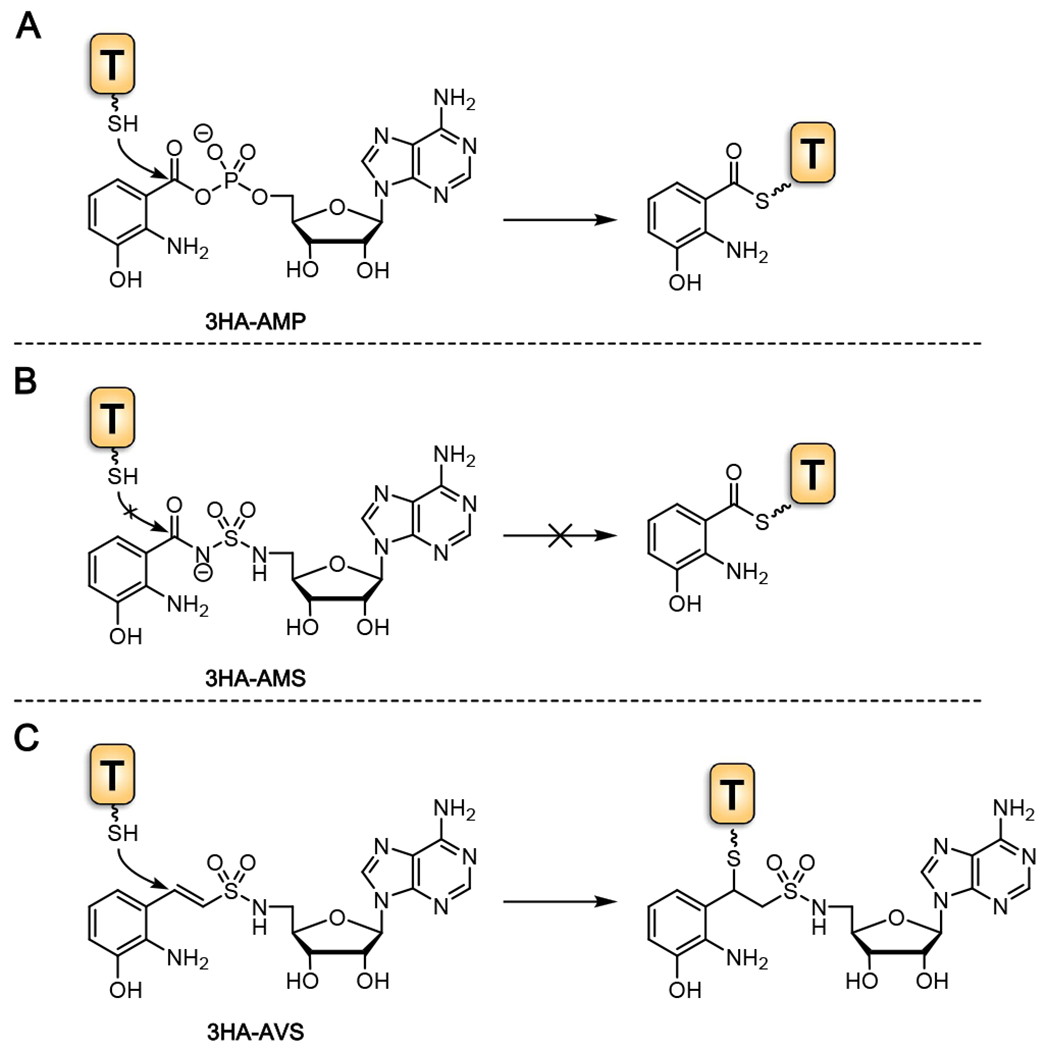
A) The mechanism in which 3-hydroxyanthraniloyl-adenylate is loaded to the holo-ThdA phosphopantetheinyl arm yielding acyl-ThdA. B) Non-cleavable bioisostere 3-hydroxyanthraniloyl-AMS mimicking the adenylate intermediate, inhibiting acylation of the downstream ThdA. C.) Vinyl-sulfonamide 3-hydroxyanthraniloyl-AVS participates in a hetero-Michael addition with the terminal phosphopantetheinyl thiol of holo-ThdA resulting in covalent modification and irreversible inhibition.
Figure 5.
Figure 5.
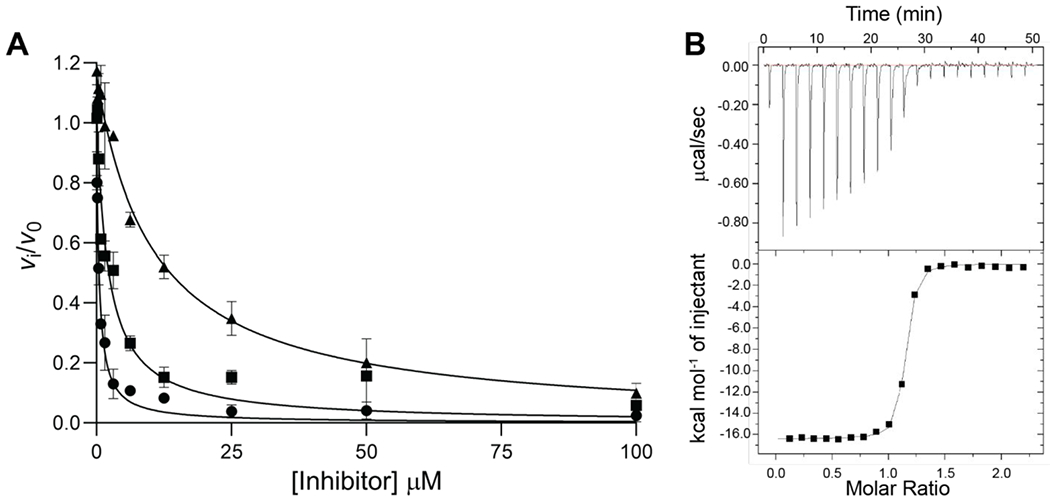
A) Concentration-response plot for NpsA inhibition by 5, 8 and 9: 3-hydroxyanthraniloyl-AMS 5 (circle), 3-hydroxybenzoyl-AMS 8 (square), anthraniloyl-AMS 9 (triangle). The curve represents the best non-linear fit to the Morrison equation. Data are average (±SD) of triplicate experiments. B) Representative ITC binding isotherm of binding 5 to NpsA. (Top) Data obtained by titration of 25 nM NpsA with 0.25 μM 5. (Bottom) The integrated curve showing experimental points and the best fit (−).
Figure 6.
Figure 6.
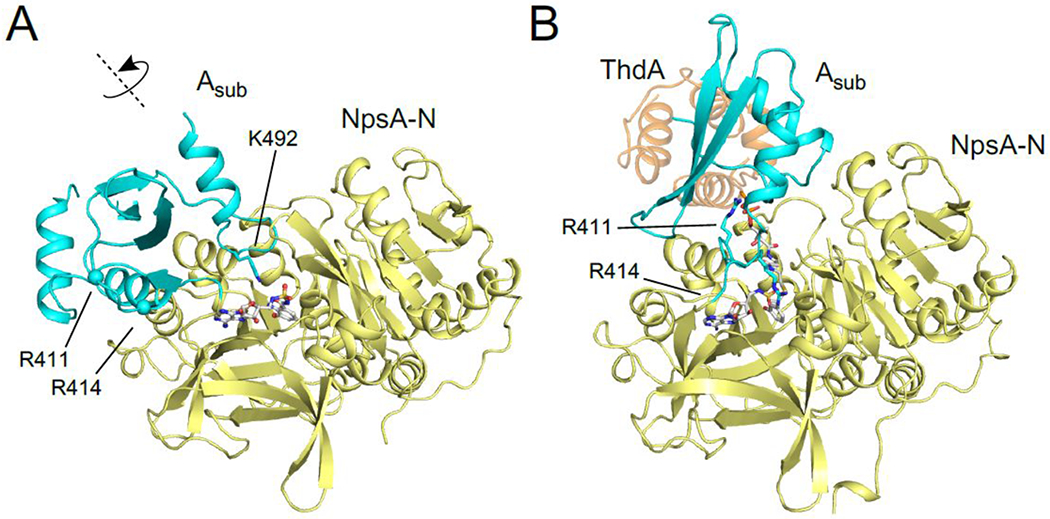
A) 3-hydroxyanthraniloyl-AMS 5 bound to full length NpsA showing Asub domain in the adenylation conformation. B) 3-hydroxybenzoyl-AVS 13 bound to NpsA-ThdA fusion protein showing A sub domain in the acylation configuration binding auxiliary protein ThdA.
Figure 7.
Figure 7.
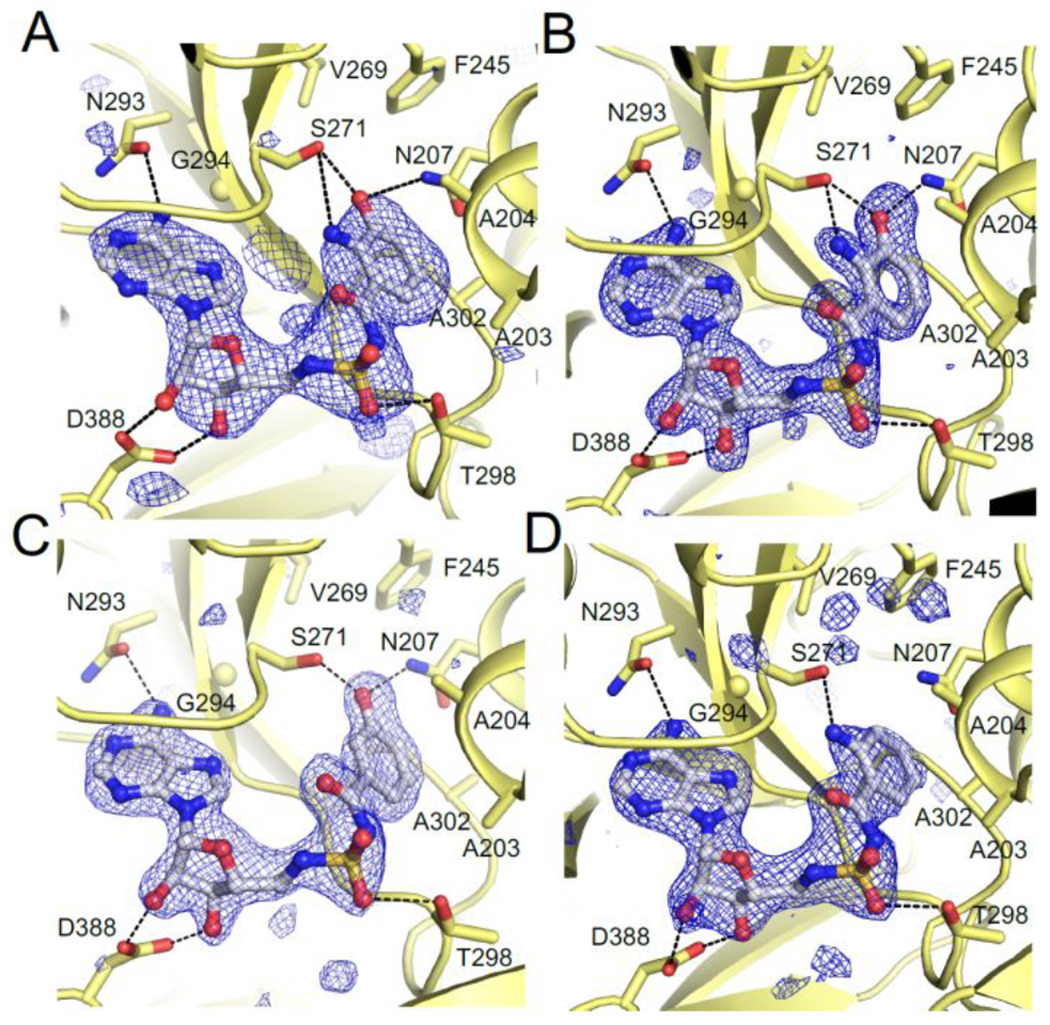
A) Full-length NpsA and 3-hydroxyanthraniloyl-AMS 5, B) NpsA-N and 3-hydroxyanthraniloyl-AMS 5, C) NpsA-N and 3-hydroxybenzoyl-AMS 8, and D) NpsA-N and 2-anthraniloyl-AMS 9. Each panel displays conserved A domain nucleotide binding residues (Asn293, Thr298, Asp388). Simulated annealing electron density is calculated with coefficients of the form mFo-DFc and contoured at 3σ.
Figure 8.
Figure 8.
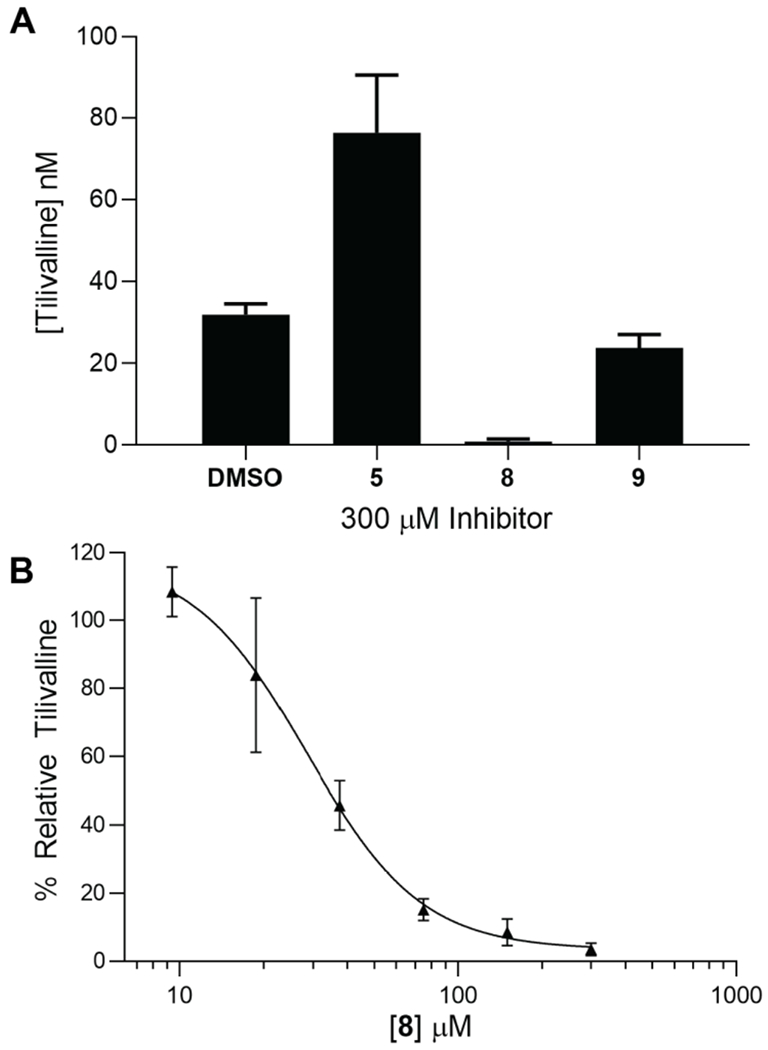
A) Cultures inoculated with K. oxytoca to a starting OD600 = 0.01 with 300 μM of 5, 8, 9 or 0.6% DMSO as a negative control were grown for 8 hours at 37 °C in CASO medium shaking at 250 rpm. Tilivalline production was quantified using LC-MS/MS and the m/z transitions 334.4→199.1 [tilivalline (analyte)] and 424→199.1 [O-benzyltilivalline (internal standard)]. B) Concentration-response plot of the normalized % production of tilivalline at 8 hours under the incubation conditions described in panel A relative to a DMSO-only control versus the concentration 3-hydroxybenzoyl-AMS 8. The curve was fit to a four-parameter Hill equation to provide an IC50 value of 29 ± 4 μM and a Hillslope of −2.1 ± 0.5. The data points represent the mean (±SD) of two independent experiments.
Figure 9.
Figure 9.
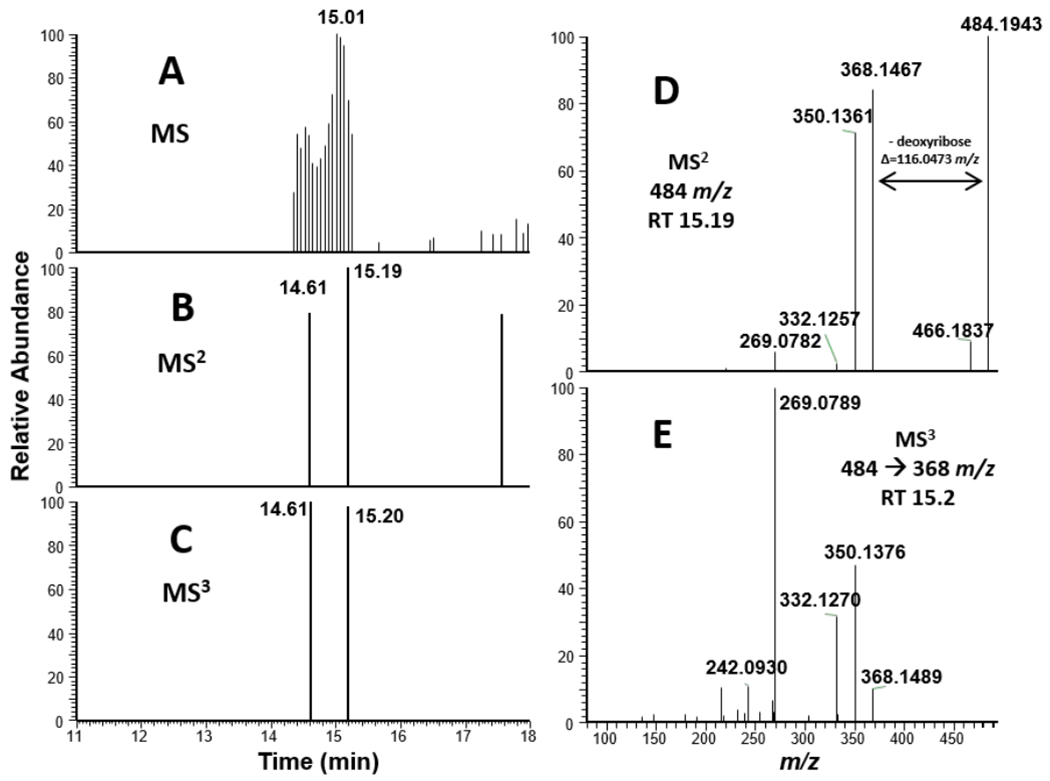
Mass spectral data for ctDNA treated with tilimycin. A.) MS1 EIC of 484.1939 m/z. B.) MS2 data dependent event for 484.1939 m/z. C.) MS3 triggered event for 484.1939→368.1466 m/z (neutral loss of deoxyribose). D.) MS2 mass spectrum from fragmentation of 484 m/z at retention time = 15.19 min. E.) MS3 mass spectrum from fragmentation of 484.1939→368.1466 m/z at retention time = 15.20 min.
Figure 10.
Figure 10.
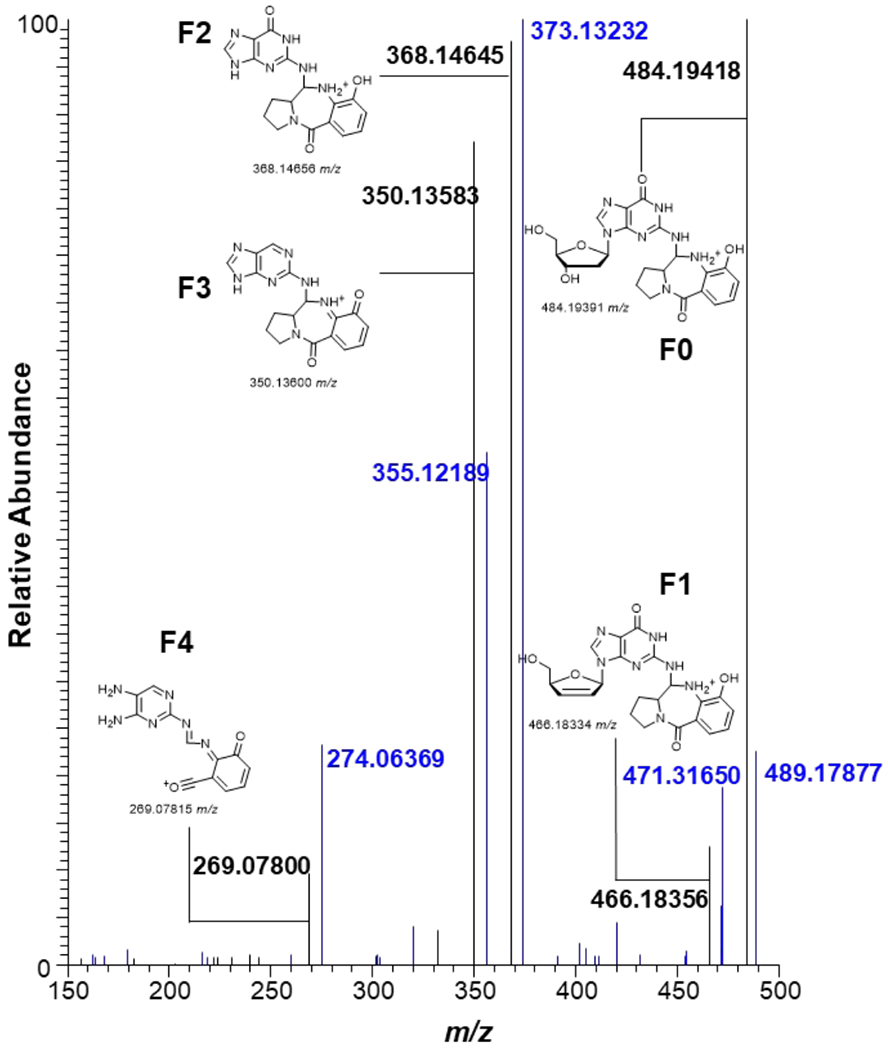
MS2 Fragmentation pattern of dG-tilimycin adduct (possible structure) from tilimycin exposure to ctDNA (black) overlaid with identical exposure to 15N bacterial DNA (blue). Possible product ions F0-F4 shown.
Figure 11.
Figure 11.
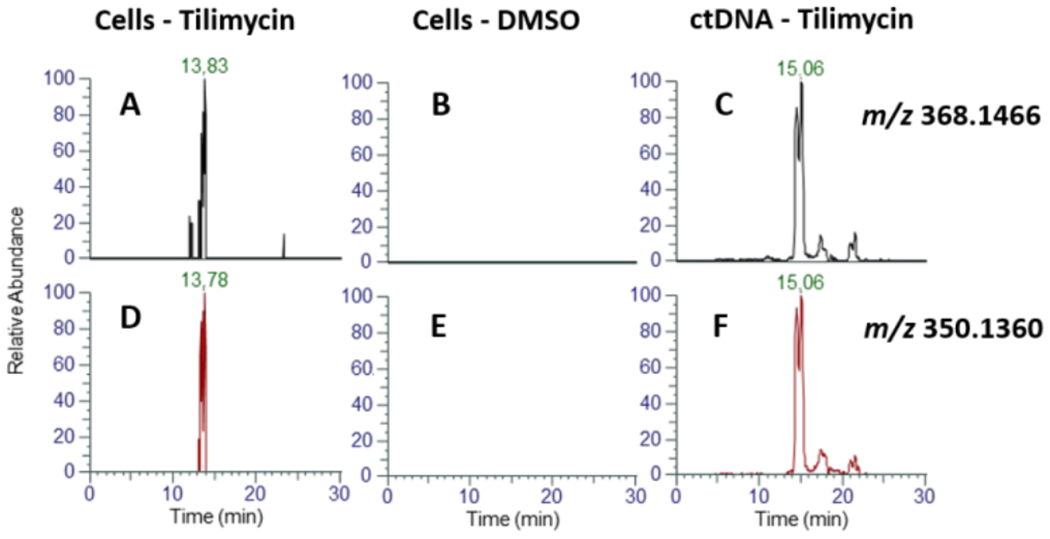
MS2 EIC of 484.1939→368.1466 m/z (neutral loss of deoxyribose) for tilimycin-treated HEK cells (A), DMSO-only HEK cells (B), and tilimycin treated ctDNA (C). MS2 EIC of 484.1939→350.1360 m/z (neutral loss of deoxyribose, H2O) for tilimycin-treated cells (D), DMSO-only HEK cells (E), and tilimycin-treated ctDNA (F).
Scheme 1.
Scheme 1.
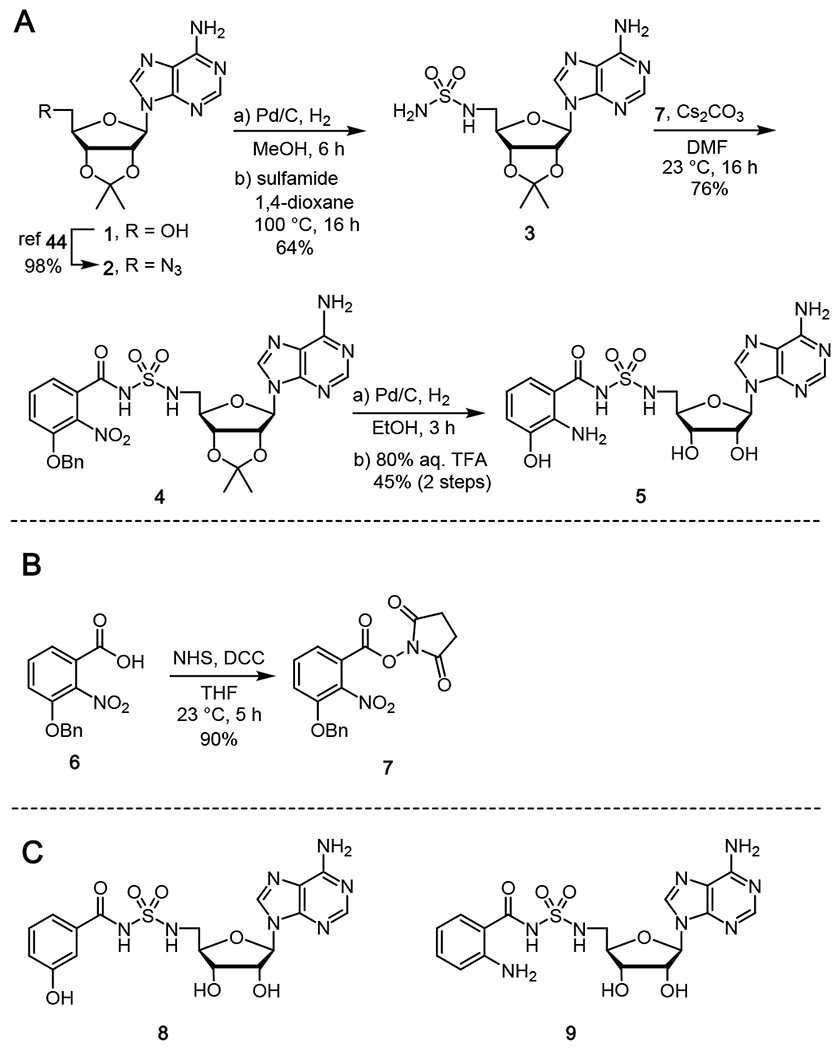
Synthesis of 3-hydroxyanthraniloyl-AMS (5).
Scheme 2.
Scheme 2.
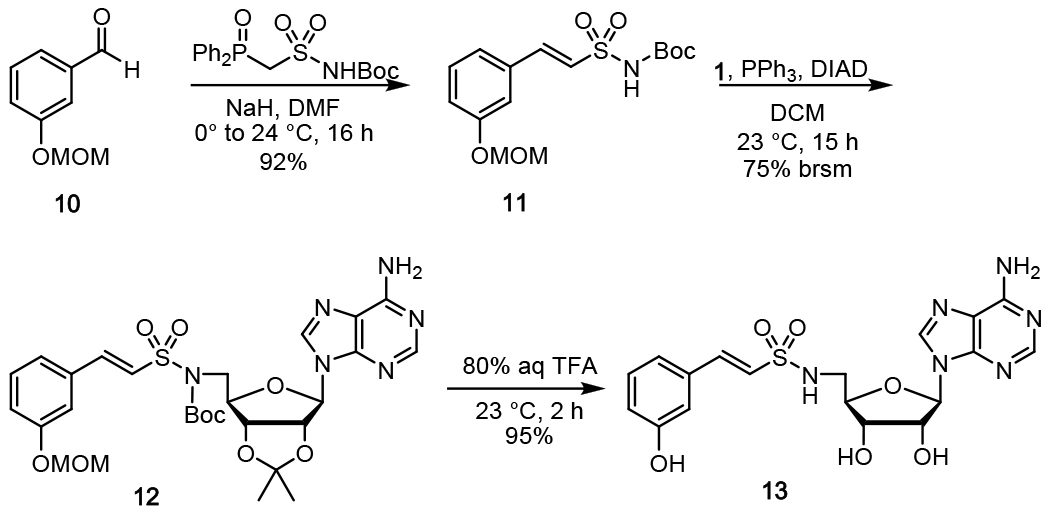
Synthesis of 3-hydroxybenzoyl-AVS (13).

References

    1. Savage DC (1977) Microbial Ecology of the Gastrointestinal Tract. Annu. Rev. Microbiol 31, 107–133. - PubMed
    1. Eloe-Fadrosh EA, and Rasko DA (2013) The Human Microbiome: From Symbiosis to Pathogenesis. Annu. Rev. Med 64, 145–163. - PMC - PubMed
    1. Nougayrede J-P (2006) Escherichia coli Induces DNA Double-Strand Breaks in Eukaryotic Cells. Science 313, 848–851. - PubMed
    1. Peery AF, Dellon ES, Lund J, Crockett SD, McGowan CE, Bulsiewicz WJ, Gangarosa LM, Thiny MT, Stizenberg K, Morgan DR, Ringel Y, Kim HP, DiBonaventura MD, Carroll CF, Allen JK, Cook SF, Sandler RS, Kappelman MD, and Shaheen NJ (2012) Burden of Gastrointestinal Disease in the United States: 2012 Update. Gastroenterology 143, 1179–1187.e3. - PMC - PubMed
    1. Belizario JE, and Napolitano M (2015) Human microbiomes and their roles in dysbiosis, common diseases, and novel therapeutic approaches. Front. Microbiol 6. - PMC - PubMed

Publication types