


Marine-Derived Compounds with Potential Use as Cosmeceuticals and Nutricosmetics
- PMID: 32486036
- PMCID: PMC7321322
- DOI: 10.3390/molecules25112536
Marine-Derived Compounds with Potential Use as Cosmeceuticals and Nutricosmetics
Abstract
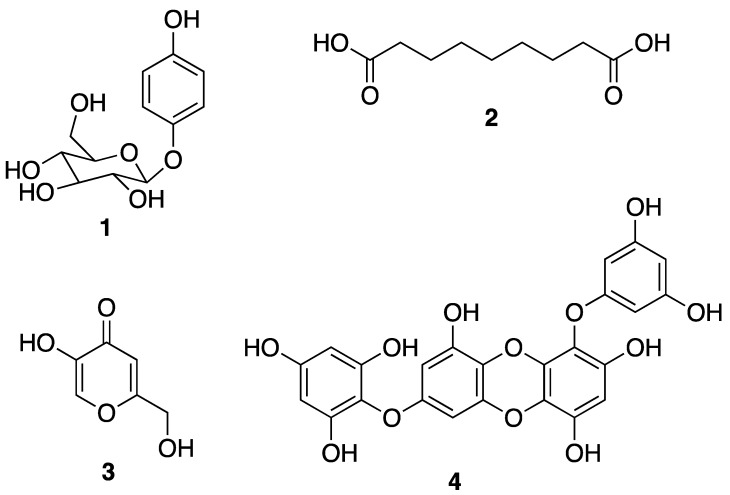
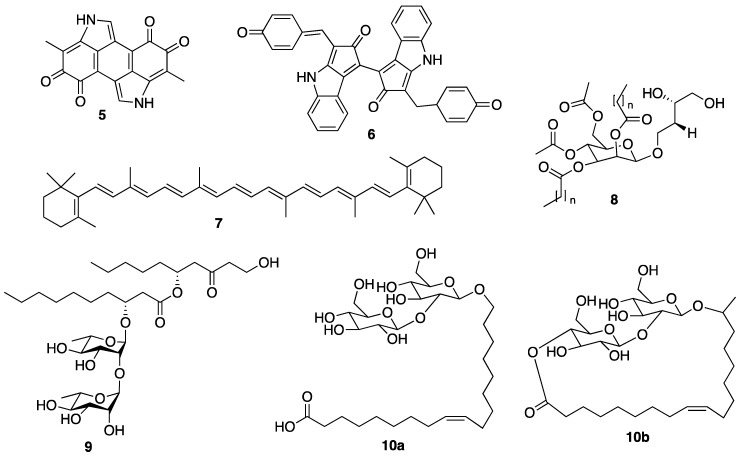
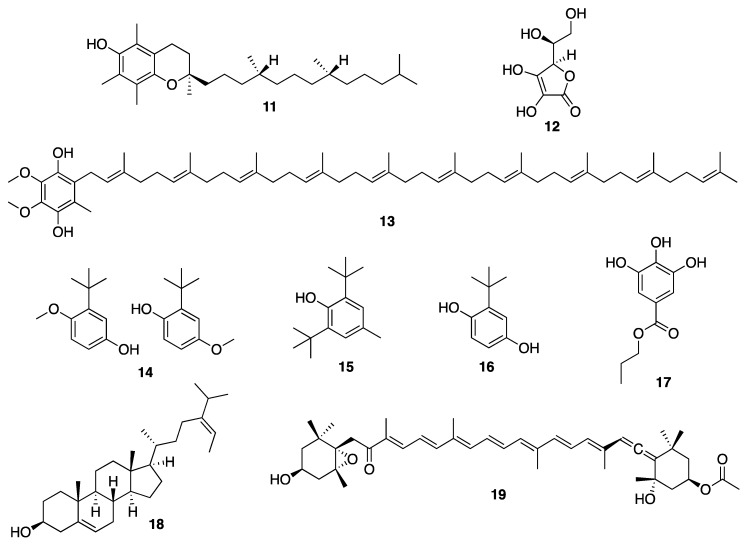
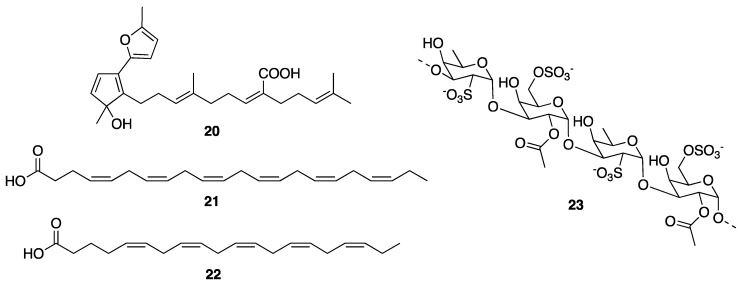
The cosmetic industry is among the fastest growing industries in the last decade. As the beauty concepts have been revolutionized, many terms have been coined to accompany the innovation of this industry, since the beauty products are not just confined to those that are applied to protect and enhance the appearance of the human body. Consequently, the terms such as cosmeceuticals and nutricosmetics have emerged to give a notion of the health benefits of the products that create the beauty from inside to outside. In the past years, natural products-based cosmeceuticals have gained a huge amount of attention not only from researchers but also from the public due to the general belief that they are harmless. Notably, in recent years, the demand for cosmeceuticals from the marine resources has been exponentially on the rise due to their unique chemical and biological properties that are not found in terrestrial resources. Therefore, the present review addresses the importance of marine-derived compounds, stressing new chemical entities with cosmeceutical potential from the marine natural resources and their mechanisms of action by which these compounds exert on the body functions as well as their related health benefits. Marine environments are the most important reservoir of biodiversity that provide biologically active substances whose potential is still to be discovered for application as pharmaceuticals, nutraceuticals, and cosmeceuticals. Marine organisms are not only an important renewable source of valuable bulk compounds used in cosmetic industry such as agar and carrageenan, which are used as gelling and thickening agents to increase the viscosity of cosmetic formulations, but also of small molecules such as ectoine (to promote skin hydration), trichodin A (to prevent product alteration caused by microbial contamination), and mytiloxanthin (as a coloring agent). Marine-derived molecules can also function as active ingredients, being the main compounds that determine the function of cosmeceuticals such as anti-tyrosinase (kojic acid), antiacne (sargafuran), whitening (chrysophanol), UV protection (scytonemin, mycosporine-like amino acids (MAAs)), antioxidants, and anti-wrinkle (astaxanthin and PUFAs).
Keywords: UV protection; anti-tyrosinase; anti-wrinkle; antiaging; cosmeceuticals; marine-derived compounds; nutricosmetics.
Conflict of interest statement
The authors declare no conflict of interest.
Figures
References
-
- Guillerme: J.-B., Couteau C., Coiffard L. Applications for Marine Resources in Cosmetics. Cosmetics. 2017;4:35. doi: 10.3390/cosmetics4030035. - DOI
-
- Hyde K.D., Bahkali A.H., Moslem M.A. Fungi-an unusual source for cosmetics. Fungal Divers. 2010;43:1–9. doi: 10.1007/s13225-010-0043-3. - DOI
-
- Kilgman A. Cosmeceuticals: A broad-spectrum category between cosmetics and drugs. In: Elsner P., Maibach H., editors. Cosmeceuticals and Active Cosmetics, Drug versus Cosmetics. Taylor & Francis; Boca Raton, FL, USA: 2005. pp. 1–9.
-
- Kim S.-K., Ravichandran Y.D., Khan S.B., Kim Y.T. Prospective of the cosmeceuticals derived from marine organisms. Biotechnol. Bioproc. E. 2008;13:511–523. doi: 10.1007/s12257-008-0113-5. - DOI
Publication types
MeSH terms
Substances
LinkOut - more resources
Full Text Sources
Other Literature Sources
Medical
Research Materials
Miscellaneous
