


Recent Advances in Nanomaterial-Based Wound-Healing Therapeutics
- PMID: 32486142
- PMCID: PMC7356512
- DOI: 10.3390/pharmaceutics12060499
Recent Advances in Nanomaterial-Based Wound-Healing Therapeutics
Abstract
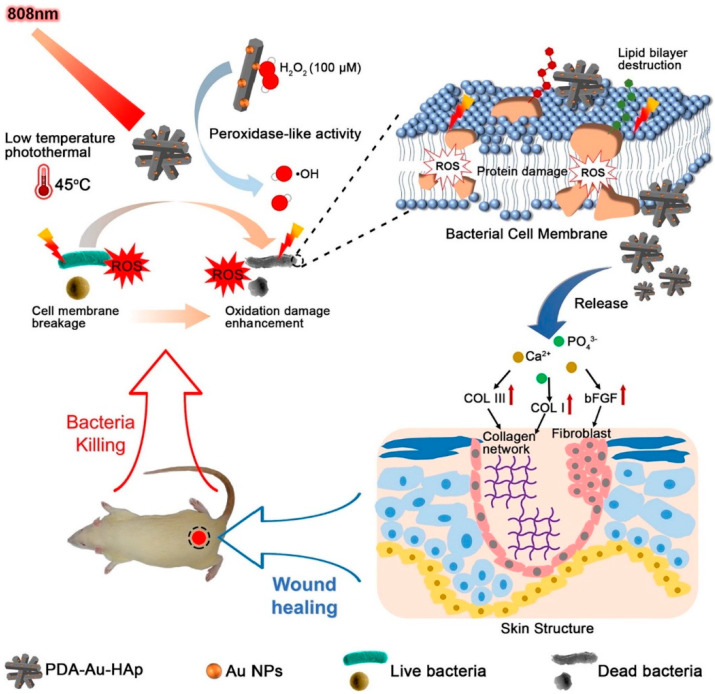
Nanomaterial-based wound healing has tremendous potential for treating and preventing wound infections with its multiple benefits compared with traditional treatment approaches. In this regard, the physiochemical properties of nanomaterials enable researchers to conduct extensive studies on wound-healing applications. Nonetheless, issues concerning the use of nanomaterials in accelerating the efficacy of existing medical treatments remain unresolved. The present review highlights novel approaches focusing on the recent innovative strategies for wound healing and infection controls based on nanomaterials, including nanoparticles, nanocomposites, and scaffolds, which are elucidated in detail. In addition, the efficacy of nanomaterials as carriers for therapeutic agents associated with wound-healing applications has been addressed. Finally, nanomaterial-based scaffolds and their premise for future studies have been described. We believe that the in-depth analytical review, future insights, and potential challenges described herein will provide researchers an up-to-date reference on the use of nanomedicine and its innovative approaches that can enhance wound-healing applications.
Keywords: dressings infectious control; innovative strategies; nanocarriers; nanomedicine; nanoparticles; scaffold; wound healing.
Conflict of interest statement
The authors declare no conflict of interest.
Figures
References
Publication types
Grants and funding
LinkOut - more resources
Full Text Sources
Other Literature Sources
