


Is every patient eligible to have an office hysteroscopy? A retrospective analysis of 1301 procedures
- PMID: 32489495
- PMCID: PMC7233160
- DOI: 10.5114/wiitm.2019.89609
Is every patient eligible to have an office hysteroscopy? A retrospective analysis of 1301 procedures
Abstract
Introduction: Hysteroscopy is the gold standard for diagnosis and treatment of uterine pathologies. The office setting seems to be safe, reducing the anesthesia risks and also decreasing the overall costs of the procedure. Recent literature suggests that hysteroscopy performed without anesthesia may not be as painless as it was previously considered. Moreover, not every patient can be referred for a hysteroscopy in an office setting.
Aim: To analyze the factors correlated with a successful hysteroscopy in an office setting.
Material and methods: We analyzed the documentation of 1301 patients who underwent hysteroscopy at our department in the period 2013-2016. The impact of the type of the procedure and the various demographic factors on the need for general anesthesia was assessed.
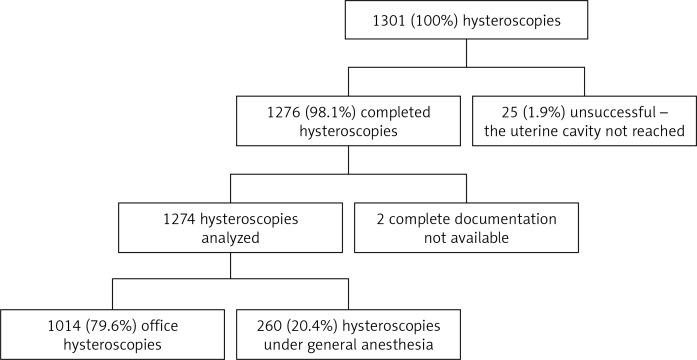
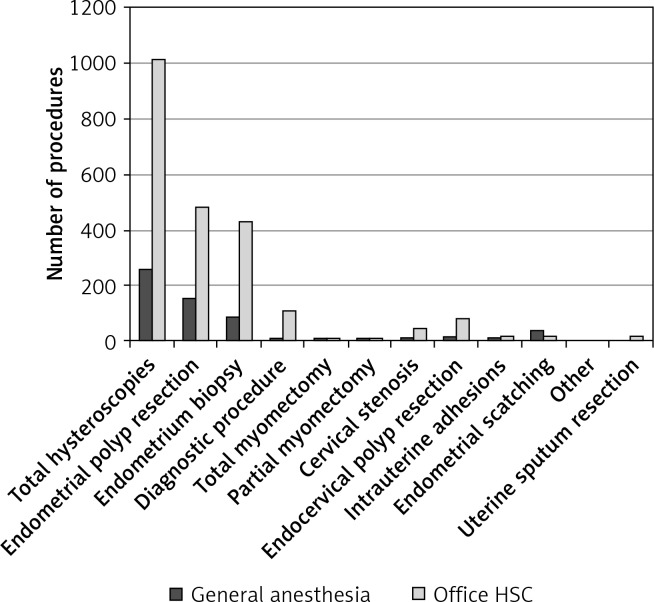
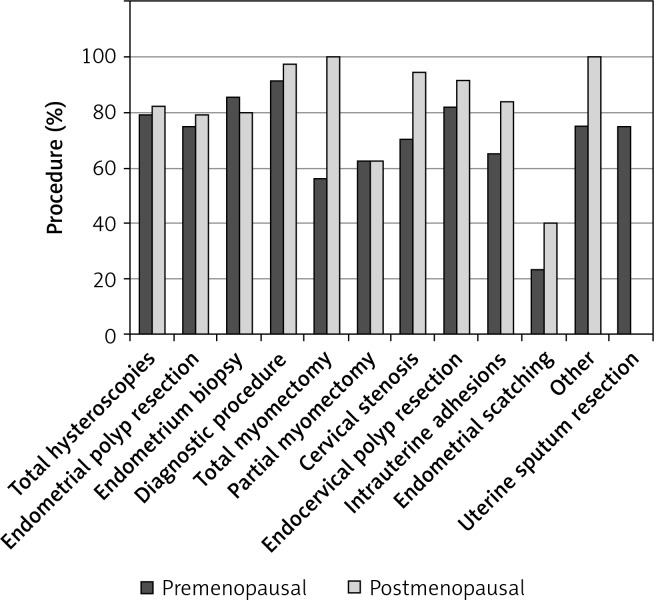
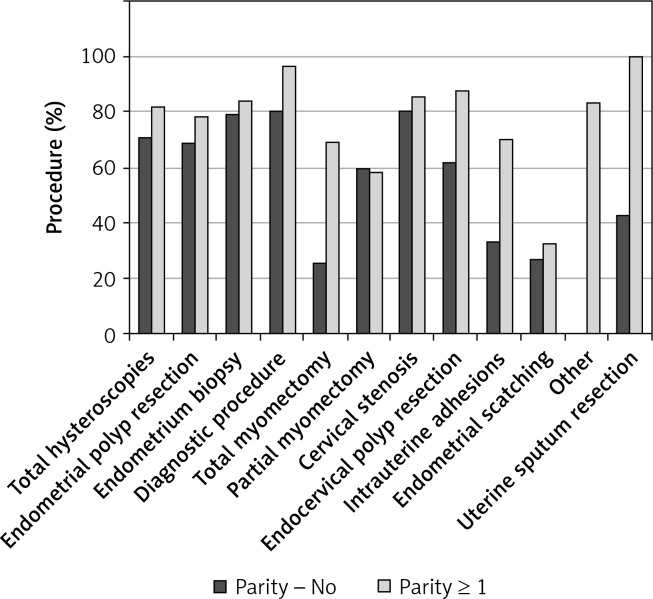
Results: Almost 80% of all hysteroscopies were performed without analgesia in an office setting. The remaining patients underwent a hysteroscopy in general anesthesia. The key aspect for successful office hysteroscopy is the scope of the performed surgery. Over 91% of diagnostic hysteroscopies have been done without analgesia, but only about 30% of extensive endometrial scratching procedures were performed in an office setting. A previous vaginal delivery increases the chances for a successful office hysteroscopy by about 21%, and in the case of diagnostic procedures, multiparous patients were at an about 79% lower risk of analgesia necessity.
Conclusions: It is possible to perform nearly all diagnostic hysteroscopies in an office setting. In the case of operative hysteroscopy, the most crucial factor is the scope of the procedure.
Keywords: anesthesia; hysteroscopy; office hysteroscopy; pain; vaginoscopy.
Copyright: © 2019 Fundacja Videochirurgii.
Conflict of interest statement
The authors declare no conflict of interest.
Figures
References
-
- Kamiński P, Ziółkowska K, Szymusik I, Gajewska M. The use of hysteroscopy in diagnosing and treatment of the septate uterus: author’s experience and literature review. Videosurgery Miniinv. 2006;1:101–9.
-
- Hassan A, Haggag H. Role of oral tramadol 50 mg in reducing pain associated with outpatient hysteroscopy: a randomised double-blind placebo-controlled trial. Aust N Z J Obstet Gynaecol. 2016;56:102–6. - PubMed
-
- Cicinelli E, Didonna T, Schonauer LM, et al. Paracervical anesthesia for hysteroscopy and endometrial biopsy in postmenopausal women. A randomized, double-blind, placebo-controlled study. J Reprod Med. 1998;43:1014–8. - PubMed
-
- Giorda G, Scarabelli C, Franceschi S, Campagnutta E. Feasibility and pain control in outpatient hysteroscopy in post-menopausal women: a randomized trial. Acta Obstet Gynecol Scand. 2000;79:593–7. - PubMed
LinkOut - more resources
Full Text Sources
