


Clinical and epidemiological characterization of severe Plasmodium vivax malaria in Gujarat, India
- PMID: 32490754
- PMCID: PMC7549892
- DOI: 10.1080/21505594.2020.1773107
Clinical and epidemiological characterization of severe Plasmodium vivax malaria in Gujarat, India
Abstract
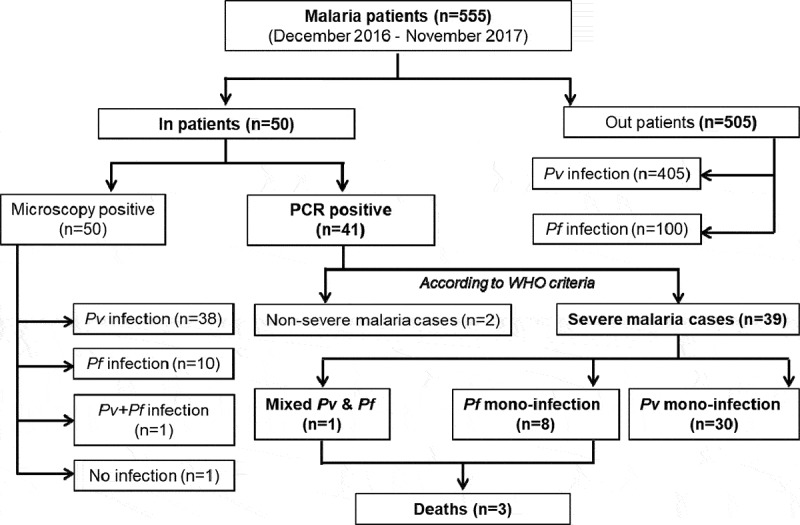
The mounting evidence supporting the capacity of Plasmodium vivax to cause severe disease has prompted the need for a better characterization of the resulting clinical complications. India is making progress with reducing malaria, but epidemics of severe vivax malaria in Gujarat, one of the main contributors to the vivax malaria burden in the country, have been reported recently and may be the result of a decrease in transmission and immune development. Over a period of one year, we enrolled severe malaria patients admitted at the Civil Hospital in Ahmedabad, the largest city in Gujarat, to investigate the morbidity of severe vivax malaria compared to severe falciparum malaria. Patients were submitted to standard thorough clinical and laboratory investigations and only PCR-confirmed infections were selected for the present study. Severevivax malaria (30 patients) was more frequent than severe falciparum malaria (8 patients) in our setting, and it predominantly affected adults (median age 32 years, interquartile range 22.5 years). This suggests a potential age shift in anti-malarial immunity, likely to result from the recent decrease in transmission across India. The clinical presentation of severe vivax patients was in line with previous reports, with jaundice as the most common complication. Our findings further support the need for epidemiological studies combining clinical characterization of severe vivax malaria and serological evaluation of exposure markers to monitor the impact of elimination programmes.
Keywords: Plasmodium vivax; Gujarat; India; Severe malaria; malaria elimination.
Conflict of interest statement
The authors have no conflict of interest to declare.
Figures
References
-
- Mackintosh CL, Beeson JG, Marsh K.. Clinical features and pathogenesis of severe malaria. Trends Parasitol. 2004;20:597–603. - PubMed
-
- Mueller I, Galinski MR, Baird JK, et al. Key gaps in the knowledge of Plasmodium vivax, a neglected human malaria parasite. Lancet Infect Dis. 2009;9:555–566. - PubMed
-
- Joshi H, Prajapati SK, Verma A, et al. Plasmodium vivax in India. Trends Parasitol. 2008;24:228–235. - PubMed
Publication types
MeSH terms
Substances
Grants and funding
LinkOut - more resources
Full Text Sources
Other Literature Sources
Molecular Biology Databases
