


Intensive Care Unit Utilization After Adoption of a Ward-Based High-Flow Nasal Cannula Protocol
- PMID: 32490796
- PMCID: PMC7289508
- DOI: 10.12788/jhm.3417
Intensive Care Unit Utilization After Adoption of a Ward-Based High-Flow Nasal Cannula Protocol
Abstract
Background: Hospitals are increasingly adopting ward-based high-flow nasal cannula (HFNC) protocols that allow HFNC treatment of bronchiolitis outside of the intensive care unit (ICU). Our objective was to determine whether adoption of a ward-based HFNC protocol reduces ICU utilization.
Methods: We examined a retrospective cohort of infants aged 3 to 24 months hospitalized with bronchiolitis at hospitals in the Pediatric Health Information System database. The study exposure was adoption of a ward-based HFNC protocol, measured by direct contact with pediatric hospital medicine leaders at each hospital. All analyses utilized an interrupted time series approach. The primary analysis compared outcomes three respiratory seasons before and three respiratory seasons after HFNC adoption, among adopting hospitals. Supplementary analysis 1 mirrored the primary analysis with the exception that the first season after adoption was censored. In supplementary analysis 2, effects among nonadopting hospitals were subtracted from effects measured among adopting hospitals.
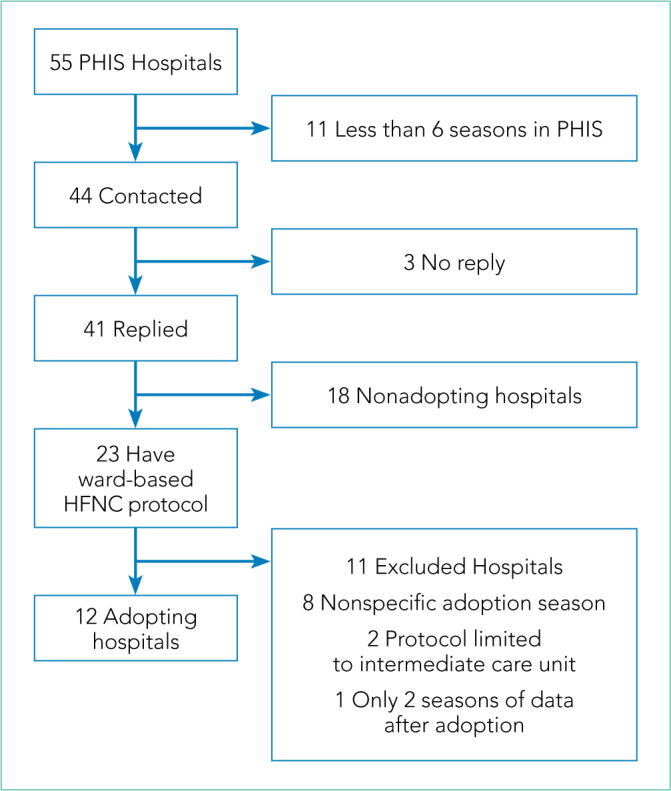
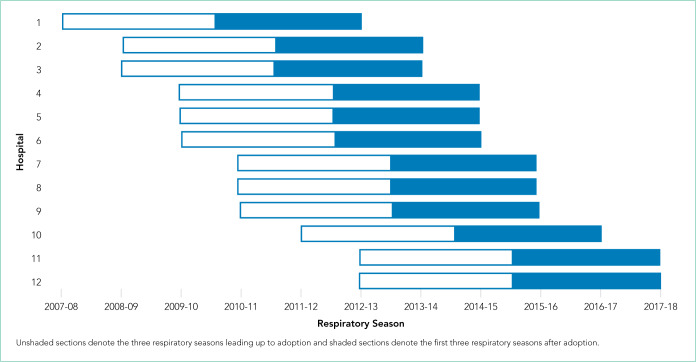
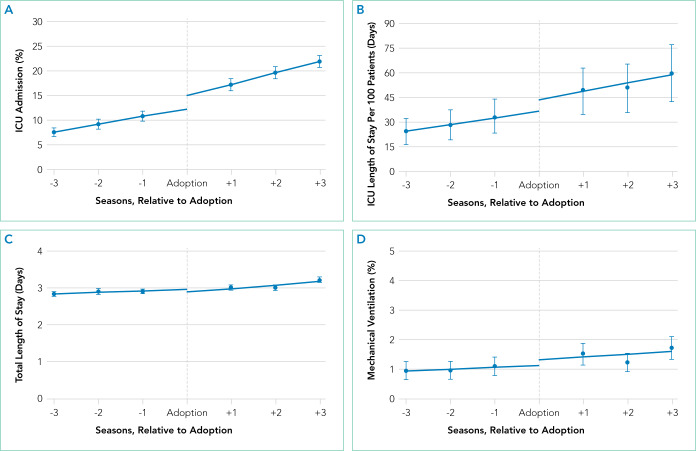
Results: Of 44 contacted hospitals, 41 replied (93% response rate), of which 18 were categorized as non-adopting hospitals and 12 were categorized as adopting hospitals. Included ward-based HFNC protocols were adopted between the 2010-2011 and 2015-2016 respiratory seasons. The primary analysis included 26,253 bronchiolitis encounters and measured immediate increases in the proportion of patients admitted to the ICU (absolute difference, 3.1%; 95% CI, 2.8%-3.4%) and ICU length of stay (absolute difference, 9.1 days per 100 patients; 95% CI, 5.1-13.2). Both supplementary analyses yielded similar findings.
Conclusion: Early protocols for ward-based HFNC were paradoxically associated with increased ICU utilization.
Figures
Comment in
-
Should the Pendulum Swing Back? More Transfers to the ICU After Implementing Ward-Based High-Flow Nasal Cannula Initiation Protocols for Bronchiolitis.J Hosp Med. 2020 Jun;15(6):381-382. doi: 10.12788/jhm.3462. J Hosp Med. 2020. PMID: 32525792 No abstract available.
References
-
- Mansbach JM, Piedra PA, Teach SJ, et al. Prospective multicenter study of viral etiology and hospital length of stay in children with severe bronchiolitis. Arch Pediatr Adolesc Med. 2012;166(8):700–706. doi: 10.1001/archpediatrics.2011.1669. doi: 10.1001/archpediatrics.2011.1669. - DOI - PMC - PubMed
Publication types
MeSH terms
Grants and funding
LinkOut - more resources
Full Text Sources
