Review
. 2020 Aug;8(8):681-691.
doi: 10.1016/j.jchf.2020.05.006. Epub 2020 Jun 3.

Considerations for Heart Failure Care During the COVID-19 Pandemic

Affiliations
Review

Considerations for Heart Failure Care During the COVID-19 Pandemic

Ersilia M DeFilippis et al. JACC Heart Fail. 2020 Aug.

Abstract

The coronavirus-2019 (COVID-19) infection pandemic has affected the care of patients with heart failure (HF) who have contracted COVID-19 as well as those without COVID-19 who have been impacted by the restructuring of health care delivery. Patients with HF and other cardiovascular comorbidities are at risk for severe disease and complications of infection. Similarly, COVID-19 has been demonstrated to cause myocarditis and may be implicated in new-onset cardiomyopathy. During this pandemic, special considerations are needed for patients with advanced HF, including those supported by durable left ventricular assist devices (LVADs) and heart transplant recipients. The purpose of this review is to summarize emerging data regarding the development of HF secondary to COVID-19 infection in patients with advanced HF and the implications of the pandemic for care of uninfected patients with HF.

Keywords: care delivery; coronavirus; heart failure; heart transplantation; ventricular assist device.


Figures

None
Graphical abstract
Figure 1
Figure 1
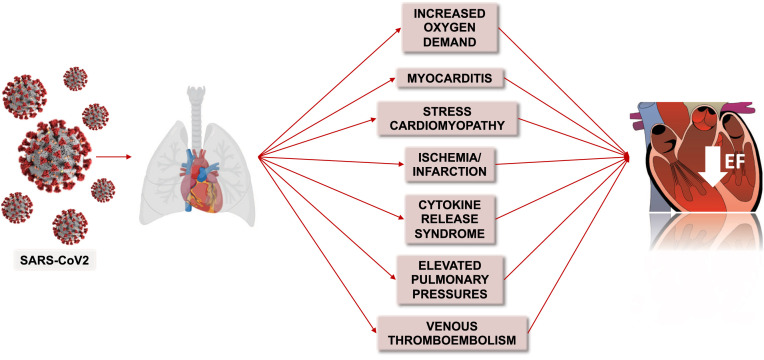
Mechanisms of New or Worsening Heart Failure in Patients With COVID-19 Potential contributing factors and mechanisms of worsening heart failure in patients with COVID-19 include increased oxygen demand, myocarditis, stress cardiomyopathy, ischemia or infarction, cytokine release syndrome, elevated pulmonary pressures, and venous thromboembolism.
Figure 2
Figure 2
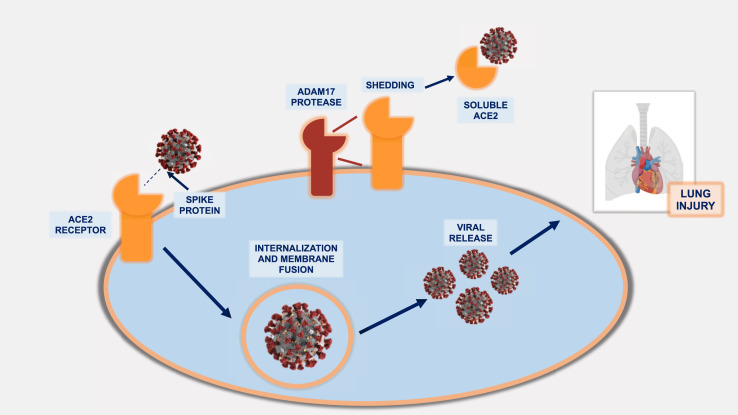
Pathophysiology of the SARS-CoV-2 Virus and the Role of the ACE2 Receptor The spike proteins of the SARS-CoV-2 virus bind to the ACE2 receptor, leading to viral entry, replication, and SARS-CoV-2 infection. The ADAM17 protease facilitates shedding of ACE2 from the membrane leading to the release of the soluble form of ACE2. Soluble ACE2 may bind the virus and prevent binding to the membrane-anchored ACE2 on cells, preventing cell entry. ACE2 = angiotensin-converting enzyme 2; SARS-CoV-2 = severe acute respiratory syndrome-coronavirus-2.
Central Illustration
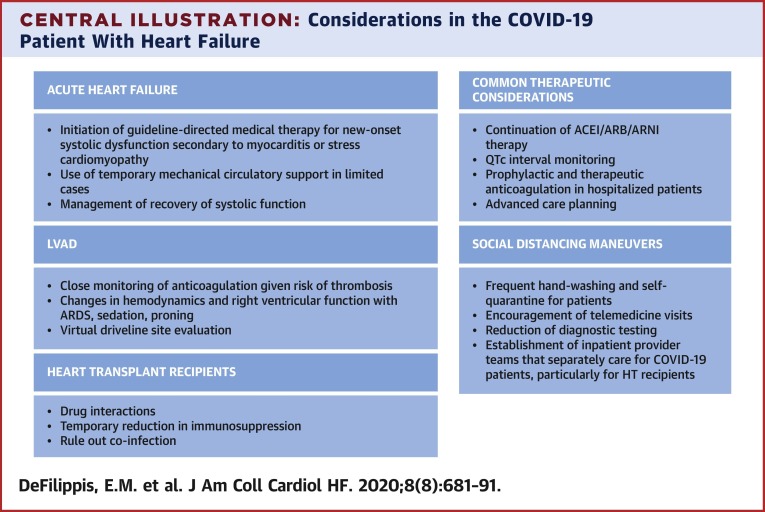
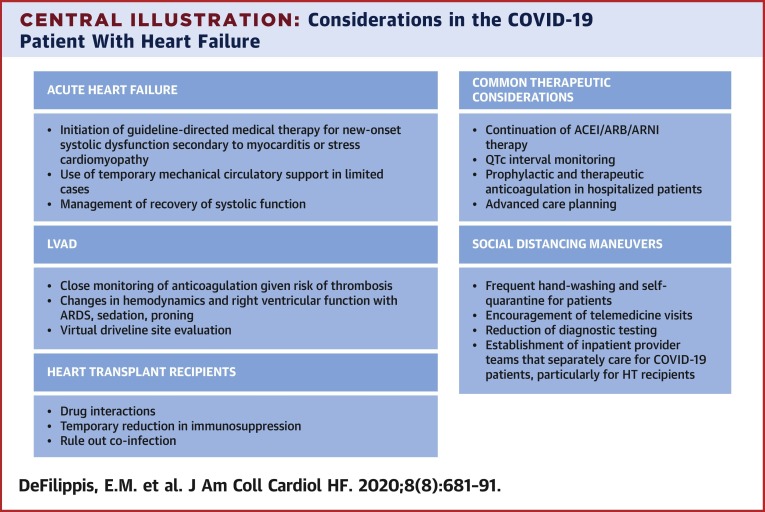
Considerations in the COVID-19 Patient With Heart Failure Considerations for patients with coronavirus-2019 (COVID-19) who develop acute heart failure as well as patients with pre-existing heart failure are shown. ACEI = angiotensin-converting enzyme inhibitors; ARB = angiotensin II receptor blockers; ARDS = acute respiratory distress syndrome; ARNI = angiotensin receptor-neprilysin inhibitors; HT = heart transplant; QTc = QT interval corrected for heart rate.
Figure 3
Figure 3
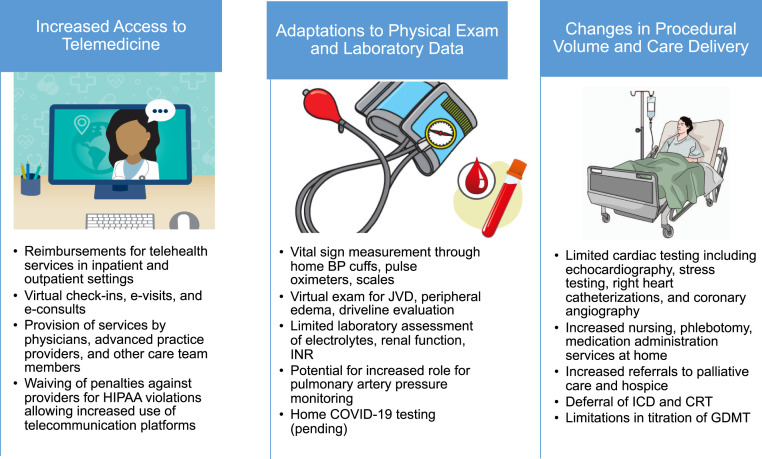
Reorganization of Care Delivery During the COVID-19 Pandemic Reorganization of care delivery has resulted in increased access to telemedicine, adaptations to physical examinations, and laboratory data and changes in procedural volume. BP = blood pressure; COVID-19 = coronavirus-2019; CRT = cardiac resynchronization therapy; GDMT = guideline-directed medical therapy; HIPAA = Health Insurance Portability and Accountability Act; ICD = implantable cardioverter defibrillator; INR = international normalized ratio; JVD = jugular venous distension.

Comment in

References

    1. Huang C., Wang Y., Li X. Clinical features of patients infected with 2019 novel coronavirus in Wuhan, China. Lancet. 2020;395:497–506. - PMC - PubMed
    1. Clerkin K.J., Fried J.A., Raikhelkar J. Coronavirus disease 2019 (COVID-19) and cardiovascular disease. Circulation. 2020;141:1648–1655. - PubMed
    1. Zhou F., Yu T., Du R. Clinical course and risk factors for mortality of adult inpatients with COVID-19 in Wuhan, China: a retrospective cohort study. Lancet. 2020;395:1054–1062. - PMC - PubMed
    1. Tersalvi G., Vicenzi M., Calabretta D., Biasco L., Pedrazzini G., Winterton D. Elevated troponin in patients with coronavirus disease 2019: possible mechanisms. J Card Fail. 2020;26:470–475. - PMC - PubMed
    1. Driggin E., Madhavan M.V., Bikdeli B. Cardiovascular considerations for patients, health care workers, and health systems during the coronavirus disease 2019 (COVID-19) pandemic. J Am Coll Cardiol. 2020;75:2352–2371. - PMC - PubMed