


Combined Tibial Tubercle Fracture With Patellar Tendon Avulsion in an Adult: A Rare Case and Novel Fixation Technique
- PMID: 32494537
- PMCID: PMC7265755
- DOI: 10.7759/cureus.7929
Combined Tibial Tubercle Fracture With Patellar Tendon Avulsion in an Adult: A Rare Case and Novel Fixation Technique
Abstract
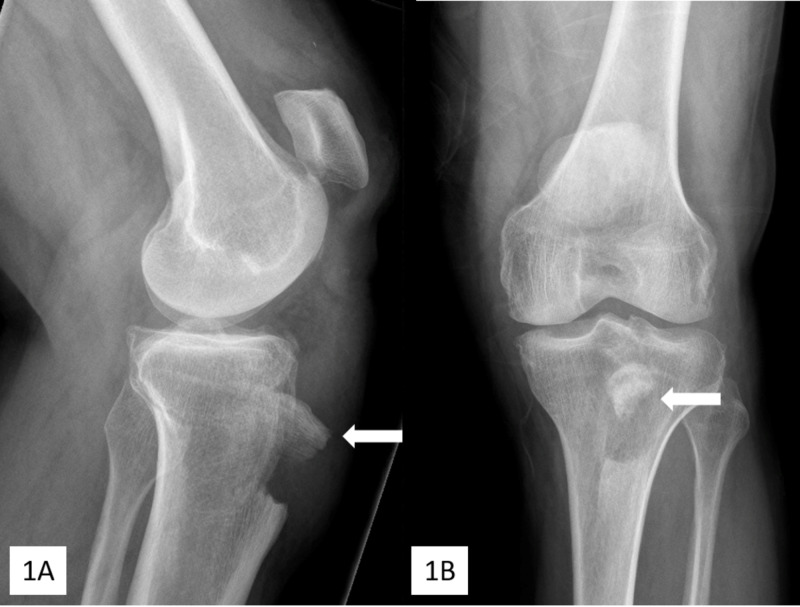
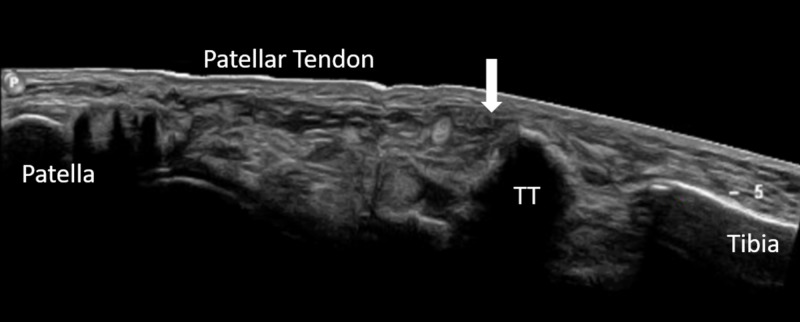
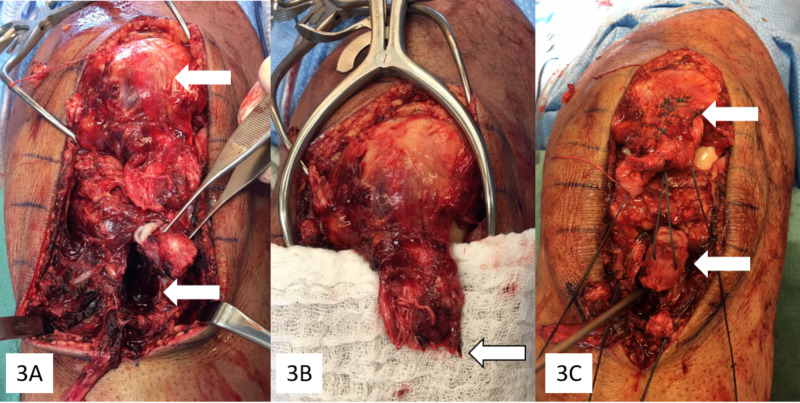
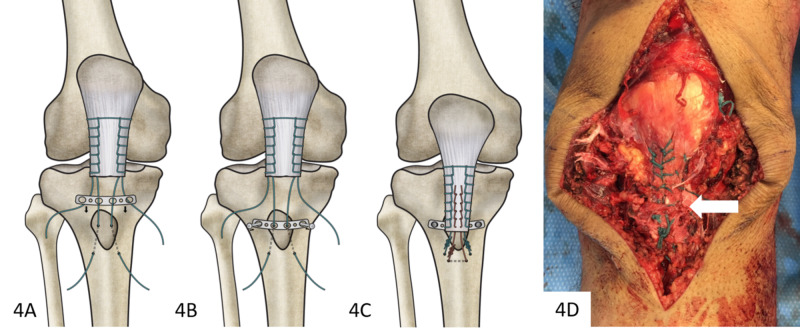
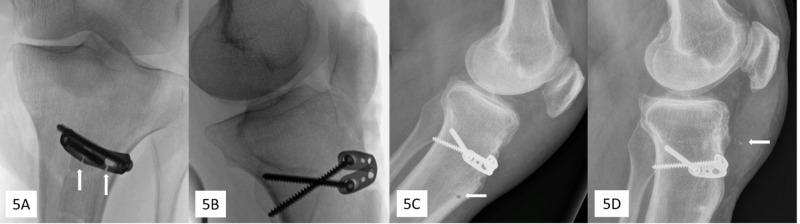
Tibial tubercle avulsion fracture with simultaneous patellar tendon avulsion is a rare injury that has only ever been reported in adolescents; the diagnosis and management of this combined lesion has not been described in the adult population. A healthy 62-year-old male presented with acute knee pain and an inability to walk after a fall on ice. Radiographs demonstrated a displaced fracture of the tibial tubercle; patellar tendon integrity could not be verified by ultrasonography. Intraoperatively, the patient was found to have a distal avulsion of the patellar tendon in addition to tubercle fracture. First, the tendon was secured to the tubercle fragment with transosseous sutures. A novel slotted-plate construct was used to fix the tubercle fragment prior to tightening the sutures. Postoperatively, the patient was permitted to bear weight as tolerated with the operative knee immobilized in extension. After six weeks, knee range of motion was gradually increased using a hinged brace. At one year, the patient had achieved excellent range of motion (full extension to 135 degrees of flexion) and strength (5/5 knee flexion and extension) without residual pain or complications. This case represents the first description of diagnosis, management, and rehabilitation of a combined tibial tubercle fracture with distal patellar tendon avulsion in an adult. The unique construct, a slotted-plate over transosseous sutures, provided excellent results and likely has further applications.
Keywords: avulsion fracture; patellar ligament; tendon rupture; tibial tubercle.
Copyright © 2020, Woolnough et al.
Conflict of interest statement
The authors have declared that no competing interests exist.
Figures
References
-
- Tibial tubercle avulsions. Bolesta MJ, Fitch RD. J Pediatr Orthop. 1986;6:186–192. - PubMed
-
- Distal patellar tendon avulsion in association with high-energy knee trauma: a case series and review of the literature. Capogna B, Strauss E, Konda S, Dayan A, Alaia M. Knee. 2017;24:468–476. - PubMed
-
- Complete avulsion of the patellar tendon from the tibial tubercle in an adult without predisposing factors. Chloros GD, Razavi A, Cheatham SA. J Orthop Sci. 2014;19:351–353. - PubMed
-
- Bifocal disruption of the knee extensor mechanism: a case report and literature review. Kang S, Chung PH, Kim YS, Lee HM, Kim JP. Arch Orthop Trauma Surg. 2013;133:517–521. - PubMed
-
- Tibial tubercle fracture with avulsion of the patellar ligament: a case report. Uppal R, Lyne ED. https://www.ncbi.nlm.nih.gov/pubmed/17571833. Am J Orthop. 2007;36:273–274. - PubMed
Publication types
LinkOut - more resources
Full Text Sources