


Dependent Stress Mediates the Relation Between ADHD Symptoms and Depression
- PMID: 32495709
- PMCID: PMC7735255
- DOI: 10.1177/1087054720925900
Dependent Stress Mediates the Relation Between ADHD Symptoms and Depression
Abstract
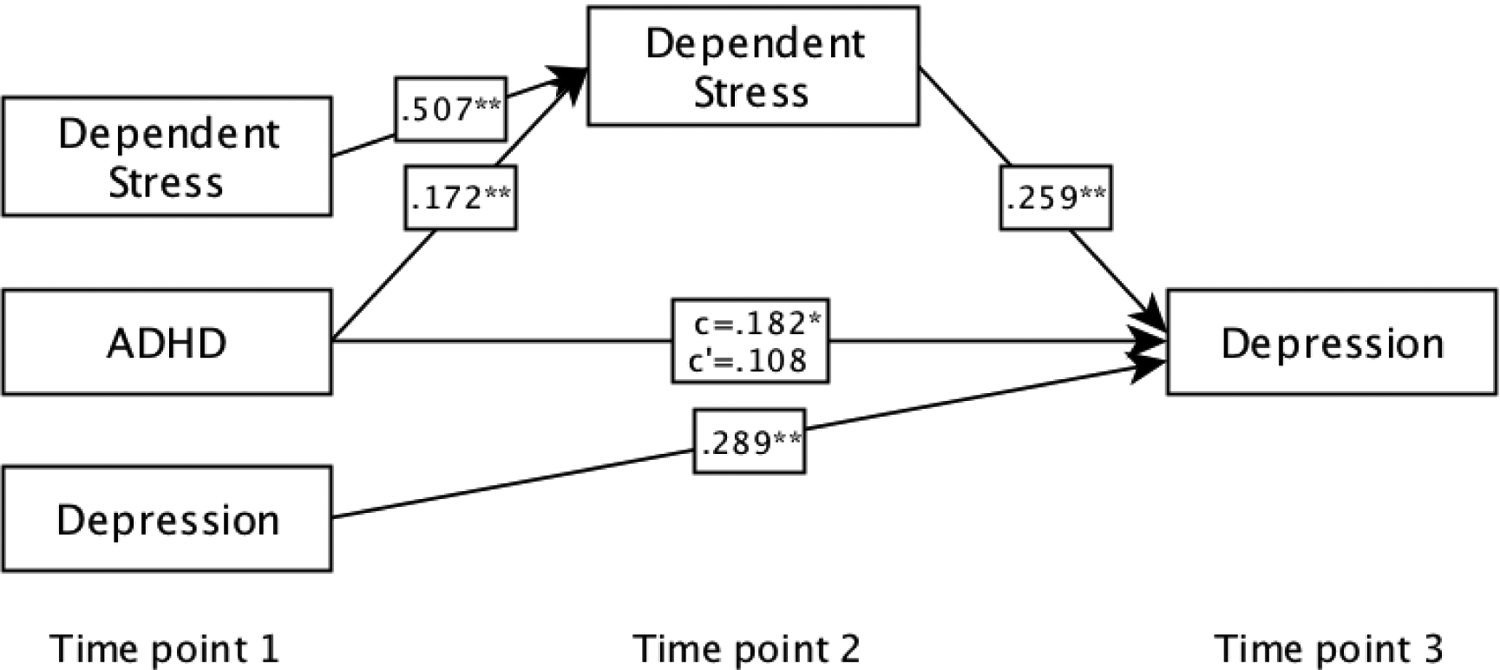
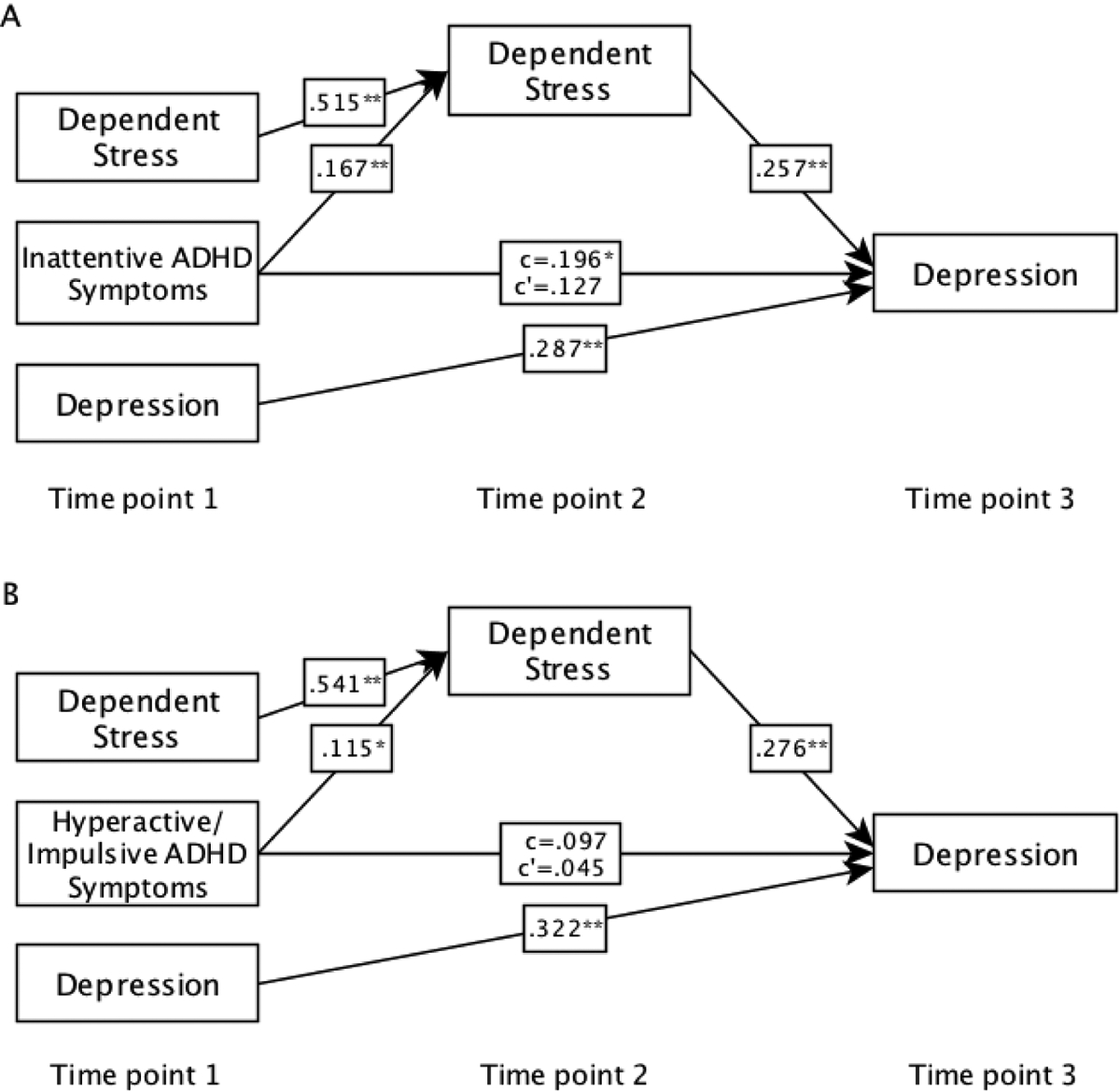
Objective: Depression and attention-deficit hyperactivity disorder (ADHD) are prevalent and highly comorbid. ADHD symptoms are associated with specific dependent (i.e., self-generated) stressors in children, and there is a strong link between dependent stress and depression. Despite continued comorbidity of ADHD and depressive symptoms into adulthood, it is unknown whether stress generation mediates the relation between ADHD and subsequent depressive symptoms in emerging adulthood, a period of heightened stress. Method: We tested this mediation model in a semester-long longitudinal study of 224 college students (aged 18-23 years). We additionally tested whether this model differed between inattentive versus hyperactive/impulsive ADHD symptoms given evidence that they vary in their relations to stress and depression. Results: Dependent stress mediated the association between total ADHD symptoms at baseline and later depressive symptoms; these effects were equivalent for inattentive versus hyperactive/impulsive ADHD symptoms. Conclusion: These findings suggest stress generation as a mechanism for increased depression in individuals with ADHD symptoms.
Keywords: ADHD; dependent stress; depression; stress generation.
Figures
References
-
- American College Health Association (2014). American College Health Association-National College Health Assessment II: Reference Group Executive Summary Spring 2014. Hanover, MD.
-
- Anastopoulos AD, King KA, Besecker LH, O’Rourke SR, Bray AC, & Supple AJ (2020). Cognitive-Behavioral Therapy for College Students With ADHD: Temporal Stability of Improvements in Functioning Following Active Treatment. Journal of Attention Disorders, 24(6), 863–874. 10.1177/1087054717749932 [Google Scholar]. - DOI - PubMed
Publication types
MeSH terms
Grants and funding
LinkOut - more resources
Full Text Sources
Medical
