


Mechanical assist devices for acute cardiogenic shock
- PMID: 32496607
- PMCID: PMC7271960
- DOI: 10.1002/14651858.CD013002.pub2
Mechanical assist devices for acute cardiogenic shock
Abstract
Background: Cardiogenic shock (CS) is a state of critical end-organ hypoperfusion due to a primary cardiac disorder. For people with refractory CS despite maximal vasopressors, inotropic support and intra-aortic balloon pump, mortality approaches 100%. Mechanical assist devices provide mechanical circulatory support (MCS) which has the ability to maintain vital organ perfusion, to unload the failing ventricle thus reduce intracardiac filling pressures which reduces pulmonary congestion, myocardial wall stress and myocardial oxygen consumption. This has been hypothesised to allow time for myocardial recovery (bridge to recovery) or allow time to come to a decision as to whether the person is a candidate for a longer-term ventricular assist device (VAD) either as a bridge to heart transplantation or as a destination therapy with a long-term VAD.
Objectives: To assess whether mechanical assist devices improve survival in people with acute cardiogenic shock.
Search methods: We searched CENTRAL, MEDLINE (Ovid), Embase (Ovid) and Web of Science Core Collection in November 2019. In addition, we searched three trials registers in August 2019. We scanned reference lists and contacted experts in the field to obtain further information. There were no language restrictions.
Selection criteria: Randomised controlled trials on people with acute CS comparing mechanical assist devices with best current intensive care management, including intra-aortic balloon pump and inotropic support.
Data collection and analysis: We performed data collection and analysis according to the published protocol. Primary outcomes were survival to discharge, 30 days, 1 year and secondary outcomes included, quality of life, major adverse cardiovascular events (30 days/end of follow-up), dialysis-dependent (30 days/end of follow-up), length of hospital stay and length of intensive care unit stay and major adverse events. We used the five GRADE considerations (study limitations, consistency of effect, imprecision, indirectness, and publication bias) to assess the quality of a body of evidence as it relates to the studies which contribute data to the meta-analyses for the prespecified outcomes Summary statistics for the primary endpoints were risk ratios (RR), hazard ratios (HRs) and odds ratios (ORs) with 95% confidence intervals (CIs).
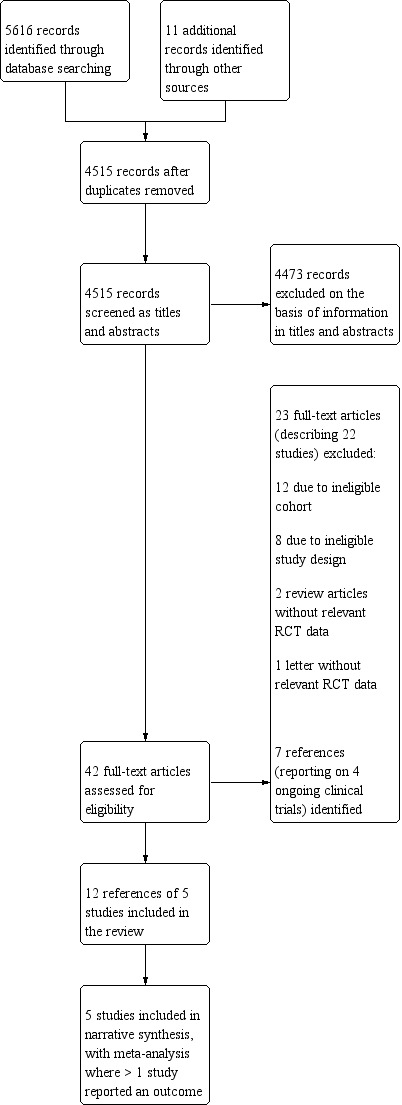
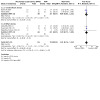
Main results: The search identified five studies from 4534 original citations reviewed. Two studies included acute CS of all causes randomised to treatment using TandemHeart percutaneous VAD and three studies included people with CS secondary to acute myocardial infarction who were randomised to Impella CP or best medical management. Meta-analysis was performed only to assess the 30-day survival as there were insufficient data to perform any further meta-analyses. The results from the five studies with 162 participants showed mechanical assist devices may have little or no effect on 30-day survival (RR of 1.01 95% CI 0.76 to 1.35) but the evidence is very uncertain. Complications such as sepsis, thromboembolic phenomena, bleeding and major adverse cardiovascular events were not infrequent in both the MAD and control group across the studies, but these could not be pooled due to inconsistencies in adverse event definitions and reporting. We identified four randomised control trials assessing mechanical assist devices in acute CS that are currently ongoing.
Authors' conclusions: There is no evidence from this review of a benefit from MCS in improving survival for people with acute CS. Further use of the technology, risk stratification and optimising the use protocols have been highlighted as potential reasons for lack of benefit and are being addressed in the current ongoing clinical trials.
Copyright © 2020 The Cochrane Collaboration. Published by John Wiley & Sons, Ltd.
Conflict of interest statement
TNH: none.
HB: none.
KB: none.
JS: none.
CC: none.
OB: I have not received any payment (or benefits), either directly or indirectly, for my contribution to (or as a consequence of my involvement in) this project.
SW: Professor Westaby is medical director of Cell Therapy Ltd, and founder and shareholder of Calon Cardiotechnology.
Figures
Update of
References
References to studies included in this review
Bonnefoy‐Cudraz 2014 {published data only}
-
- Bonnefoy-Cudraz E, Huot L, Elbaz M, Cottin Y, Roux A, Bouchot O, et al. Mechanical circulatory support with the Impella 5.0 and intra-aortic balloon pump for cardiogenic shock in acute myocardial infarction. The IMPELLA-STIC study. European Heart Journal 2014;1:1063.
Burkhoff 2006 {published data only}
-
- Burkhoff D, Cohen H, Brunckhorst C, O'Neill WW, TandemHeart Investigators Group. A randomized multicenter clinical study to evaluate the safety and efficacy of the TandemHeart percutaneous ventricular assist device versus conventional therapy with intraaortic balloon pumping for treatment of cardiogenic shock. American Heart Journal 2006;152(3):469.e1-8. - PubMed
Ouweneel 2017 {published data only}
-
- NTR3450. IMPRESS in severe shock. www.who.int/trialsearch/Trial2.aspx?TrialID=NTR3450 (first received 24 May 2012).
-
- Ouweneel DM, Engstrom AE, Sjauw KD, Hirsch A, Hill JM, Gockel B, et al. Experience from a randomized controlled trial with Impella 2.5 versus IABP in STEMI patients with cardiogenic pre-shock. Lessons learned from the IMPRESS in STEMI trial. International Journal of Cardiology 2016;202:894-6. - PubMed
-
- Ouweneel DM, Eriksen E, Sjauw KD, Dongen IM, Hirsch A, Packer EJ, et al. Percutaneous mechanical circulatory support versus intra-aortic balloon pump in cardiogenic shock after acute myocardial infarction. Journal of the American College of Cardiology 2017;69(3):278-87. [DOI: ] - PubMed
Seyfarth 2008 {published data only}
-
- Seyfarth M, Bauer I, Sibbing D, Bott-Flugel L, Kastrati A, Schomig A. A prospective and randomized trial to compare a left ventricular assist device (Impella LP2.5) with IABP in patients with cardiogenic shock by acute myocardial infarction: the ISAR-SHOCK trial. Circulation 2007;116(16):929.
-
- Seyfarth M, Sibbing D, Bauer I, Frohlich G, Bott-Flugel L, Byrne R, et al. A randomized clinical trial to evaluate the safety and efficacy of a percutaneous left ventricular assist device versus intra-aortic balloon pumping for treatment of cardiogenic shock caused by myocardial infarction. Journal of the American College of Cardiology 2008;52(19):1584-8. [DOI: ] - PubMed
-
- Seyfarth M, Sibbing D, Gloeck T, Bott-Fluegel L, Bauer I, Kastrati A, et al. Two-year outcome with the LVAD Impella LP2.5 compared to IABP for patients with cardiogenic shock by myocardial infarction: long term follow-up of a randomized trial (ISAR-SHOCK). European Heart Journal 2009;1:157-8.
Thiele 2005 {published data only}
-
- Thiele H, Boudriot E, Sick P, Niebauer J, Diederich KW, Hambrecht R, et al. Randomized comparison of intra-aortic balloon support versus a percutaneous left ventricular assist device in patients with acute myocardial infarction complicated by cardiogenic shock. Journal of the American College of Cardiology 2004;43(5):234A. - PubMed
-
- Thiele H, Boudriot E, Sick R, Diederich KW, Niebauer J, Hambrecht R, et al. Randomized comparison of intraaortic balloon support versus a percutaneous left ventricular assist device in patients with acute myocardial infarction complicated by cardiogenic shock. European Heart Journal 2004;25:73. - PubMed
-
- Thiele H, Sick P, Boudriot E, Diederich KW, Hambrecht R, Niebauer J, et al. Randomized comparison of intra-aortic balloon support with a percutaneous left ventricular assist device in patients with revascularized acute myocardial infarction complicated by cardiogenic shock. European Heart Journal 2005;26(13):1276-83. - PubMed
-
- Thiele H, Sick P, Boudriot E, Diederich KW, Hambrecht R, Niebauer J, et al. Randomized comparison of intraaortic balloon support versus a percutaneous left-ventricular assist device in patients with revascularized acute myocardial infarction complicated by cardiogenic shock. European Heart Journal 2003;24:25. - PubMed
References to studies excluded from this review
Abraham 2012 {published data only}
-
- Abraham WT, Anand I, Aranda JM Jr, Boehmer J, Costanzo MR, DeMarco T, et al. Randomized controlled trial of ventricular elastic support therapy in the treatment of symptomatic heart failure: rationale and design. American Heart Journal 2012;164(5):638-45. - PubMed
Abraham 2014 {published data only}
-
- Abraham W, Adamson P, Costa M, Nienaber C, Ince H, Erglis A, et al. Percutaneous ventricular restoration therapy using the parachute device in patients with ischemic dilated heart failure: pooled analysis of the first 100 patients treated for 1 year. European Journal of Heart Failure 2014;2:215.
Agarwal 2015 {published data only}
-
- Agarwal S, Sud K, Martin J M, Menon V. Trends in the use of mechanical circulatory support devices in patients presenting with ST-segment elevation myocardial infarction. JACC. Cardiovascular Interventions 2015;8(13):1772-4. - PubMed
Agrawal 2016 {published data only}
-
- Agrawal H, Aggarwal K. Mechanical circulatory support in percutaneous coronary interventions: expanding the possibilities. Journal of Invasive Cardiology 2016;28(6):243-5. - PubMed
Almond 2017 {published data only}
-
- Almond C, Jaquiss J, Massicotte P, Ichord R, Kaltman J, Stylianou M, et al. The pumpkin trial study design and rationale. Cardiology in the Young 2017;27(4):S78-9.
Alushi 2019 {published data only}
Anderson 2006 {published data only}
-
- Anderson M, Madani M, Raess D, Samuels L, Sun B, Sleeper L. Ventricular assist devices improve recovery outcomes in acute myocardial infarction cardiogenic shock: benchmark of US multicenter experience against SHOCK trial. American Journal of Cardiology 2006;98(8A):88M.
Basir 2019 {published data only}
-
- Basir MB, Kapur NK, Patel K, Salam MA, Schreiber T, Kaki A, et al. Improved outcomes associated with the use of shock protocols: updates from the National Cardiogenic Shock Initiative. Catheterization and Cardiovascular Interventions 2019;93(7):1173-83. - PubMed
Birks 2009 {published data only}
-
- Birks EJ, Dulay M, O'Driscoll G, Jansz P, Wieselthaler G, Strueber M. Health-related QOL and neurocognitive status before and after implantation of the HeartWare left ventricular assist system. Journal of Cardiac Failure 2009;1:S46.
Birks 2018 {published data only}
-
- Birks EJ, Drakos SG, Lowes BD, Patel SR, Selzman C, Slaughter MS, et al. Outcome and primary endpoint results from a prospective multicenter study of myocardial recovery using LVADs: remission from stage d heart failure (RESTAGE-HF). Journal of Heart and Lung Transplantation 2018;37 (4 Suppl 1):S142.
Bluhm 2010 {published data only}
-
- Bluhm R. The epistemology and ethics of chronic disease research: further lessons from ECMO. Theoretical Medicine and Bioethics 2010;31(2):107-22. - PubMed
Bol 2019 {published data only}
-
- Bol ME, Suverein MM, Lorusso R, Delnoij TS, Brandon Bravo Bruinsma GJ, Otterspoor L, et al. Early initiation of extracorporeal life support in refractory out-of-hospital cardiac arrest: design and rationale of the INCEPTION trial. American Heart Journal 2019;210:58-68. - PubMed
Bronicki 2013 {published data only}
-
- Bronicki RA, Adachi I. The ventricular assist device: bridge to transplant. Bridge to recovery? Bridge to beyond? Pediatric Critical Care Medicine 2013;14(9):910-1. - PubMed
Brunner 2019 {published data only}
-
- Brunner S, Guenther SP, Lackermair K, Peterss S, Orban M, Boulesteix AL, et al. Extracorporeal life support in cardiogenic shock complicating acute myocardial infarction. Journal of the American College of Cardiology 2019;73(18):2355-7. - PubMed
Kar 2012 {published data only}
-
- Kar B, Basra SS, Shah NR, Loyalka P. Percutaneous circulatory support in cardiogenic shock interventional bridge to recovery. Circulation 2012;125(14):1809-17. - PubMed
Liu 2012 {published data only}
Morici 2018 {published data only}
-
- Morici N, Oliva F, Ajello S, Stucchi M, Sacco A, Cipriani MG, et al. Management of cardiogenic shock in acute decompensated chronic heart failure: the ALTSHOCK phase II clinical trial. American Heart Journal 2018;204:196-201. - PubMed
NCT03101787 {published data only}
-
- NCT03101787. Early initiation of extracorporeal life support in refractory OHCA. clinicaltrials.gov/show/NCT03101787 (first received 5 April 2017).
NCT03431467 {published data only}
-
- NCT03431467. Impella CP with VA ECMO for cardiogenic shock. clinicaltrials.gov/show/NCT03431467 (first received 13 February 2018).
Patel 2011 {published data only}
-
- Patel MR, Thiele H, Smalling RW, Chandra P, Zhou Y, Cohen M, et al. A multicenter, randomized, controlled study of mechanical left ventricular unloading with counterpulsation to reduce infarct size prepercutaneous coronary intervention for acute myocardial infarction: rationale and design of the Counterpulsation Reduces Infarct Size Acute Myocardial Infarction trial. American Heart Journal 2011;162(1):47-55. - PubMed
Saeed 2013 {published data only}
-
- Saeed D, Arusoglu L, Gazzoli F, Hetzer R, Morshius M, Alloni A, et al. Results of the European clinical trial of Arrow CorAide left ventricular assist system. Artificial Organs 2013;37(2):121-7. - PubMed
Vallabhajosyula 2017 {published data only}
-
- Vallabhajosyula S, O'Horo JC, Antharam P, Ananthaneni S, Vallabhajosyula S, Stulak JM, et al. Concomitant intra-aortic balloon pump use in cardiogenic shock requiring veno-arterial extracorporeal membrane oxygenation. Circulation. Cardiovascular Interventions 2018;11(9):e006930. - PubMed
-
- Vallabhajosyula S, O'Horo JC, Antharam P, Ananthaneni S, Vallabhajosyula S, Stulak JM, et al. Venoarterial extracorporeal membrane oxygenation with concomitant Impella versus venoarterial extracorporeal membrane oxygenation for cardiogenic shock. ASAIO Journal 2017;17:17. - PubMed
References to ongoing studies
DanGer Shock Trial {unpublished data only}
-
- NCT01633502. Danish cardiogenic shock trial (DanShock). clinicaltrials.gov/ct2/show/NCT01633502 (first received 4 July 2012).
ECLS‐SHOCK {published data only}
-
- NCT02544594. Clinical study of extra-corporal life support in cardiogenic shock complicating acute myocardial infarction. clinicaltrials.gov/show/NCT02544594 (first received 9 September 2015).
-
- NCT03637205. Extracorporeal life support in cardiogenic shock (ECLS-SHOCK). clinicaltrials.gov/ct2/show/NCT03637205 (first received 17 August 2018).
ECMO‐CS {published data only}
-
- NCT02301819. Extracorporeal membrane oxygenation in the therapy of cardiogenic shock (ECMO-CS). clinicaltrials.gov/ct2/show/NCT02301819 (first received 26 November 2014).
EuroShock {published data only}
-
- NCT03813134. Testing the value of novel strategy and its cost efficacy in order to improve the poor outcomes in cardiogenic shock. clinicaltrials.gov/show/NCT03813134 (first received 23 January 2019).
Additional references
AHA 2012
-
- Peura JL, Colvin-Adams M, Francis GS, Grady KL, Hoffman TM, Jessup M, et al, on behalf of the American Heart Association Heart Failure and Transplantation Committee of the Council on Clinical Cardiology, Council on Cardiopulmonary, Critical Care, Perioperative and Resuscitation, Council on Cardiovascular Disease in the Young, Council on Cardiovascular Nursing, Council on Cardiovascular Radiology and Intervention, and Council on Cardiovascular Surgery and Anesthesia. Recommendations for the use of mechanical circulatory support: device strategies and patient selection: a scientific statement from the American Heart Association. Circulation 2012;126:2648-67. - PubMed
AHA 2017
-
- Diepen S, Katz JN, Albert NM, Henry TD, Jacobs AK, Kapur NK, et al. Contemporary management of cardiogenic shock: a scientific statement from the American Heart Association. Circulation 2017;136(16):e232-68. - PubMed
Austin 2017
Babaev 2005
-
- Babaev A, Frederick PD, Pasta DJ, Every N, Sichrovsky T, Hochman JS. Trends in management and outcomes of patients with acute myocardial infarction complicated by cardiogenic shock. JAMA 2005;294:448-54. - PubMed
Bartlett 2010
-
- Bartlett RH, Gattinoni L. Current status of extracorporeal life support (ECMO) for cardiopulmonary failure. Minerva Anestesiologica 2010;76:534-40. - PubMed
Basir 2016 USpella registry
-
- Basir MB, Schrieber TL, Grines CL, Dixon SR, Moses JW, Mani BS, et al. Effect of early initiation of mechanical circulatory support on survival in cardiogenic shock. American Journal of Cardiology 2017;119:845-51. - PubMed
Chamogeorgakis 2013
-
- Chamogeorgakis T, Lima B, Shaffii AE, Nagpal D, Pokersnik JA, Navia JL, et al. Outcomes of axillary artery side graft cannulation for extracorporeal membrane oxygenation. Journal of Thoracic and Cardiovascular Surgery 2013;145:1088-92. - PubMed
Chung 2012
-
- Chung SY, Sheu JJ, Lin YJ, Sun CK, Chang LT, Chen YL, et al. Outcomes of patients with profound cardiogenic shock after cardiopulmonary resuscitation and prompt extracorporeal membrane oxygenation support. A single-centre observational study. Circulation 2012;6:1385-92. - PubMed
Copeland 2004
-
- Copeland JG, Smith RG, Arabia FA, Nolan PE, Sethi GK, Tsau PH, et al. Cardiac replacement with a total artificial heart as a bridge to transplantation. New England Journal of Medicine 2004;351(9):859-67. - PubMed
DanGer Shock 2019
-
- Udesen NJ, Moller JE, Lindholm MG, Eiskjaer H, Schafer A, Werner N, et al. Rationale and design of DanGer shock: Danish-German cardiogenic shock trial. American Heart Journal 2019;214:69-8. - PubMed
Deeks 2011
-
- Deeks JJ, Higgins JP, Altman DG. Chapter 9: Analysing data and undertaking meta-analyses. In: Higgins JP, Green S editor(s). Cochrane Handbook for Systematic Reviews of Interventions Version 5.1.0 (updated March 2011). The Cochrane Collaboration, 2011. Available from handbook.cochrane.org.
Emmert 2011
-
- Emmert MY, Prêtre R, Ruschitzka F, Krhenmann F, Falk V, Wilhelm MJ. Peripartum cardiomyopathy with cardiogenic shock: recovery after prolactin inhibition and mechanical support. Annals of Thoracic Surgery 2011;91(1):274-6. - PubMed
ESC 2019
-
- Thiele H, Ohman EM, deWaha-Thiele S, Zeymer U, Desch S. Management of cardiogenic shock complicating myocardial infarction: an update 2019. European Heart Journal 2019;40:2671-83. - PubMed
Fox 2007
Friedel 1992
-
- Friedel N, Viazis P, Schiessler A, Warnecke H, Hennig E, Trittin A, et al. Recovery of end-organ failure during mechanical circulatory support. European Journal of Cardiothoracic Surgery 1992;6(10):519-22. - PubMed
Goldberg 2001
-
- Goldberg RJ, Gore JR, Thompson CA, Gurwitz JH. Recent magnitude of and temporal trends (1994–1997) in the incidence and hospital death rates of cardiogenic shock complicating acute myocardial infarction: the second National Registry of Myocardial Infarction. American Heart Journal 2001;141:65-72. - PubMed
GRADEpro GDT [Computer program]
-
- McMaster University (developed by Evidence Prime) GRADEpro GDT. Hamilton (ON): McMaster University (developed by Evidence Prime), 2015.Available at gradepro.org.
Hasdai 2000
-
- Hasdai D, Harrington RA, Hochman JS, Califf RM, Battler A, Box JW, et al. Platelet glycoprotein IIb/IIIa blockade and outcome of cardiogenic shock complicating acute coronary syndromes without persistent ST-segment elevation. Journal of American College of Cardiology 2000;36:685-92. - PubMed
Hendry 1999
-
- Hendry PJ, Masters RG, Mussivand TV, Smith S, Davies RA, Finlay S, et al. Circulatory support for cardiogenic shock due to acute myocardial infarction: a Canadian experience. Canadian Journal of Cardiology 1999;15(10):1090-4. - PubMed
Higgins 2011
-
- Higgins JP, Green S, editor(s). Cochrane Handbook for Systematic Reviews of Interventions Version 5.1.0 (updated March 2011). The Cochrane Collaboration, 2011. Available from handbook.cochrane.org.
Hill 1986
-
- Hill JD, Farrar DJ, Hershon JJ, Compton PG, Avery GJ 2nd, Levin BS, et al. Use of a prosthetic ventricle as a bridge to cardiac transplantation for postinfarction cardiogenic shock. New England Journal of Medicine 1986;314:626-8. - PubMed
Hochman 1999
-
- Hochman JS, Sleeper LA, Webb JG, Sanborn TA, White HD, Talley JD, et al. Early revascularization in acute myocardial infarction complicated by cardiogenic shock. SHOCK Investigators. Should we emergently revascularize occluded coronaries for cardiogenic shock. New England Journal of Medicine 1999;341:625-34. - PubMed
Hochman 2001
-
- Hochman JS, Sleeper LA, White HD, Dzavik V, Wong SC, Menon V, et al. One year survival following early revascularization for cardiogenic shock. JAMA 2001;285:190-2. - PubMed
Holman 1995
-
- Holman WL, Roye GD, Bourge RC, McGiffin DC, Iyer SS, Kirklin JK. Circulatory support for myocardial infarction with ventricular arrhythmias. Annals of Thoracic Surgery 1995;59(5):1230-1. - PubMed
Howell 2016
-
- Howell E, Paivanas N, Stern J, Vidula H. Treatment of acute necrotizing eosinophilic myocarditis with immunosuppression and mechanical circulatory support. Circulation. Heart Failure 2016;9(12):e003665. - PubMed
ISHLT 2013
-
- Feldman D, Pamboukian SV, Teuteberg JJ, Birks E, Lietz K, Moore SA, et al. The 2013 International Society for Heart and Lung Transplantation guidelines for mechanical circulatory support: executive summary. Journal of Heart and Lung Transplantation 2013;32:157-87. - PubMed
Kato 1999
-
- Kato S, Morimoto S, Hiramitsu S, Nomura M, Ito T, Hishida H. Use of percutaneous cardiopulmonary support of patients with fulminant myocarditis and cardiogenic shock for improving prognosis. American Journal of Cardiology 1999;83(4):623-5. - PubMed
Lefebvre 2011
-
- Lefebvre C, Manheimer E, Glanville J. Chapter 6: Searching for studies. In: Higgins JP, Green S, editor(s). Cochrane Handbook for Systematic Reviews of Interventions Version 5.1.0 (updated March 2011). The Cochrane Collaboration, 2011. Available from handbook.cochrane.org.
Liberati 2009
Lü 2016
-
- Lü TF. Prevention: some important steps forward, but many unmet needs in a world with cardiovascular disease as the leading cause of death. European Heart Journal 2016;37(42):3179-81. - PubMed
Mandawat 2017
NICE 2014
-
- National Institute for Health and Care Excellence. Acute heart failure: diagnosis and management. nice.org.uk/guidance/cg187 (accessed prior to 7 May 2020).
Omerovic 2016
-
- Omerovic E. Takotsubo syndrome – scientific basis for current treatment strategies. Heart Failure Clinics 2016;12(4):577-86. - PubMed
Ponikowski 2016
-
- Ponikowski P, Voors AA, Anker SD, Bueno H, Cleland JG, Coats AJ, et al. ESC Guidelines for the diagnosis and treatment of acute and chronic heart failure. European Heart Journal 2016;37(27):2129-200. - PubMed
Review Manager 2014 [Computer program]
-
- Nordic Cochrane Centre, The Cochrane Collaboration Review Manager 5 (RevMan 5). Version 5.3. Copenhagen: Nordic Cochrane Centre, The Cochrane Collaboration, 2014.
Reynolds 2008
-
- Reynolds H, Hochman S. Cardiogenic shock: current concepts and improving outcomes. Circulation 2008;117:686-97. - PubMed
Rihal 2015
-
- Rihal CS, Naidu SS, Givertz MM, Szeto WY, Burke JA, Kapur NK, et al. 2015 SCAI/ACC/HFSA/STS clinical expert consensus statement on the use of percutaneous mechanical circulatory support devices in cardiovascular care. Journal of the American College of Cardiology 2015;65(19):e7-e26. - PubMed
Sellke 2010
-
- Sellke FW, Nido PH, Swanson SJ. Sabiston & Spencer Surgery of the Chest. 8th edition. Vol. II. Philadelphia (PA): Saunders Elsevier, 2010.
Shekar 2016
Shemilt 2011
-
- Shemilt I, Mugford M, Byford S, Drummond M, Eisenstein E, Knapp M, et al. Chapter 15: Incorporating economics evidence In: Higgins JP, Green S, editor(s). Cochrane Handbook for Systematic Reviews of Interventions Version 5.1.0 (updated March 2011). The Cochrane Collaboration, 2011. Available from handbook.cochrane.org.
Shemilt 2017
-
- Shemilt I, Mugford M, Vale L, Craig D, Campbell and Cochrane Economics Methods Group. Searching NHS EED and HEED to inform development of economic commentary for Cochrane intervention reviews. www.methods.cochrane.org/economics/workshops (accessed 13 July 2017).
Simmonds 2005
-
- Simmonds MC, Higgins JP, Stewart LA, Tierney JF, Clarke MI, Thompson SG. Meta-analysis of individual patient data from randomized trials: a review of methods used in practice. Clinical Trials 2005;2:209-17. - PubMed
Squiers 2016
-
- Squiers JJ, Lima B, DiMaio JM. Contemporary extracorporeal membrane oxygenation therapy in adults: fundamental principles and systematic review of the evidence. Journal of Thoracic and Cardiovascular Surgery 2016;152(1):20-32. - PubMed
Thiele 2017
-
- Thiele H, Jobs A, Ouweneel DM, Henriques JP, Seyfarth M, Desch S, et al. Percutaneous short term active mechanical support devices in cardiogenic shock: a systematic review and collaborative meta-analysis of randomized trials. European Heart Journal 2017;38:3523-31. - PubMed
Thiele 2017 CULPRIT Shock Trial
-
- Thiele H, Kin I, Sandri M, Fuernau G, Waha S, Meyer-Saraei R, et al. PCI strategies in patients with acute myocardial infarction and cardiogenic shock. New England Journal of Medicine 2017;377:2419-32. - PubMed
WHO 2018
-
- World Health Organization. Global health estimates 2016: deaths by cause, age, sex, by country and by region, 2000–2016. www.who.int/healthinfo/global_burden_disease/estimates/en/index1.html (accessed prior to 7 May 2020).
References to other published versions of this review
Publication types
MeSH terms
LinkOut - more resources
Full Text Sources
Miscellaneous
