


Advances in the use of chloroquine and hydroxychloroquine for the treatment of COVID-19
- PMID: 32496926
- PMCID: PMC7441788
- DOI: 10.1080/00325481.2020.1778982
Advances in the use of chloroquine and hydroxychloroquine for the treatment of COVID-19
Abstract
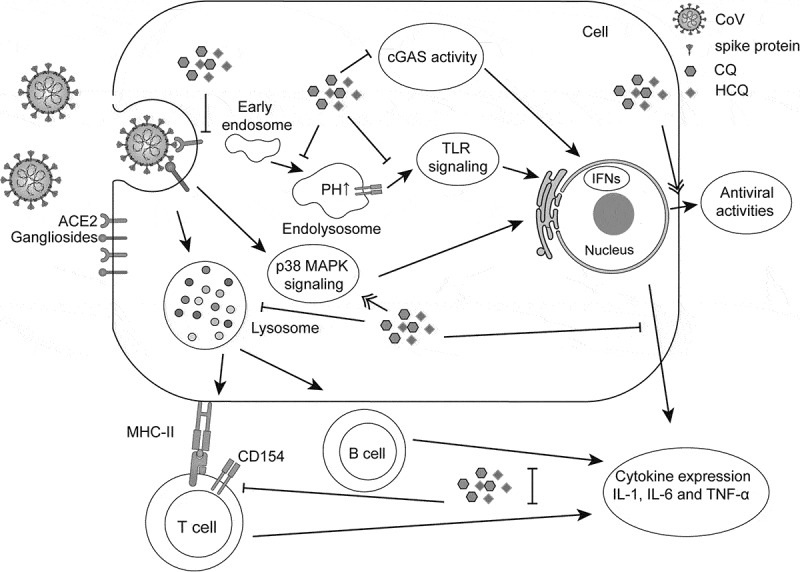
Coronavirus Disease 2019 (COVID-19), caused by severe acute respiratory syndrome coronavirus 2 (SARS-CoV-2), is spreading worldwide. Antiviral therapy is the most important treatment for COVID-19. Among the drugs under investigation, anti-malarials, chloroquine (CQ) and hydroxychloroquine (HCQ), are being repurposed as treatment for COVID-19. CQ/HCQ were shown to prevent receptor recognition by coronaviruses, inhibit endosome acidification, which interferes with membrane fusion, and exhibit immunomodulatory activity. These multiple mechanisms may work together to exert a therapeutic effect on COVID-19. A number of in vitro studies revealed inhibitory effects of CQ/HCQ on various coronaviruses, including SARS-CoV-2 although conflicting results exist. Several clinical studies showed that CQ/HCQ alone or in combination with a macrolide may alleviate the clinical symptoms of COVID-19, promote viral conversion, and delay disease progression, with less serious adverse effects. However, recent studies indicated that the use of CQ/HCQ, alone or in combination with a macrolide, did not show any favorable effect on patients with COVID-19. Adverse effects, including prolonged QT interval after taking CQ/HCQ, may develop in COVID-19 patients. Therefore, current data are not sufficient enough to support the use of CQ/HCQ as therapies for COVID-19 and increasing caution should be taken about the application of CQ/HCQ in COVID-19 before conclusive findings are obtained by well-designed, multi-center, randomized, controlled studies.
Keywords: Coronavirus; antiviral; chloroquine; hydroxychloroquine; sars-CoV-2.
Figures
References
-
- Boelaert JR, Piette J, Sperber K. The potential place of chloroquine in the treatment of HIV-1-infected patients. J Clin Virol. 2001;20(3):137–140. - PubMed
Publication types
MeSH terms
Substances
LinkOut - more resources
Full Text Sources
Miscellaneous
