


Testing methods and physical qualities of male age grade rugby union players: A systematic review
- PMID: 32497130
- PMCID: PMC7272054
- DOI: 10.1371/journal.pone.0233796
Testing methods and physical qualities of male age grade rugby union players: A systematic review
Abstract
Background: Rugby union match demands are complex, requiring the development of multiple physical qualities concurrently. Quantifying the physical qualities of age grade rugby union players is vital for practitioners to support athlete preparation and long-term development.
Aim: This systematic review aimed to identify the methods used to quantify the physical qualities of male age grade (≤ Under-20) rugby union players, present the normative values for physical qualities, and compare physical qualities between age grades and positions.
Methods: Electronic databases were systematically reviewed from the earliest record to November 2019 using key words relating to sex, age, sport and physical testing.
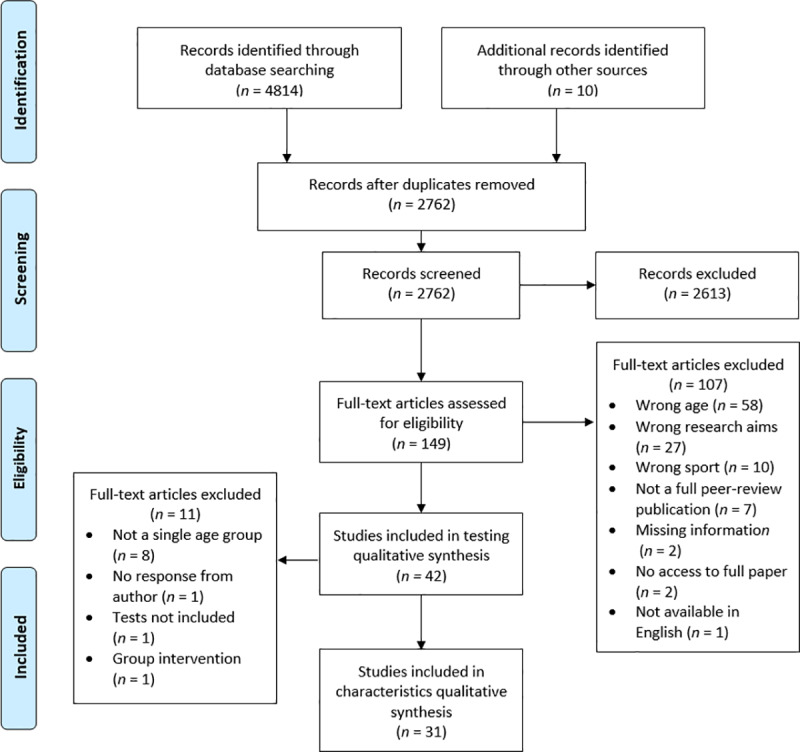
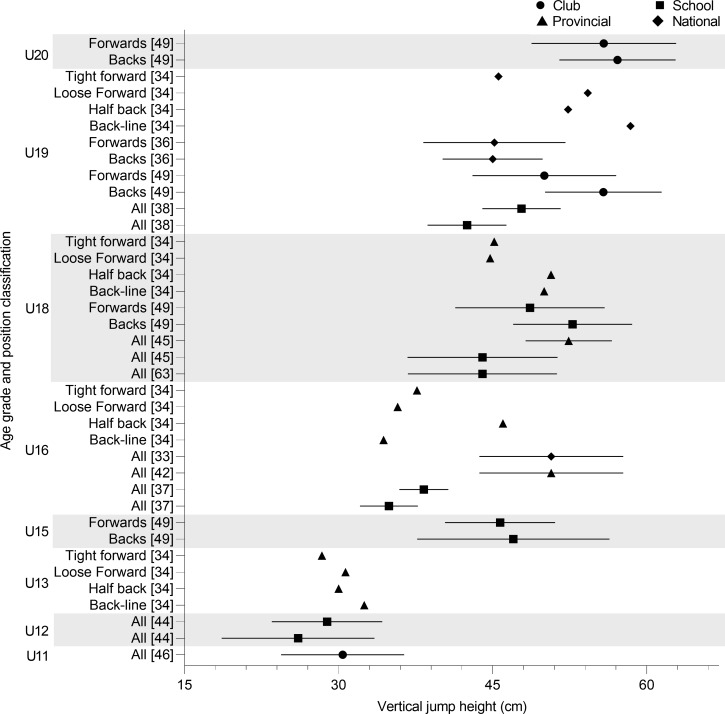
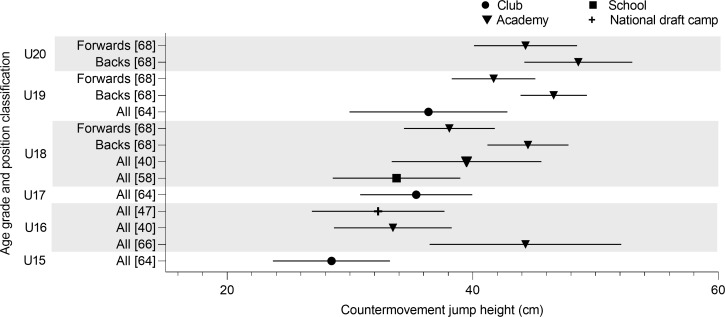
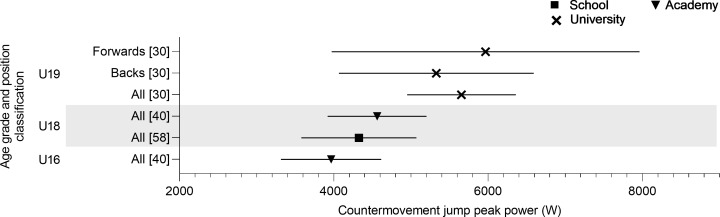
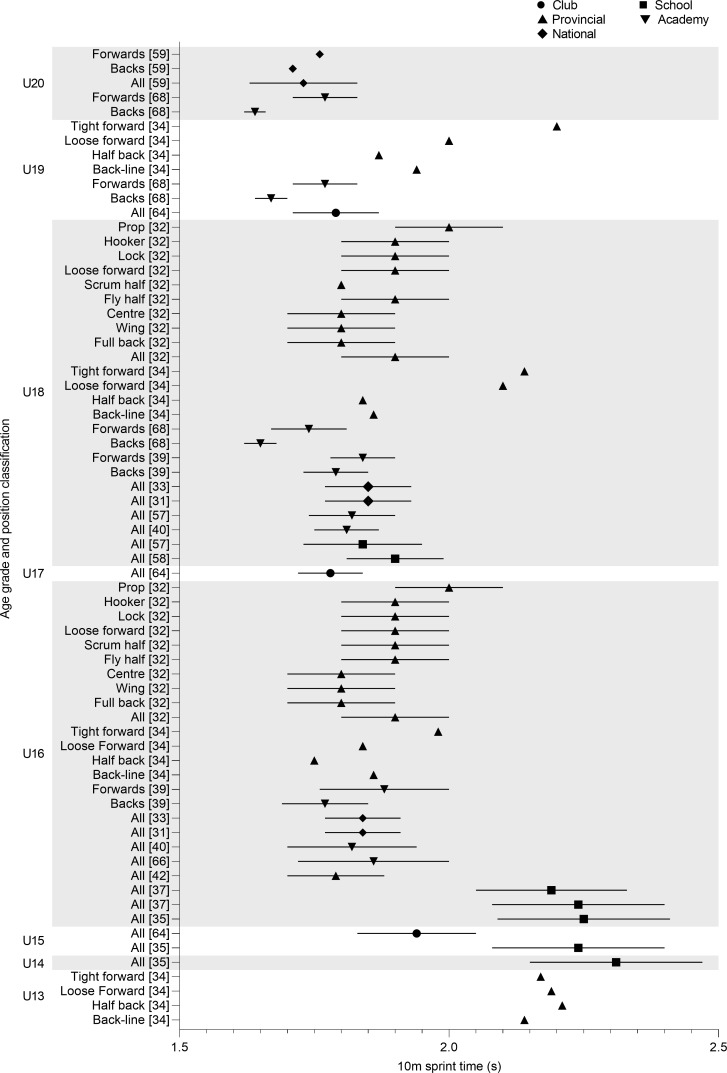
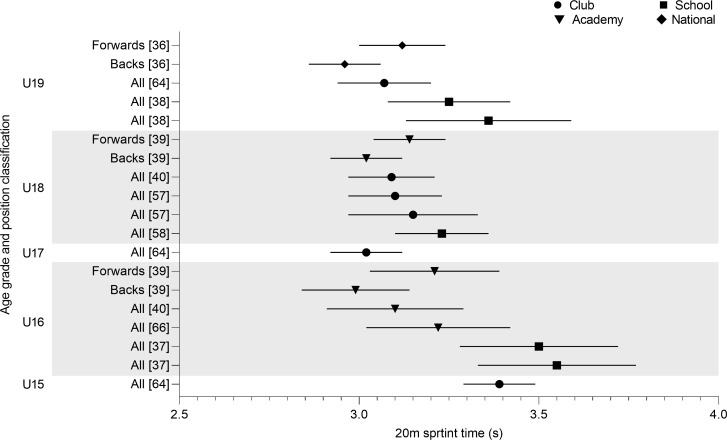
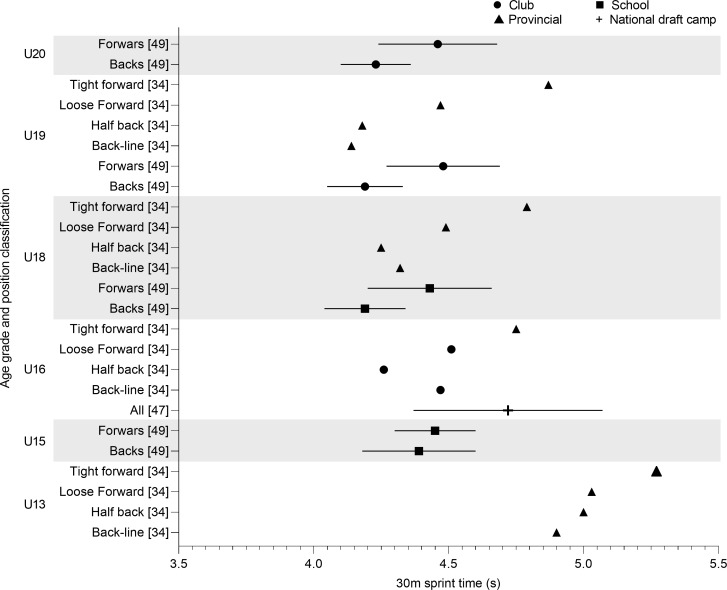
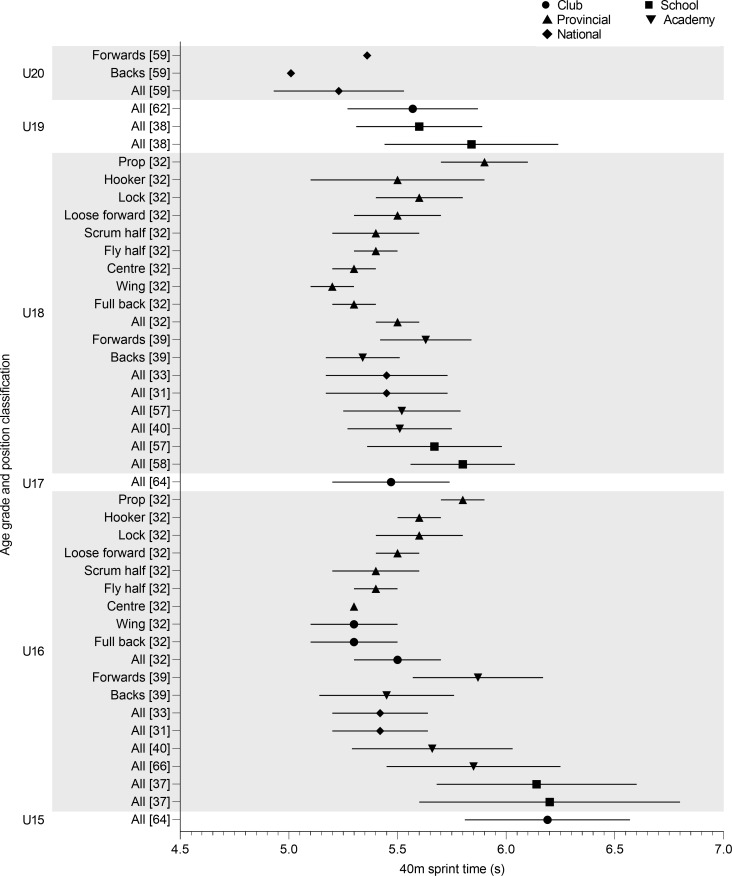
Results: Forty-two studies evaluated the physical qualities of age grade rugby union players. Seventy-five tests were used to quantify body composition, muscular strength, muscular power, linear speed, change of direction ability, aerobic capacity and anaerobic endurance. Thirty-one studies met the eligibility criteria to present the physical qualities. Physical qualities differentiate between age groups below Under-16, while differences in older age groups (Under-16 to Under-20) are not clear. Positional differences are present with forwards possessing greater height, body mass, body fat percentage and strength while backs are faster and have greater aerobic capacities.
Conclusions: A wide variety of tests are used to assess physical qualities limiting between study comparisons. Although differences in older age grades are unclear, older age groups (Under-19-20) generally performed better in physical tests. Positional differences are associated with match demands where forwards are exposed to less running but a greater number of collisions. Practitioners can use the results from this review to evaluate the physical qualities of age grade rugby union players to enhance training prescription, goal setting and player development. Future research should consider the use of national standardised testing batteries due to the inconsistency in testing methods and small samples limiting the reporting of positional differences.
Conflict of interest statement
Cameron Owen is affiliated to Yorkshire Carnegie Rugby Union club, Kevin Till and Ben Jones are affiliated to Leeds Rhinos Rugby League club and Ben Jones to The Rugby Football League. There are no patents, products in development or marketed products to declare. This does not alter our adherence to all the PLOS ONE policies on sharing data and materials, as detailed online in the guide for authors.
Figures
References
-
- World Rugby [Internet]. Worldrugby.org. 2020 [cited 14 January 2019]. Available from: http://www.worldrugby.org/development/player-numbers.
-
- World Rugby Laws—World Rugby's Law Education Web Site [Internet]. Laws.worldrugby.org. 2020 [cited 14 January 2019]. Available from: https://laws.worldrugby.org/?law=5.
Publication types
MeSH terms
LinkOut - more resources
Full Text Sources
Miscellaneous
